How to travel ethically
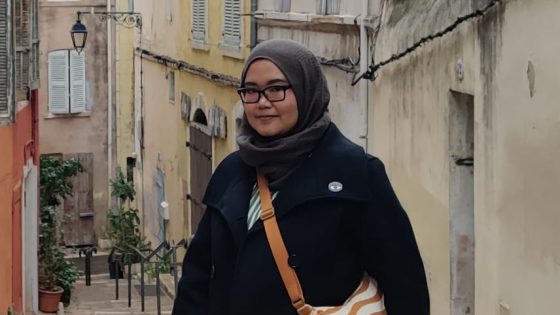
 Written by Elizabeth Couse
Puerto Viejo de Talamanca, Costa Rica
Our How To guides offer practical step-by-step instructions of how best to use your individual actions to contribute to wider movements.
Environmental activist and founder of Liberation Agriculture, Elizabeth Couse, offers tips and advice on how to travel ethically. In doing so she offers guidance on how to move away from extractive tourism and toward reciprocity, justice and genuine connection with the places we visit.
*The steps in this guide have been informed by years of genuine conversation with local friends, community members, and organisers in Costa Rica and across Latin America, and by my own ongoing process of unlearning assumptions I didn’t even know I held. This guide is only a small contribution to a much larger and evolving conversation around travel.
We all love to travel, see new places, experience different cultures and see the world. And it may seem many of the people around you are on constant holidays, but it’s estimated that only between 2% and 4% of the global population fly abroad annually in any given year. Travel is an immense privilege and should be treated that way. Travel is also inherently political. We don’t all have the same power with our passports and the impacts of global tourism are immense.
If we are going to travel, how do we ensure we are causing the least harm possible?
I’ve been lucky enough to travel to dozens of countries around the world and have spent nearly the last decade as an American living in Latin America. It’s been a reckoning recognising the privilege that I and many Westerners have just existing abroad.
Travel is also at the centre of a growing and necessary conversation about climate impact. Many people are genuinely grappling with whether they should travel at all. Global tourism now accounts for around 9% of the world’s total greenhouse gas emissions and it is growing more than twice as fast as the rest of the global economy. Yet the communities most impacted by extractive tourism rarely see the wealth the industry generates.
There are no easy answers, but this guide is less about telling you not to travel and more about asking: if we are going to travel, how do we ensure we are causing the least harm possible? And how do we ensure that the future of travel is shaped not by the travel industry or by those with the most powerful passports, but by the communities most impacted by tourism and by climate change itself?
This may seem like an oxymoron, but a conversation I have had with many of my local friends is on how to be a ‘good gringo’. Living this question has led me to sit with and reflect deeply on the impact that I and other travellers have on the communities we visit and live in.
Before we get started…
Travel is not passive or neutral. It is a choice and if we are going to choose to travel, especially if you are from the Global North travelling to the Global South, we have to consider the power dynamics at play.
Just our presence in a place can have adverse effects on a local community. Our buying power and exchange rates can raise prices simply from us visiting a place. Airplane travel has a huge environmental cost. Posting a local nature spot on social media that goes viral can ruin a local ecosystem. And the rise of digital nomads are pricing locals out of their homes.
There is a growing awareness of the negative impacts of travel and extractive tourism. In Latin America, the ‘gringo go home’ movement has gained significant momentum, with communities pushing back against the displacement, rising rents, and cultural erosion that comes with an influx of foreign visitors. It is a demand worth listening to and it is a demand for dignity and reciprocity.
In saying all of this, travel isn’t stopping anytime soon, and I do truly believe that travel has the beautiful and special ability to open our minds to become more empathetic, kind and generous humans.
Individual action alone will never be enough to change those systems, but it matters. And when those choices are made consciously and collectively, they become part of something much larger.
So if we are going to travel, how can we do it the most ethically?
Step 1: Learn before you land
Before you book a flight, take time to understand where you’re actually going. Not just the best beaches or restaurants, but the history, politics, and culture of the place. Who colonised this land and when? What are the current land rights issues? Who are the Indigenous communities and what are they fighting for? What is the political context right now?
This kind of research entirely changes how you show up and can help you to better understand the lived realities of the people living in a place.
Step 2: Engage in the culture of the place you are visiting
Before you arrive, seek out books by local authors, films by local filmmakers, and music and art from the communities you’ll be visiting. Engaging with a place through its own cultural production is one of the most meaningful ways to prepare. You arrive as an informed, conscious guest who understands that your presence exists within a larger political and historical context.
Step 3: Be a guest, not a tourist
I have noticed that with travel, many people view it as ‘what can I get out of this’? It is a transactional and one-sided relationship. But travel is a relationship between you and the land, the people, the culture, and the local community of a place. It must be reciprocal, not just one way, and as such we need to make sure we change our mindset about travel as a whole. For example, a tourist extracts—experiences, photos, souvenirs—and then leaves. But a guest shows up with respect, reciprocity, and genuine curiosity.
In practice, this looks like eating at locally owned restaurants, buying directly from local artisans and learning a few words of the local language. It also means accepting that not everything is available for your consumption. Some places, ceremonies, and communities are not tourist attractions. Recognising that is the beginning of being a good guest.
Step 4: Understand your buying power
Many Westerners expect places in the Global South to be ‘cheap’, where they are able to benefit from their money going further than in their own country. But it’s important to know that if you’re travelling from a wealthier country to a less wealthy one, your buying power has consequences.
Many people think that when tourists from wealthier countries arrive in the Global South, their spending power benefits the local economy–but it can actively distort it. Foreign demand drives up prices for housing, food and everyday goods, pushing locals out of their own communities.
In Costa Rica, property prices in coastal areas increased by up to 400% between 2020 and 2023, driven by an influx of foreign visitors and digital nomads. In the town where I live in Costa Rica, rent has nearly doubled since the pandemic, and the cost of living from groceries to eating out and basic activities have all skyrocketed.
Step 5: Use your buying power for good
To help ensure that you are using your buying power for good, spend locally and pay fairly rather than bargaining people down for the sake of a bargain. Support locally owned businesses that uphold local culture rather than foreign-owned ones catering to tourist tastes. This could mean going to a local restaurant to eat rice and beans rather than the Instagrammable cafe with an aesthetic interior. I mean the point of travel is to experience a place, not just be in your comfort zone or at a cafe that looks like it could be in your home city, right?
Step 6: Choose the eco option
How we treat this Earth affects all of us and the most marginalised people will feel the worst effects of the climate crisis. Nepal contributes just 0.027% of global carbon emissions, yet faces devastating consequences like melting glaciers, catastrophic landslides and floods destroying communities.
Indigenous and local communities across the Global South have been protecting biodiversity for generations with minimal resources and maximum results. This is less about individual carbon guilt and more about how we can make choices that preserve local ecosystems.
Always choose local when you can. Choosing a locally owned eco-lodge over an international hotel chain ensures greater money and resources for local communities. This in turn contributes to local communities having greater means to preserve and take care of their natural resources.
Step 7: Travel slower and lower carbon
How you get somewhere matters as much as where you go. Aviation accounts for around 2.5% of global CO2 emissions but its total warming impact is closer to 4% when you factor in contrails and other non-CO2 effects.
Where possible, choose slower routes by land or sea over flying. Opt for public transport whenever you can. Instead of hopping between different cities every few days, spend time in a place. Travel less frequently but stay longer. A month in one place has a fraction of the carbon footprint of four weekend trips. And if you do fly, consider offsetting through genuinely community-led environmental projects rather than corporate carbon credit schemes, which often do more harm than good.
Step 8: Think about what you share online
In the age of social media, a single viral post can transform a quiet local beach into an overwhelmed tourist destination within weeks and the community living there rarely benefits from that attention.
Before you post, think about whether geotagging this location serves the place or just your content. Ask permission before photographing people. Consider whether the way you’re framing your experience centres your own narrative as a visitor or genuinely represents the place and its people with dignity and complexity.
‘Poverty porn’ and reductive imagery of the Global South has fed harmful stereotypes for decades and shapes how Western audiences perceive entire regions and cultures. Travel content that reduces a rich culture to an aesthetic backdrop or positions local people as props in your story is its own form of extractive storytelling.
Step 9: Bring it home
Many people think the trip ends once you get home, but the most underrated step in ethical travel is what you do when you get back. Travel should change you, not just entertain you. What did you witness? What did you learn about land, food, community, or justice that challenged your assumptions? How does what you saw connect to systems at home like the food on your plate, the companies you bank with, the politicians you vote for?
Bringing it home means letting travel be genuinely transformative. The most powerful souvenir you can bring back is a changed perspective that you actually act on.