Full transcript text
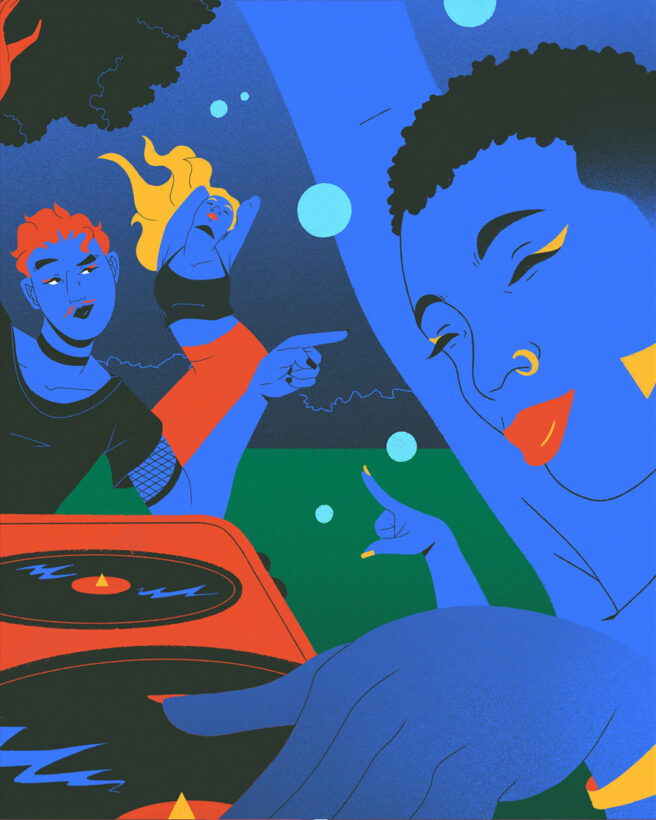
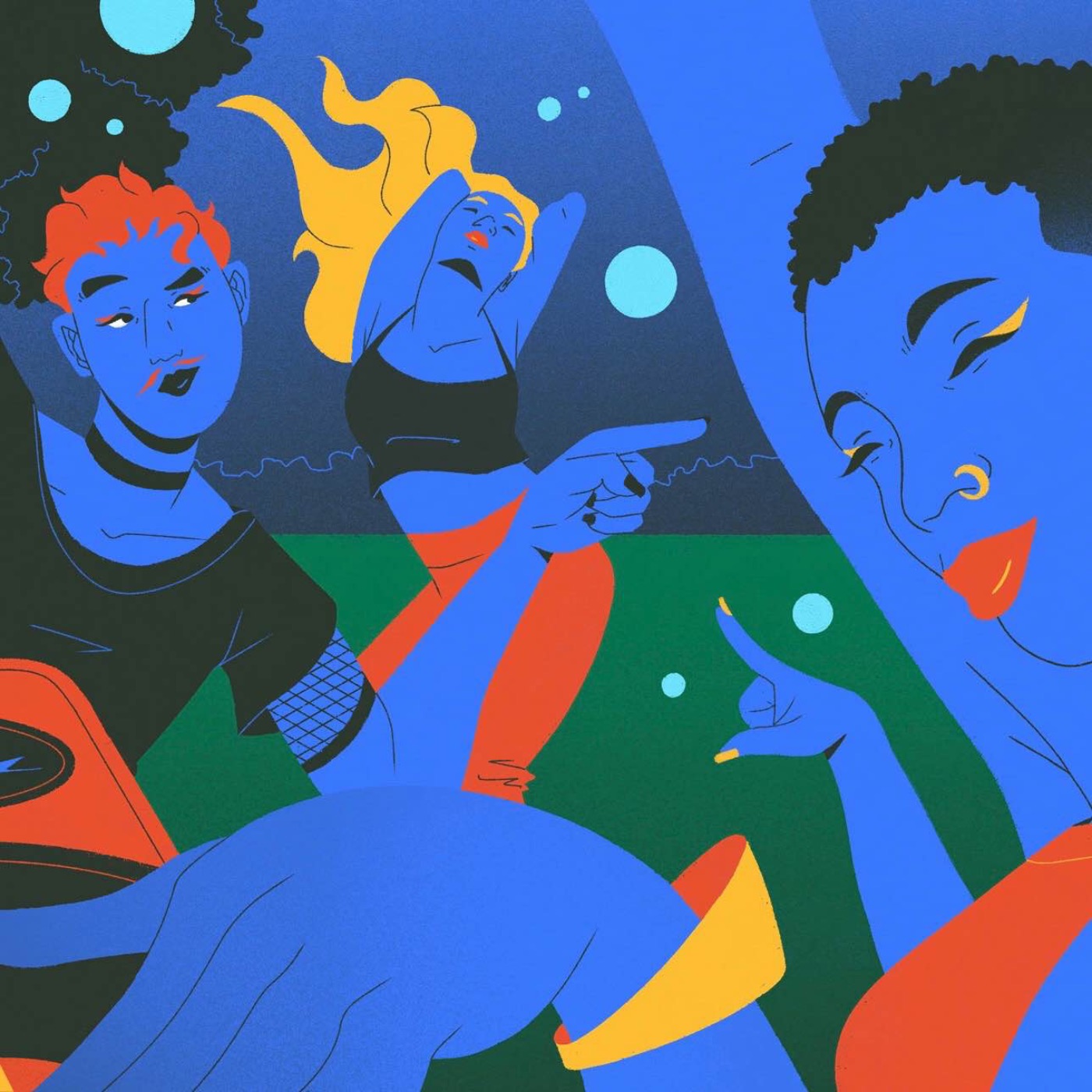
My name is Thanushka Yakupitiyage and you are listening to A World With. In this episode, I want to explore a world with free public dance parties.
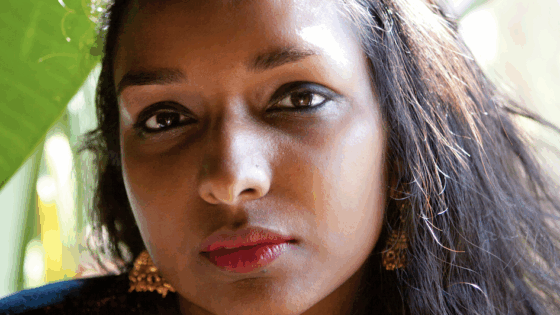
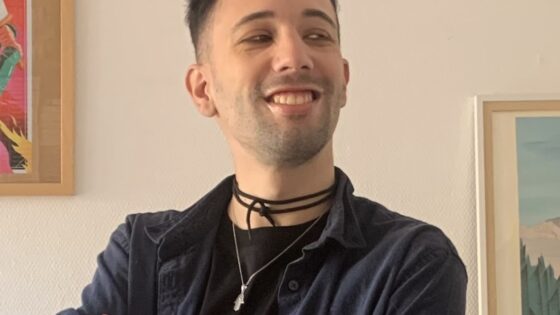
My friends call me Thanu. and my artist name is Ushka. I think of it as ‘Thanu’ by day and ‘Ushka’ by night. I'm of Sri Lankan origin. I grew up in the UK, Sri Lanka and Thailand, and I came to the US when I was 18 for university. I'm based in New York City where I am a climate justice and immigrant rights activist, a communications strategist and a resource mobiliser. I'm also an artist and DJ, and right now Arrebato Queer in Jackson Heights, Queens taking a quick break in between spinning some of my favourite tracks.
On our journey to liberation my contribution to the world is more free dance parties. I have chosen to add a world with free public dance parties because I've seen and experienced their impact firsthand.
Among the many things that New York City taught me was how to find joy through struggle and it was in dance parties that I found this in abundance. Since college, I've been a club kid and a dancer. I joke that some people go to church or temple to connect with higher powers. I go to the club.
I joke that some people go to church or temple to connect with higher powers. I go to the club.
When I graduated university and moved to New York City, I had no idea how hard it would be as an immigrant to build a sustainable life. I worked several jobs and this exposed me to the many issues that immigrants have to face – being paid below minimum wage, wage theft and constant fear of immigration status. That led me to focus on migration for my graduate studies and I moved into work at a nonprofit where I supported immigrants regardless of their status with access to education, healthcare, housing and everyday needs.
Trying to stop families from being separated and to shift anti-immigrant narratives is rewarding but not easy. It's also scary, especially when you're an immigrant yourself. So as a way of letting loose and for my mental health, I started seeking out music and nightlife spaces as a reprieve.
I was fascinated by how much different New York City communities had to offer and how they brought their roots and heritage into club spaces. It was almost an anthropological exploration of how DJs and producers were connecting to diaspora communities. These spaces made me realise that nightlife can be intentional explorations of culture. In a glance, a smile, a dance, a conversation, you can find connections on the dancefloor that are harder to find in daily life. For me, LGBTQ+ nightlife in New York felt liberatory. As a young queer South Asian, it allowed me to be all of my identities and be unapologetic about it. I've since run my own parties to bring communities together.
So what exactly are free dance parties and why am I adding them to the world? At their best they are free public spaces where communities can come together to dance and listen to music and I have chosen to add them to the world as a vehicle for creating greater joy, inclusion and connection.
Free public dance parties are not a new phenomenon. They have been a core part of history movements and liberation efforts forever. In the ’90s, Reclaim the Streets, a direct-action movement against corporate globalisation, drew heavily from UK rave culture, while anti-sectarianism demonstrations in Lebanon in 2019 saw all-night DIY raves hosted at protest sites and abandoned buildings across the country.
In 2024, trans rights activists in Washington D.C. in the U.S.held a vogue ball outside the Heritage Foundation, a right wing organisation. This dance party joined by dozens was a symbol of queer liberation against all odds and all hate.
So why is a world with free dance parties needed at this moment?
Since the COVID-19 pandemic, scientists have noted an increase in the “epidemic of loneliness.” This concerning rise in social isolation has been recognised by official bodies like the World Health Organisation as a major public health concern.
In 2023, the US Department of Health and Human Services released a report titled “Our Epidemic of Loneliness and Isolation.”
The report, which was the U.S. Surgeon General’s advisory on the Healing Effects of Social Connection and Community, says:
“Many of us felt lonely or isolated in a way we had never experienced before. We postponed or canceled meaningful life moments and celebrations like birthdays, graduations, and marriages. We experienced feelings of anxiety, stress, fear, sadness, grief, anger, and pain through the loss of these moments, rituals, celebrations, and relationships.”
In a world so focused on individualism and getting ahead - the dance party as an intentional space can help bridge a lot of the loneliness and lost feelings that people have and more importantly it can root them in the community.
In adrienne maree brown's postnationalism work, she challenges us to rethink the rules of activism and that investing in healing and happiness is critical in the struggle for change.
Movement is a form of therapy. Studies have proven that dance parties benefit mental health by releasing endorphins, which improve mood and reduce stress. For example, a journal published in Scientific Reports in 2022 confirms that music can be good for cognitive wellbeing and for releasing feelings of pleasure.
I believe that cities and towns should invest in culture and the arts for everyone. By investing in joyful spaces that are affordable, this can help set a tone for unity amongst people and increase multiracial solidarity.
What excites me so much about the possibilities of a world with free public dance parties is that I’ve seen it work!
So how do we build a world with more free public dance parties? Local governments can partner with local creators, DJs and artists to create events in public spaces. Accessible block parties could partner with community organisations to provide health care booths and free STD testing, legal information on housing and immigration, and more. This kind of environment rooted in care, and topped with amazing music and DJs, can help build community.
If every city in town invested in a Department of Cultural Affairs and a department of nightlife, we could utilise dance floors as a form of cultural shifting and community building.
What excites me so much about the possibilities of a world with free public dance parties is that I’ve seen it work!
Right now in New York and around the world, people are feeling a sense of hope that we can defeat fascism and tackle affordability - and that we can do this in a loving way that brings people together. Music and cultural spaces are a part of what helps make that possible which is a critical thing.
Free dance parties can help connect people, get them talking to each other, and help build a culture of care, which is a critical thing you need to solve a crisis of affordability. We would feel less lonely, our mental health would be better, our neighbours would feel more connected, and we would be more likely to help each other as a community.
Free dance parties can help connect people, get them talking to each other, and help build a culture of care.
Free public dance parties have the potential to build community and multiracial solidarity. Cultural shifts are what are needed in this moment and free public dance parties can help build a bigger “we” which can lead people to transforming and fighting for the needs of their community.
My name is Thanu and that’s what a world with free public dance parties would look like and feel like for me.
I can't wait to hear what else we'll add in the next season. Thanks for listening.
A World With is produced by Futures in Draft and Storythings.