
Power of Place is a personal essay series that explores the transformative power of places around the world and how they are being used by communities as sites of resistance and worldbuilding.
In this article spatial practitioner and artist, Amahra Spence discusses the impacts of dispossession and ‘regeneration’ on communities in Birmingham, and how Hood Futures is building spaces for connection, remembering and spatial justice.
I have a complicated relationship with my city. I love the people; our sense of humour; our stories; the ways our abundant cultures amalgamate to create their own distinct forms. But Birmingham is a place of paradoxes: on the one hand, the promise of renewal, investment, ‘regeneration’; on the other, the legacy of dispossession that persists in every quietly contested corner.
My story is rooted here. While my friends and peers left the city to pursue opportunities more readily available elsewhere, I made a political choice to stay, to attempt to build the things that so many of us longed for – community, spaces, opportunity. That choice comes at a cost.
I am someone who has seen neighbourhoods erased, communities unsettled and memory buried under the logic of profit. But I also carry forward a counter-practice, aimed at intervening in that erasure. Not by replicating reformist or patchwork solutions, but by contributing to infrastructures of repair: memory, sanctuary, hospitality, culture – rooted in my community’s dignity, self-determination and interdependence.
When I speak of my community, I speak of a context which has both place-based and diasporic dimensions. I speak as a Jamaican British woman living in the city of Birmingham, in communion with other racialised people, working class people, migrants or descendents of those moved, invited, seeking asylum or dispossessed in the UK within the legacies of Empire.
Birmingham is a place of paradoxes: on the one hand, the promise of renewal, investment, ‘regeneration’; on the other, the legacy of dispossession that persists in every quietly contested corner.
How urban policy manufactures loss
Dispossession is not an exceptional moment; it is a constant condition in cities structured by colonial, capitalist and racial orders. Within this, land title regimes that have come to shape the British geopolitical landscape, class system and subsequent economy are not neutral. They are layered by colonial seizure, racialised exclusion and ongoing dispossession.
The logic that treats land and housing as investment assets accelerates those layers of erasure. In England, social housing has been steadily hollowed out, replaced by models of “affordable housing” that remain tethered to market logic, cultivating a phenomenon of hyper-commodification.
This erosion is not only about homes. When Birmingham City Council issued its Section 114 notice in 2023, effectively admitting it could no longer balance its budget, the fallout accelerated the selling off of assets that have long sustained communities like mine. Buildings that held the health, vitality and prospects of our people – adult education centres, youth centres, libraries and community hubs – are being sold or shuttered to plug financial holes.
These were not just public services; they were anchors of memory and safety, places where we could learn, create, gather and dream futures beyond survival. Their loss compounds the violence of mass urban renewal schemes that strip us not only of our homes but of the social infrastructure that made those homes liveable and connected.
In Birmingham, the Ladywood regeneration is one of the most visible flashpoints of this dynamic. The plan proposes demolishing over 1,900 homes, affecting perhaps 6,000 people and building 7,500 new homes in their place – of which only around 1,000 are designated as affordable. According to community group Ladywood Unite, private builders Berkeley and the City Council’s own projections suggest that 30% of existing households (across tenures) may be displaced. That displacement is not framed as an anomaly; it is built into the scheme by the language of “viability” and profit margins, by reductions in promised affordable stock when cost pressures bite. Regeneration is gentrification dressed as renewal.
Dispossession isn’t just an eviction notice or a demolition plan; it’s a daily pressure that pushes working-class and Black communities to the edges of the city long before the cranes arrive.
Dispossession as constant, not rupture
Years ago, I was priced out of Ladywood, the neighbourhood that shaped my childhood. My home was not mine by legal title, but by years of care, neighbours’ greetings across fences, children growing up in shared gardens, the days of front doors left open.
Like so many others, I left not because I wanted to, but because of the engineered tenets of violence. Rising rents and the increasing criminalisation of racialised people made staying impossible.
That kind of exit is often described as a singular event – a rupture – but in truth, it’s part of a longer, grinding pattern. Dispossession isn’t just an eviction notice or a demolition plan; it’s a daily pressure that pushes working-class and Black communities to the edges of the city long before the cranes arrive.
And yet, my work now – returning to the B16 neighbourhood of Birmingham to build Hood Futures Studio – is part of my own reclamation. Hood Futures Studio is a spatial justice organisation, addressing the root causes of displacement and dispossession by building community infrastructures of radical hospitality, cultural memory and regenerative economics, rooted in collective dignity and thriving.
That is to say, we build infrastructure owned by the people, rooted in soul. Coming back isn’t nostalgia; it’s a deliberate act of repair. I am investing my skills, networks and imagination into a place that once felt closed to me. It’s a refusal of the logic that says once we’re pushed out, our ties are severed. For me, basing my practice here is a way of taking root again, on different terms.
Coming back isn’t nostalgia; it’s a deliberate act of repair.
Hood Futures Studio: intervening with infrastructures of possibility
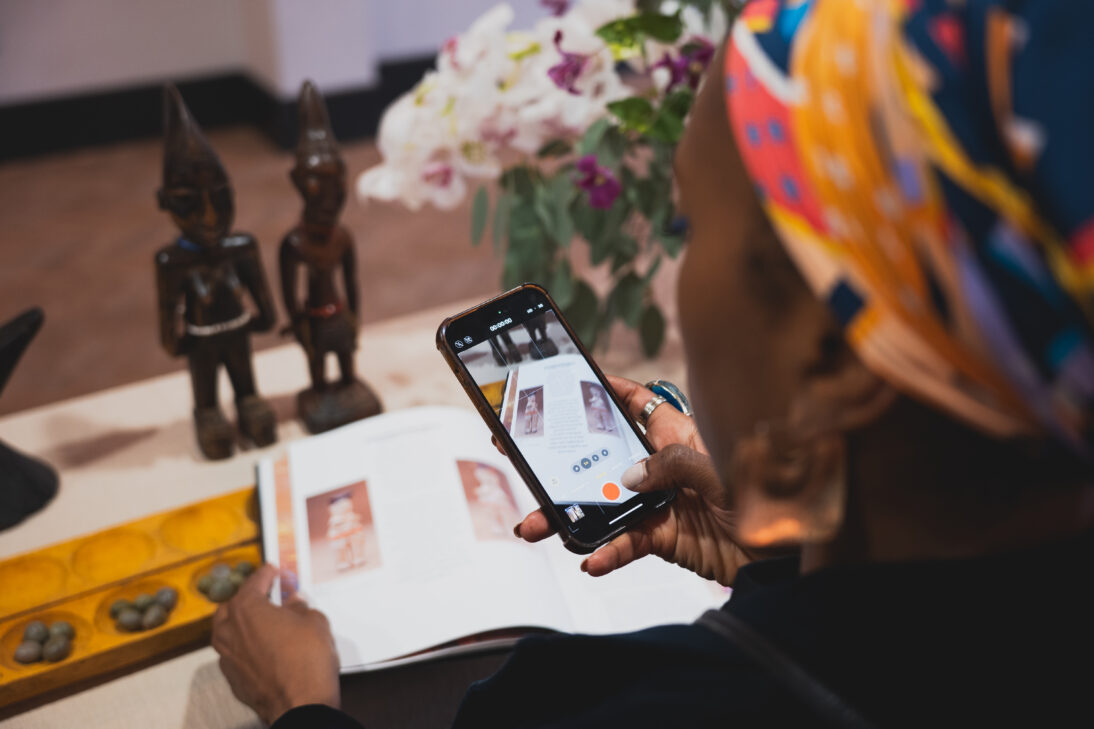
Hood Futures Studio is, first and always, a space I needed long before I knew how to name it. It grew from years of watching my community lose ground – literally and figuratively – and from my own longing for places that hold us with dignity, memory and possibility. What we’ve built is not a set of programmes but an ecosystem: a shared place where knowledge, care, culture and future-making are inseparable and where we materially practise the world we are trying to bring into being.
It is a space shaped by memory. When I think about the elders who raised us, the stories that guided us and the neighbourhood wisdom that kept us alive, I realise how much of our knowledge sits on the brink of erasure. Hood Futures became a place to change that. Here, we treat memory as infrastructure – something to be tended, protected and grown.
Whether through archives held in people’s front rooms, neighbourhood storytelling circles, or the alternative school we’re preparing to open, we’re creating a living commons of knowledge. It’s not simply about preserving history; it’s about orienting ourselves. In a landscape shaped by demolition and displacement, remembering becomes a political act – a way of navigating toward liberated futures using the strategies and survival lessons of those who came before us.
In a landscape shaped by demolition and displacement, remembering becomes a political act
It is also a sanctuary – a place held with the kind of care I first experienced in my Grandad’s home, where hospitality wasn’t an industry but a generational inheritance. A way of welcoming, rooted in love, refuge and responsibility.
That memory sits at the heart of ABUELOS, our vision for a hotel and cultural centre built from the ethics of radical hospitality rather than the logics of extraction. It’s there in the design plans for our land-based apothecary, where plant medicine, ecological healing and community care meet.
Culture as infrastructure, diaspora as practice
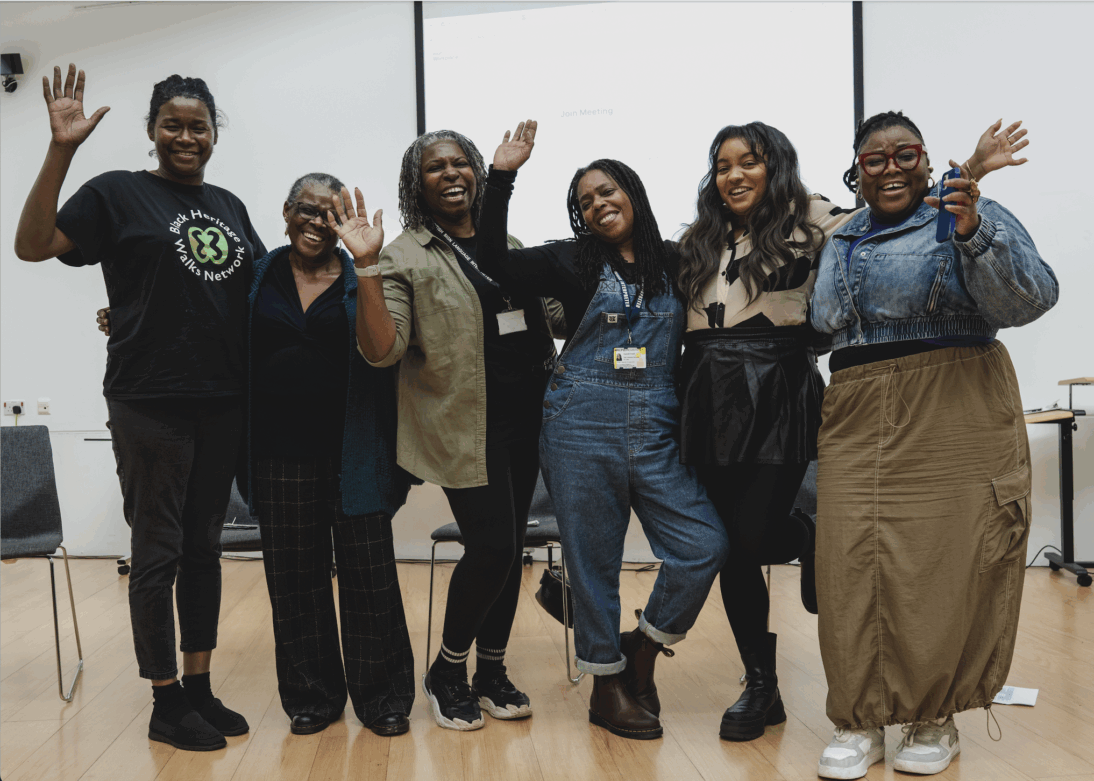
Hood Futures is a rehearsal for a different kind of infrastructure – one that understands belonging as a material practice. It is also a site of culture-making. Not culture as commodity or spectacle, but culture as the connective tissue of our futures.
Within these walls – and out in the streets, gardens and abandoned lots we reclaim – we create space for our community’s desires, griefs and visions to take form. Culture is not an output here; it is the infrastructure through which we articulate the futures we are walking toward.
And running through all of this is the understanding that our work sits in a larger diasporic story. Hood Futures is not only a Birmingham project; it is part of a wider constellation stretching across the Caribbean, the African continent from which we were displaced and every place shaped by the afterlives of empire.
The forces uprooting us here are entangled with those displacing our kin elsewhere. So our practice asks how value – cultural, economic, intellectual, spiritual – can flow across these geographies. How can the tools we build here fortify those over there? How can their innovations transform what we do in return?
In creating transnational channels of solidarity and care, we disrupt the isolation that colonial and capitalist logics rely on. We build futures where resilience is shared, where knowledge travels and where belonging is something we hold across oceans.
This is what Hood Futures Studio offers: a space where memory, care, culture and diasporic solidarity form the backbone of an emerging world. A space that shapes me as much as I shape it. A space where we practise the infrastructures our survival and joy require. A space modelling what it looks like to build futures from the ground we stand on – together.
Toward a transformative future
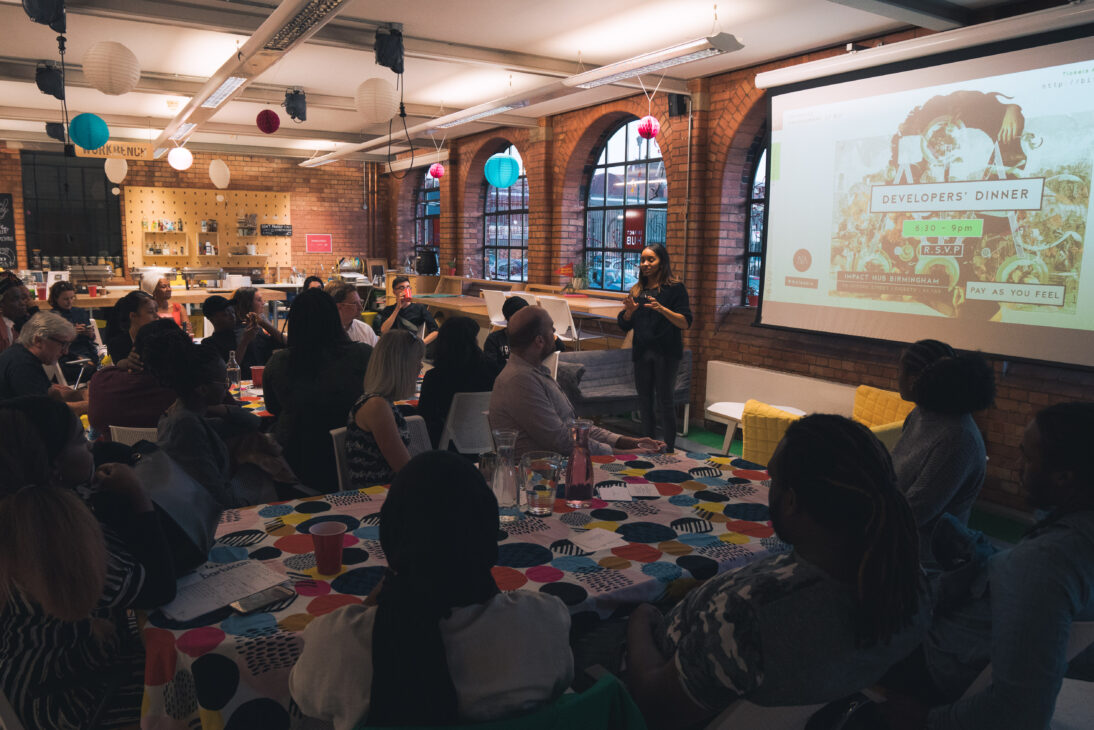
I recognise that the ability to build what we long for, instead of responding to what we’re fighting against is made possible because of the ecosystems I’m a part of, in which there are a range of approaches, each committed to thriving, community-centred futures.
It is clear to me that working beyond the existing frameworks of reform is necessary for these times. I do not believe conventional planning or corporate-led regeneration will deliver the futures we require. Instead, I believe real transformation emerges when people reclaim the ground — spatially and politically — through the co-creation of infrastructure for life, not profit.As I write this, a Conservative MP is making headlines for calling my neighbourhood a slum. Beneath the veil imposed by government-led austerity, neglect and disparity by design, lies another place — one not defined by displacement, profit and erasure, but by dignity, belonging and thriving interdependence. The kind of future we need is already here, in fragments, in struggle, in presence. It’s time to get proximate. To get close. To recognise our interdependence. To be connected.