

Our Worldbuilding series connects the theory of systems change to the work being done on the ground.
During the interview with No More Exclusions (NME), Zahra Bei and I reflected on the enormous contributions of the late Melz Owusu to our movement’s capacity to dream. This article is dedicated to his legacy. Gone far too soon but eternally with us as an ancestor, and enduringly felt in the imaginaries and futures that they inspired! Àṣẹ!
What is the purpose of education? Schools, colleges, universities, they’re places we exchange and (re)create knowledge. That’s something I’ve always loved: as my nursery teacher said in my first ever school report, “Larissa is eager to share her knowledge and ideas”.
Over two decades later and the rest, as they say, is history. But why share knowledge? Why co-create ideas? This is a question that I’ve been posing to myself since October, when I began researching knowledge production in movement spaces.
I’ve been reflecting on the power of knowledge, and the (re)production of new imaginaries in helping us envision new worlds and will them into existence. I had the joy and privilege of speaking to three organisations doing just this. Though their theories of change are distinct, they share a vision for the world we need to build. A world that centres freedom, justice and solidarity.
Racism, ableism and securitisation in education
But why is a reimagination of education needed? It is no secret that mainstream education has long been exploited by the state to serve its own political ends. Securitisation is one such end. Through this process, the state codifies the idea that certain viewpoints or communities pose a threat to national security and uses this so-called threat as an excuse to ramp up security policies. You only have to look at the recent deployment of Prevent policies in UK schools, under the guise of ‘safeguarding’, which turns students into suspects, to see this.
Alongside this, school exclusion levels are at their highest since 2006 and we continue to see a correlative relationship between suspensions, exclusions and racism, ableism and the convergence of all of these.
In some areas, Black children are up to five times more likely to face exclusion. Disabled children, children of Pakistani and Bangladeshi descent, as well as children from Gypsy, Roma and Traveller backgrounds are also disproportionately likely to face exclusion. The stats make it clear that, in its current state, the education system is not reducing but reproducing oppression.
But when I honour the excitement of my inner child, that kid who loved to share knowledge and ideas, I know that we cannot accept this status quo as inevitable.
Reclaiming the purpose of education
As a doctoral student researching knowledge production in social movement spaces, I’ve been thinking deeply about how we, as practitioners, can reclaim the purpose of education and move towards an alternative system that is rooted in liberation. I don’t have all the answers, but I’ve been looking to spaces of non-hierarchal teaching to explore some of the ways this might be possible.
I’ve seen education thrive outside of formal structures: I’ve seen its sparks and possibilities.
For me, this has involved hosting a campaign advocating for free, accessible, lifelong and democratised education, where we hosted a walk out and teach-in to share tactics and skills. I am also part of a collective that co-created an imagination lab for Black and racialised folks to come together to learn, connect and dream.
Through this exploration, I’ve seen education thrive outside of formal structures: I’ve seen its sparks and possibilities.
Introducing three organisations dedicated to education as the practice of freedom
As someone who has held space for imaginative exploration, I’m particularly excited by the idea of a future where we can design spaces that breathe life into what Paulo Freire and bell hooks term ‘education as the practice of freedom’.
In this transgressive approach to education, in lieu of the current banking model that treats students as passive depositories, critical consciousness is fostered and collective power is emphasised. Rather than hierarchies between students and teachers, each recognises the other’s agency in making change.
I often return to Freire and hooks’ work to imagine a world where we build new, community-led spaces for teaching, learning and knowledge exchange of all sorts – sharing everything from practical skills to community history. But these are not utopian ideas that lie in the distant future – the work to build these futures is being modelled by organisations as we speak; and can be seen clearly in the work of all three organisations featured in this piece.
I spoke to Zahra, J, Ro, and Francesca on behalf of No More Exclusions (NME), a Black-led community coalition based in London seeking to transform the current education system with an abolitionist lens.
I also learned from four education transformation experts at Rekindle, a Manchester-based youth-led supplementary school that 11-14 year olds can opt in to attend from 5-9pm after school. Rekindle models alternative forms of education with a goal to shift the norms in the system. I met with two young leaders known as youth pioneers, Annalyse and Eli; Cara Kennedy, a former youth pioneer who is now Community & Partnerships Lead, and Ruth Ibegbuna, Rekindle’s Founder and CEO.
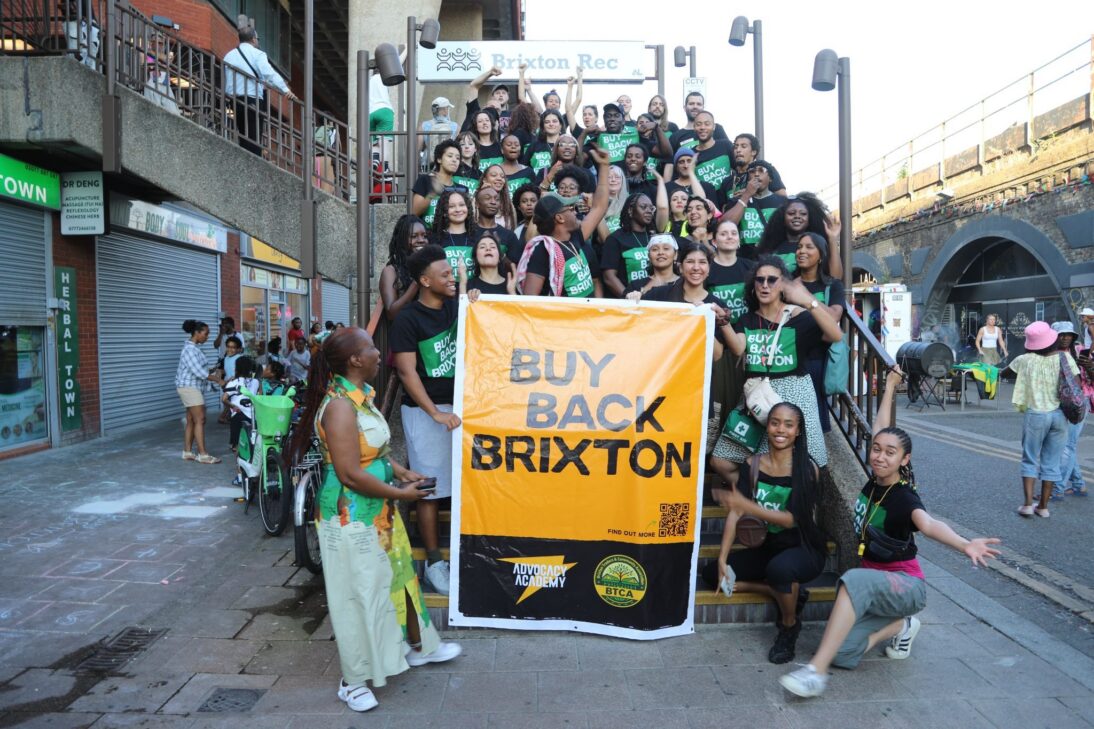
Last, but certainly not least, I had a call with Imane Maghrani, an Associate Director at The Advocacy Academy (TAA): a Brixton-based space for learning that is separate to the system entirely, and intentionally so.
Each of these conversations explored these changemakers’ respective visions for how transgressive education is reshaping imaginaries and strengthening our capacity to build anew.
Undoing harm of, and fostering healing from, mainstream education
A key takeaway from these conversations was that building new worlds starts with liberated minds. And, in their own ways, NME, TAA and Rekindle are each undoing the harm of traditional education as part of that journey to liberation.
I learned that at Rekindle students can opt in to attend their after-school sessions. This fact alone makes Rekindle compelling: young people are choosing to attend these after a full day of school.
Why? They are yearning for a place to reflect on the things that the mainstream classroom doesn’t hold space for. In the churn of an overstretched curriculum, I’ve repeatedly heard from students in secondary schools, colleges and universities across all corners of the UK, that they rarely have the opportunity to give their honest opinions and reflect on the parts of the education system that they would like to change. Nor are they afforded the time to reflect outwards, bringing up what they hear in the news, how they feel about it and interrogating what they would like to change about the world around them.
When I chat to CEO of Rekindle, Ruth Ibegbuna, she insists that children have constructive views about the type of education they want and need, and the topics that are important to them, saying “they want to talk about Gaza, trans rights, immigration”.
Preventing spaces for these conversations to happen and ignoring the ways that these issues impact children and young people, stifles their voices and their sense of agency. I learned that for Rekindle, it isn’t about dwelling in the overwhelm of how much needs to change, but instead we need to support young people as agents of change in reimagining education.
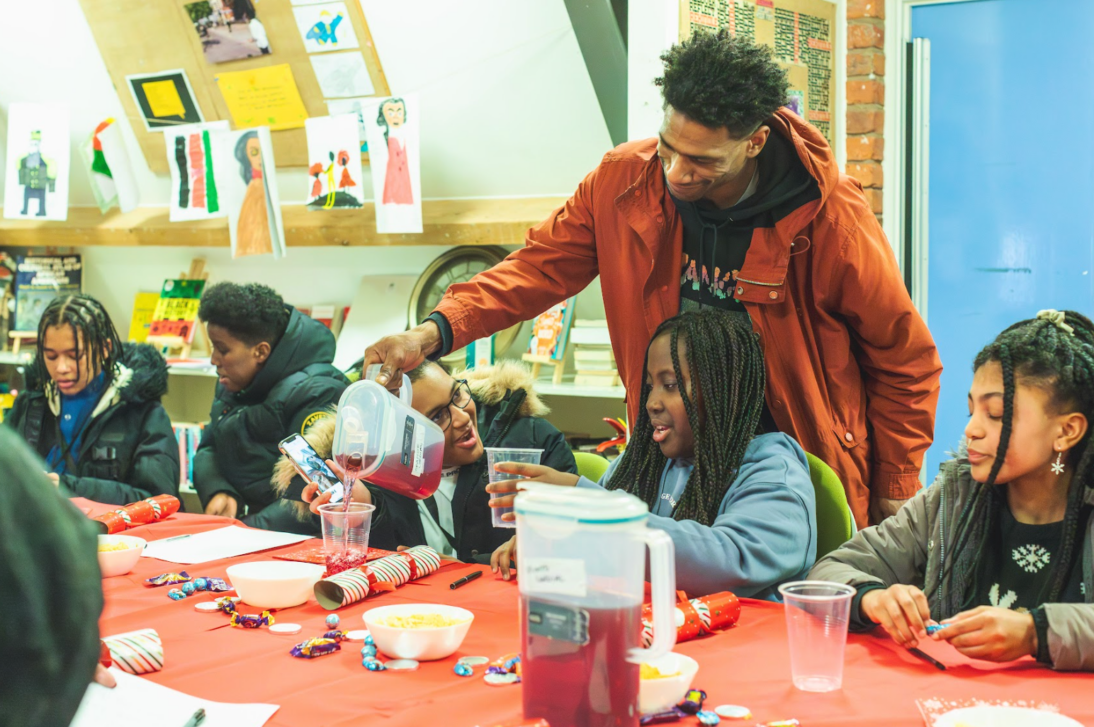
By centring agency, Rekindle is working to redress the harm caused by the state’s assumption that young people are empty vessels who have no knowledge of their own, and need to be filled with pre-determined ideas. Rather, they’re modelling the alternative. We desperately need this because, in the absence of agency, we forget how important it is to show up for one another, and we lose sight of our collective power.
In parallel, Rekindle is about healing too. Speaking to me about the Rekindle Educational Commons, a space to share resources and suggest strategies about the future of education, Ruth told me the story of a then-17-year-old, Sadhana (who is now a trustee for the organisation). At just 17, she worked alongside Goldsmiths University and led research on a report about how often students experience joy in mainstream schooling.
Rekindle’s youth-led reports are used to influence mainstream teaching practice on topics from youth voice to care, belonging to policing of language. One of Rekindle’s youth researchers, Mel, wrote a report on embedding care institutionally. When challenges arise in the classroom, the education system as we know it often centres punishment and order. This report proposed alternative de-escalation practices that interrogate the reasons behind disruptive behaviour. Mel explained that punitive responses like shame and exclusion “only serve to shut down any form of conflict, and restore order to the space […] De-escalation practices may be more time consuming, though always more rewarding in the longterm.” For young people who have experienced harm in mainstream education, being part of the change could form part of their healing journey.
In the absence of agency, we forget how important it is to show up for one another, and we lose sight of our collective power.
As youth pioneer from Rekindle, Annalyse, put it, “so many young people seem to lose a bit of themselves through the education system”. She went on to add that for many young people in school they “can’t really express who they truly want to be.”
I felt both mournful and hopeful as she shared this. Mournful for the pockets of personality that have been stripped away from these young people; yet still hopeful because I’m a firm believer that once you can name the way that mainstream education is shrinking you, collectively you can do something about it. And it’s why I believe that knowledge sharing is a fundamental stepping stone in the journey towards liberation.
A visceral response to the harm of exclusions
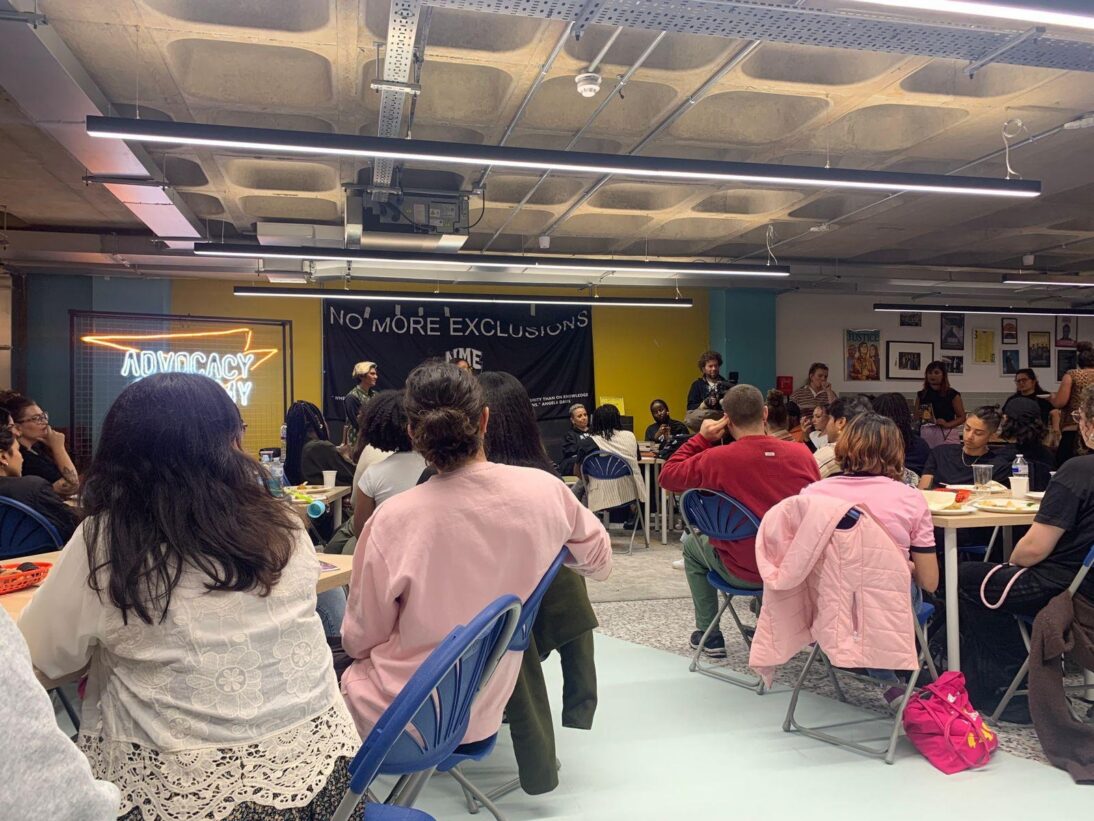
This dual reparative track of redressing harm and advancing healing was also evident in my conversation with No More Exclusions (NME). Zahra Bei, co-founder of NME, identifies as a “recovering teacher”, which she describes as being a lifelong journey and process of healing from the historical and ongoing harm that she witnessed from almost two decades in the education system.
During her time as a teacher, Zahra attended a conference on state racism, collusion and resistance, where speakers discussed a range of ways that structural racism impacts young people in schools, including the school to prison pipeline.
Zahra felt compelled to act, and asked fellow attendees: does anyone else feel like something should be done to disrupt the school to prison pipeline that was talked about earlier? “That day, 54 people got in a line to give me their phone number,” Zahra recalls. With that, NME began as a group chat of teachers, social workers, youth workers, lawyers and others who wanted to take action.
I’ve known Zahra and the work of NME for nearly six years and it has always felt like their organising is pulling from a bottomless well of both vision and steadfastness. As an abolitionist group that seeks to eradicate exclusions, they strike that tightrope balance of dreaming up the futures we often don’t dare to imagine, and executing the practical forwards movement that can get us there.
The art of imagination
NME’s origin story is incredible but not unique. So often, organising begins from a place of experiencing or witnessing harm in the world, and wanting to do something about it. Part of my dialogue with Imane at The Advocacy Academy (TAA) also dwelled on the relief that organising can bring us in a world where we face systemic harm. Speaking to TAA’s programming, Imane explained how an experiential, embodied approach to capacity building with young organisers can encourage them in a different way.
Sharing her insight, she insisted that young people come to TAA already holding knowledge about harmful systems from an emotional, somatic relationship to these systems; from lived experience; and, often, already with language to describe what they know and feel.
From this starting point, she describes her role as “connecting [this] to a bigger picture of systemic oppression, and giving young people the language to help do the analysis part.” Then, supporting them to turn the analysis into a vision for an alternative and designing impactful action that helps turn that dream into a reality.
Bringing to life what vision-building looks like in practice, Imane shared that she asks young people to dream: “What is the world as it should be? How does it feel? How does it smell? How does it taste? Let’s talk about it, write about it, paint it, do whatever to try and connect to the bigger vision.”
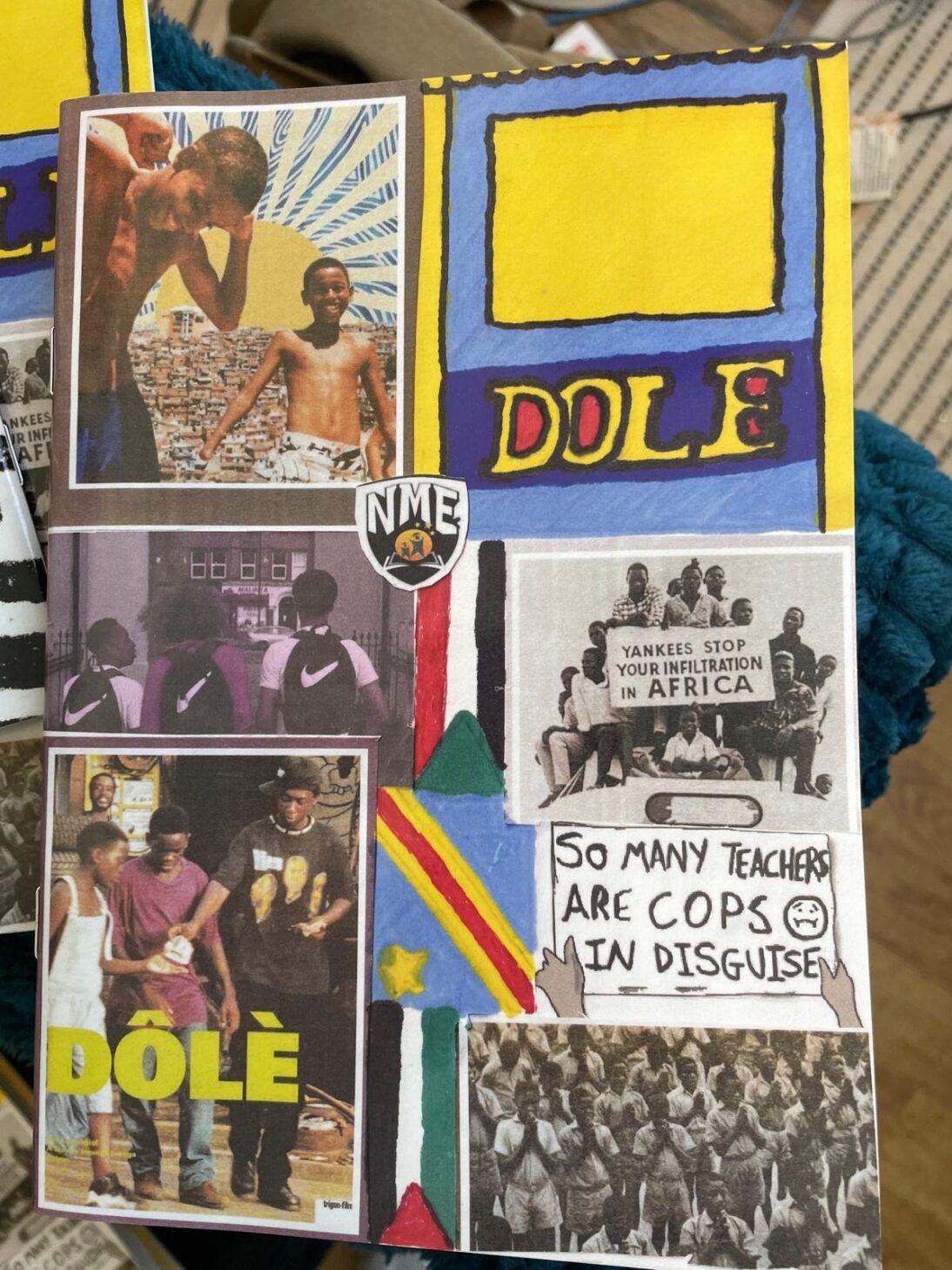
Leaning into the art of imagination, I found myself starting to imagine as Imane reeled these questions off. I could feel the grass under my palms and the sun on my back at an outdoor summertime knowledge exchange. I could hear the keyboards tapping away at a coding class where we learn to build community-level alternatives to big AI. We are creating in coalition with, and upholding the rights of, artists, authors, creators and inventors.
For all three, education is the practice of freeing us all to breathe more deeply.
I, too, believe that by dreaming, we can create a tangible shared vision that gives us hope even amidst the harm. Her poetic analogy of this was that “we’re all swimming in toxic water but, together, we can try to create these air bubbles where people can breathe. We can’t make the world free of harm, but we can try and have a better understanding of the systems we move within and how we might be able to minimise their impact.”
In their own lanes, I’ve come to see how Rekindle, NME and TAA are all creating these air bubbles, and expanding them an inch at a time. For all three, education is the practice of freeing us all to breathe more deeply.
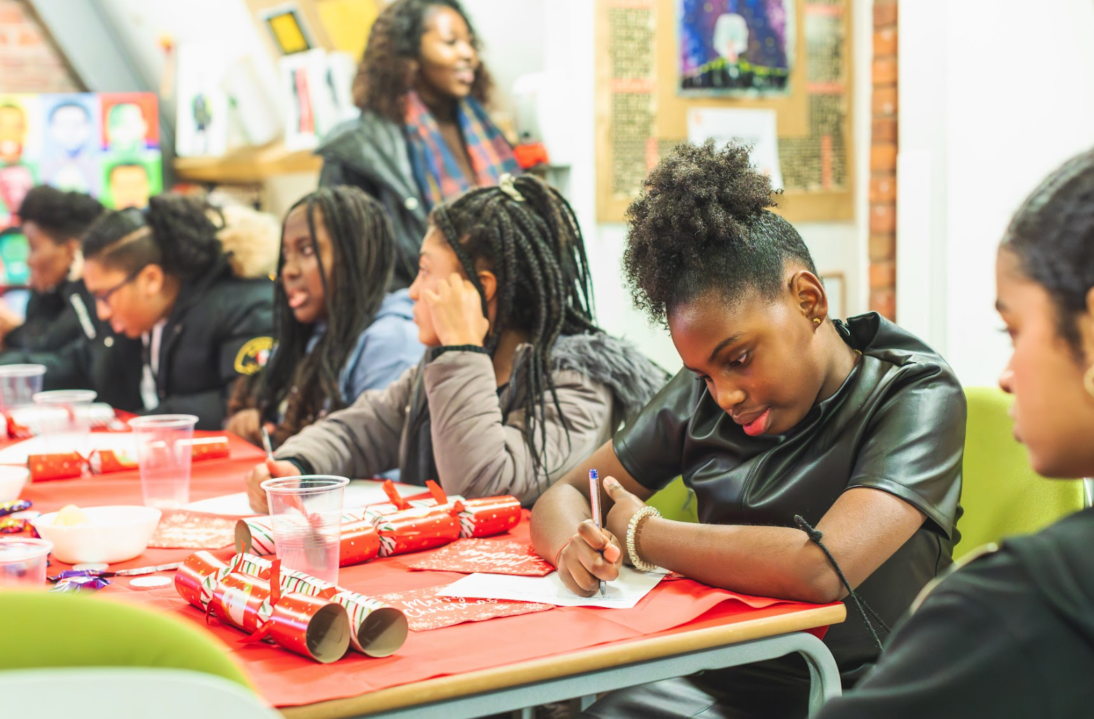
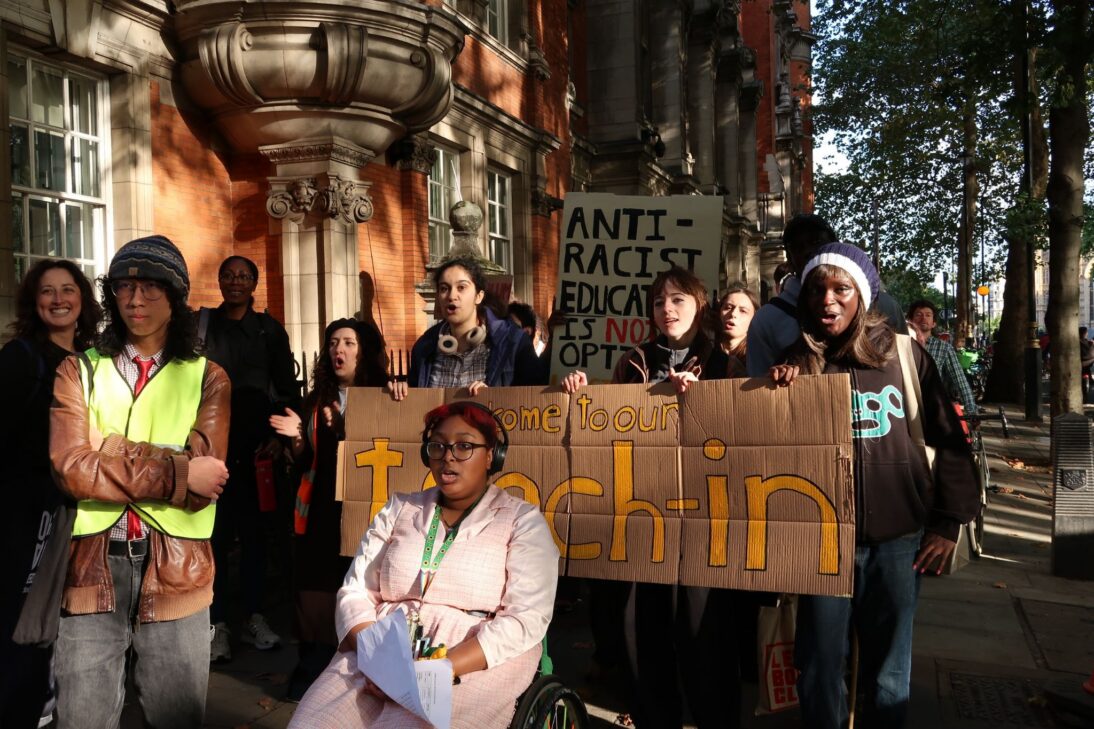
Building collective power across age and discipline
Through my conversations and learning from these bold imaginaries, I find myself reminded of how essential it is to partner with young people in this work.
From its very beginnings, Rekindle structurally embedded genuine youth leadership. Rekindle’s board is entirely made up of Black and brown young people aged 30 and under. Each school – in Manchester, London and Dundee – has a group of eight youth pioneers. Through these mechanisms, Rekindle builds legitimacy in practising what they preach. If young people can take the lead in the strategic development of their supplementary school, why couldn’t they do so with a mainstream school?
NME has also employed the technique of raising critical consciousness and, then, co-creating alternatives. Just last year, NME launched the Abolitionist Alternatives to Exclusions Guide, which J, one of the co-founders of NME, described as “a bad boy piece of work.”
Having read it, I’m inclined to agree. After many years of holding space for knowledge exchange around exclusion abolition, and building solidarity between students, educators, parents and elders, NME embarked on a three-year process of co-developing tangible alternatives. These culminated in a resource that J explained “helps bridge the gaps in between reality and the world we seek to build.” No longer can the abolition of exclusions be seen as a theoretical ideal; it is a future being willed into existence.
That future without exclusions forms part of a broader, more expansive future that NME, TAA and Rekindle are all working towards. A future where what we learn, teach and share reminds us that – at every age and in every discipline – we can engage critically with the world around us to ask difficult questions and to be part of developing the world we want to see. That’s why I’m researching knowledge production in movements: I want to better understand what the ‘aha’ moments are in building a sense of agency.
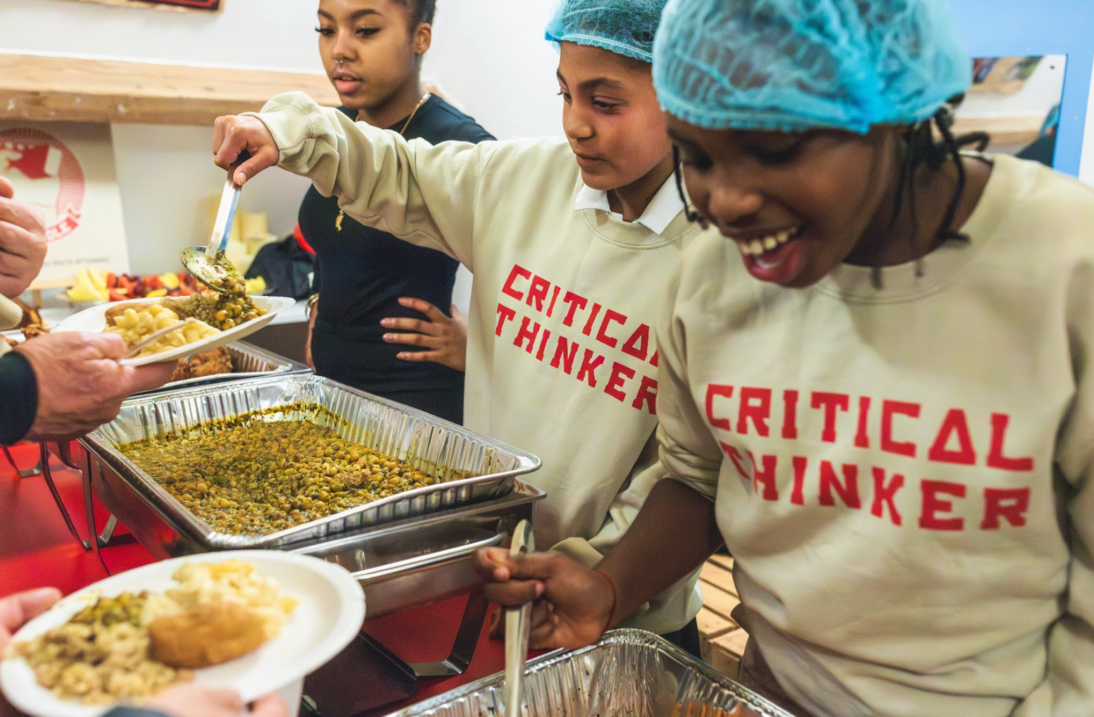
Where do we go from here?
In my conversations I’ve learned how these organisations are charting a journey that would see us abolish harmful education systems, and rebuild spaces of teaching, learning and knowledge exchange. Instead of using education to control or conquer, they’d be rooted in critical consciousness, enabling the spaces themselves to be genuinely youth and community-led, and supporting learners as agents of change in the broader world beyond.
These different journeys, though ultimately delivering the same vision, remind me that plurality of approach is such an advantage of transgressive work. We are not bound by a system or an institution. Our skills, ideas and dreams lead us to build different roads of the map towards a world where liberated education isn’t even transgressive but, rather, the norm.
So, perhaps, that answers the question of what education’s purpose is: it is not singular, it is to foster inclusion, agency and power; to nurture, care and support.
Though that world is quite far away, each organisation has short and medium-term goals in mind as they lay the stepping stones of that road ahead.
Talking about a social shift, Zahra shared that even if the law hasn’t yet changed, exclusions should become “unthinkable”. This means making true inclusion a reality – beyond a buzzword. TAA are branching out beyond their Brixton stomping ground to support youth-led movement infrastructure across the UK. Ruth said that Rekindle will continue to “test and refine” their model, and eventually push for a Rekindle hub in every school; a space where students will be cared for, loved, nurtured and supported.
So, perhaps, that answers the question of what education’s purpose is: it is not singular, it is to foster inclusion, agency and power; to nurture, care and support. That sounds like an education system to be proud of.