Power of Place is a personal essay series that explores the transformative power of places around the world and how they are being used by communities as sites of resistance and worldbuilding.
It’s the place where I ran my first 10km race; where I strolled daily while my first baby napped in her sling. It’s the place where I fell in love with Studio McGuire’s holographic mermaids; where I sit and watch the ducklings on the floating wetland; where my kids ride their bikes and eat ice creams. It’s the place I love to swim on a wintery Sunday morning; and where I got my first job in Bristol.
It’s also the place that played a significant role in the Maafa (Swahili for “Great disaster”, referring to the African Holocaust) and hit international headlines for the toppling of Edward Colson’s statue; the place that is at risk of flooding; where many people who are experiencing homelessness seek rest; and the place full of concrete and hard edges where temperatures are rising and biodiversity is falling.
Bristol’s Harbourside, at the centre of the city, was once home to a seasonally grazed wetland. But, the expansion of the docks in the 1240’s saw Bristol become one of Britain’s most important urban centres. In 1890, the Floating Harbour was created along with the transit sheds that connected international trade to Bristol.
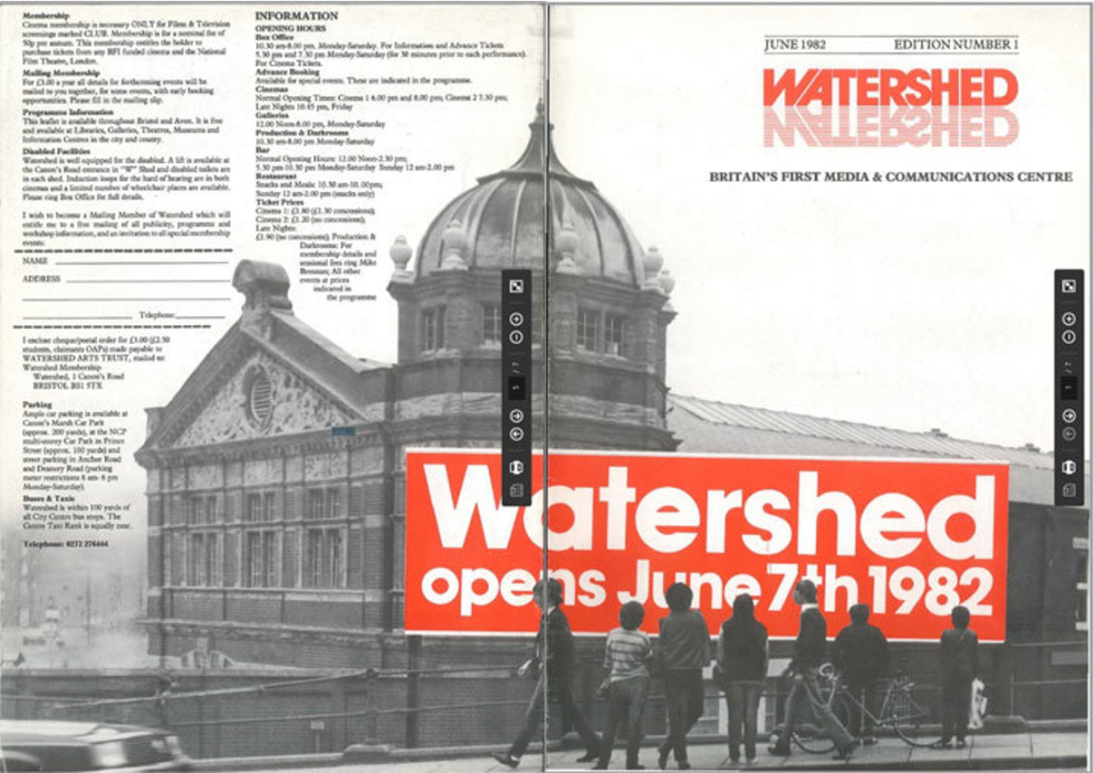
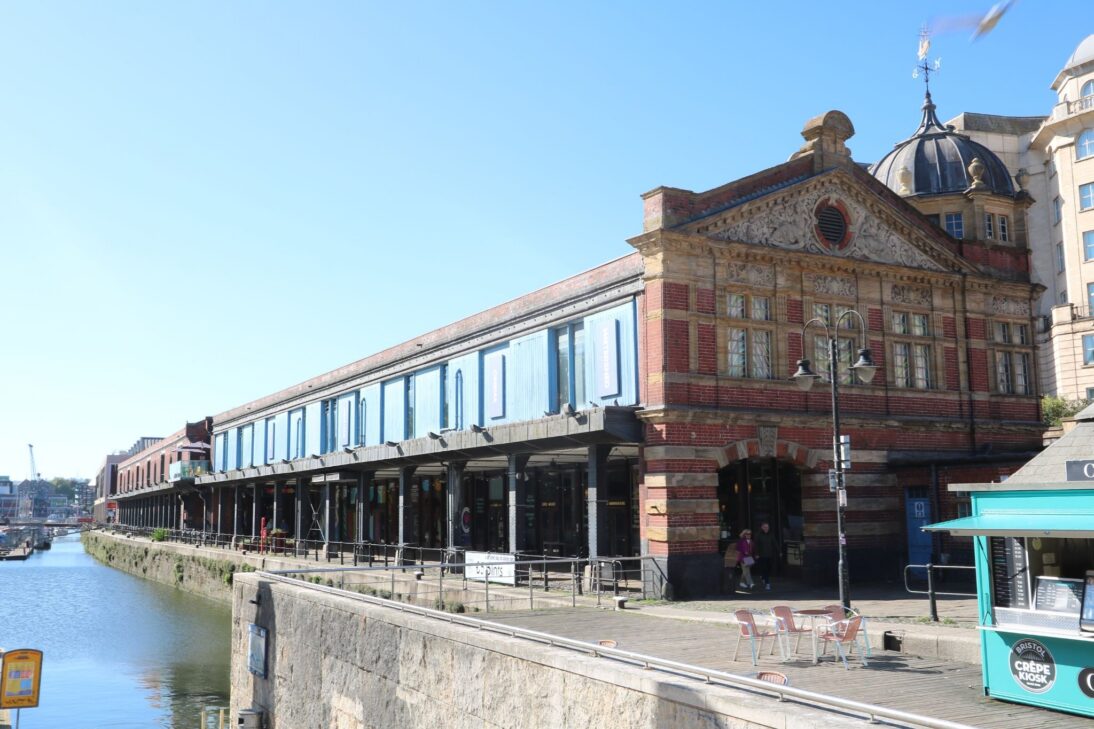
Following the end of commercial shipping in the port, the harbour was adapted and slowly redeveloped into what we know today. In 1982, Watershed opened in two Victorian goods sheds – W Shed and E Shed – at the gateway to the Harbourside, it became the UK’s first media centre.
Watershed Wild and Generous
Today, Watershed is a cultural organisation and its currency is storytelling and technology. It’s a place for ideas, for hope and creativity.
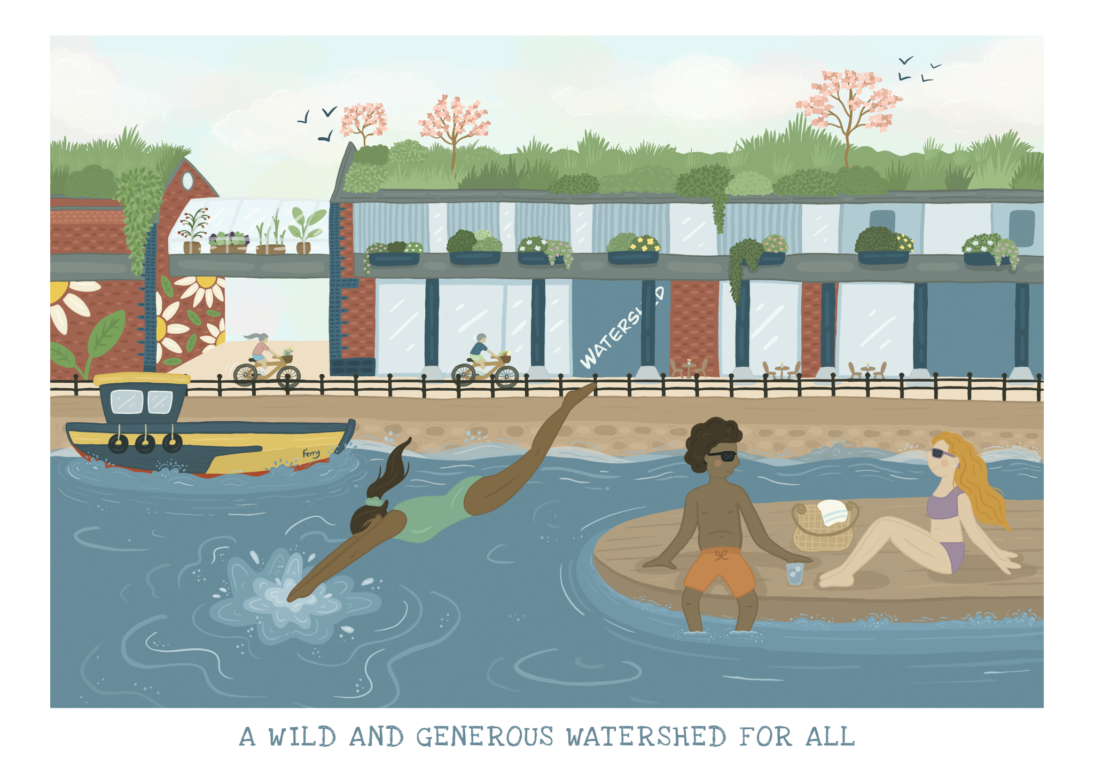
Since first joining Watershed in 2014, it’s become my second home. I returned last year as Co-Director of Regenerative Futures to co-lead Watershed Wild and Generous – a bold and ambitious plan to secure our business model and grow our impact for the next 100 years by centring regeneration, stewardship and equity.
Watershed’s buildings present substantial environmental, operational and maintenance challenges, with several elements reaching the end of their life. The most urgent priority is the repair and retrofit of our buildings. However, our vision is of a place-led redevelopment that balances the changing needs of our organisation with adapting to the impacts of the climate and ecological crisis.
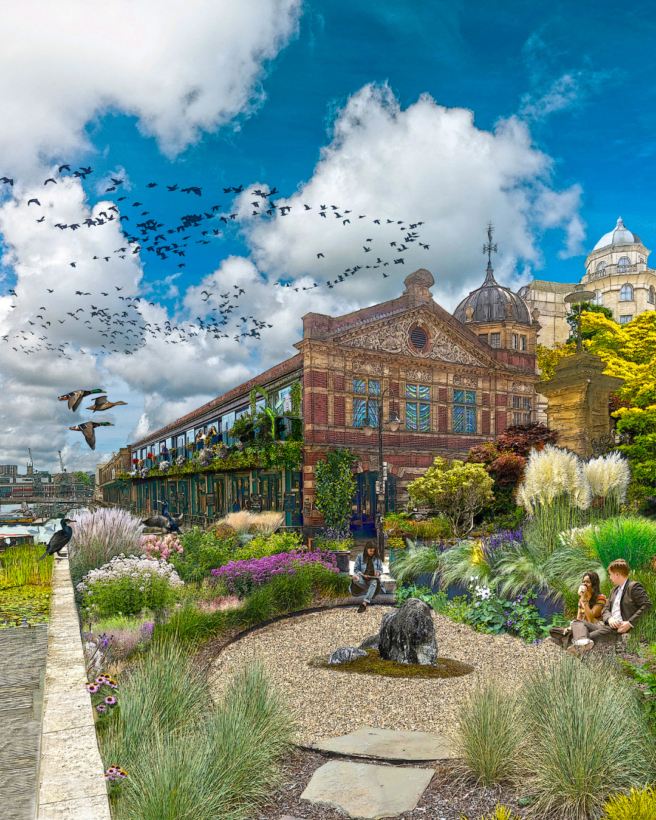
Walking around Watershed today, the surfaces are hard and the streets are dirty and configured for cars. There is not much to encourage you to linger. We envision a building wrapped in nature – the public spaces reconnected to the marshland of its past. We imagine sponge-like surfaces that soak up the water run-off of the city and give life to our planting – which in turn improves the water quality of the harbour around us. We imagine nature-rich co-habitats with abundant shade and resting places for humans and more than humans.
We are exploring what it means to steward a cultural venue over a century, not a decade. Focusing on regenerative, non-extractive approaches to development and collaboration rooted in care.
Realities of the present
In Bristol, we are facing rising water levels and extreme temperatures, and biodiversity is under threat. We’re in a cost-of-living crisis, a mental health crisis, a time of rising xenophobia and extremism, a climate and ecological crisis. In short, we’re living in a polycrisis.
This has caused tensions in the city between short-term economic priorities and long-term regeneration. We need to face them directly and reshape how we define value.
It’s impossible to realise the vision of ‘Watershed Wild and Generous’ in a silo. We need to embed collaboration into our processes at every step. And this collaboration needs to stretch beyond the norm and across species; bringing together ecologists, trees, artists, local councillors, birds, children, elders, water, construction workers and more.
What have we learned so far?
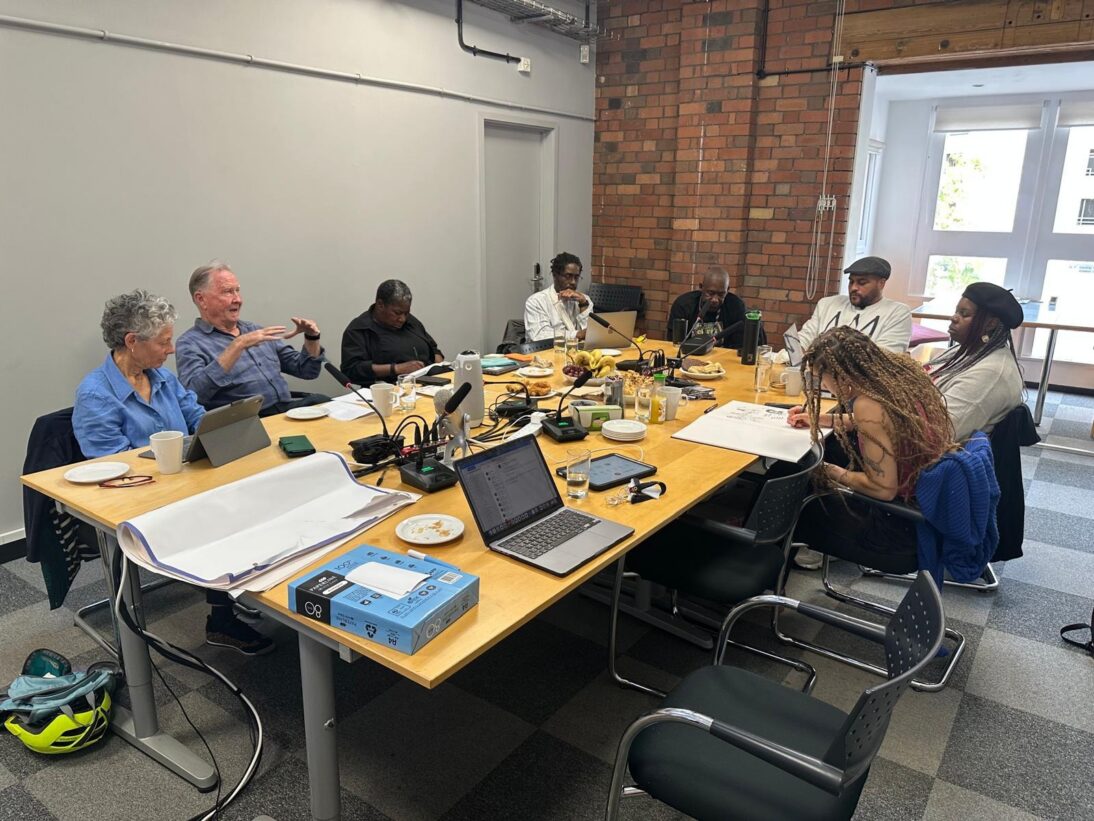
The concept of ‘Watershed Wild and Generous’ emerged through a series of expert community workshops in 2023.
We believe the world will want compelling stories, resting spaces, places to cool down, hopeful visions and togetherness. So our questions in these workshops were: How will we get there? And, what will the world need from a cultural venue in a climate crisis?
Since then, the project has developed and grown, but we’re still holding onto the initial ideas that emerged from the workshops. Over the last year, we’ve started with small acts of responsibility as we carefully and intentionally move towards stewardship. We’re starting with listening, observing and sharing.
One of our closest neighbours is the River Frome and we have been learning to listen to her. This began with a two-part walk in 2025 from her source to her mouth, seeking reconnection with a living waterway that runs through the heart of the city. Through this process we’re thinking about our role as storytellers and whether a reciprocal collaboration with the river will ever be truly possible.
We commissioned Professor Shawn Sobers to lead a research project exploring the historical trajectory, current networks and future possibilities of Black filmmaking. The resulting publication, Reframing the Frame, celebrates the creativity and resilience of Black filmmakers, curators and audiences who have shaped Bristol’s cultural landscape for over four decades. This is the first phase of a long-term project that will continue to centre collaboration, care and creative autonomy to ensure that Black film culture remains visible, valued and visionary.
We have also begun exploring what it means to include nature in our governance structures — not just as a principle, but as a legal and operational reality. As part of a cohort of charities led by Lawyers for Nature, we are learning about the philosophy and legal frameworks that underpin this idea, and what it could mean in practice for how we make decisions.
Alongside this, we have partnered with the Wildfowl and Wetlands Trust (WWT), to scope the possibilities for new urban wetlands around Canon’s Marsh. We’re considering sustainable drainage systems (SuDS) and rain gardens as practical interventions to improve local biodiversity, manage surface water and improve water quality in the harbour. We’re excited to explore what urban nature recovery might look like on our doorstep, and how we can make best use of natural systems to mitigate the impacts of climate change.
Finally, in collaboration with the West of England Nature Partnership, we have been convening local and national stakeholders across Canon’s Marsh to develop an ambitious plan for the area’s future — one that centres blue and green spaces. We know that stewardship is not a solo endeavour; it requires bringing many voices to the table and being willing to share both the vision and the responsibility.
What makes a good steward?
These small acts of responsibility are moving us towards the future we want to see. It’s a recognition that now is not the time for business as usual. Stewardship will only happen if we work in community with each other and with nature.
Bristol Harbourside has always been a place of movement: of goods, people, ideas, exploitation, resistance, arrival and departure. These stories and memories are woven into its fabric. Stewardship is about listening deeply and caring for those who are not cared for – humans and more than humans.
We also recognise the need to interrogate the meaning of ownership and management and who it serves. Ownership of a building, the land it sits on and the organisation that manages it. How do we reconfigure ourselves towards stewardship? How do we apply learnings from Indigenous People’s stewardship of the land? We need to iterate and fail openly.
These challenges are not exclusive to Bristol Harbourside. The questions ‘Watershed Wild and Generous’ is asking are universal. Many cities have a waterfront and a regeneration plan that centres economic growth but ignores the need for affordable new housing for local residents.
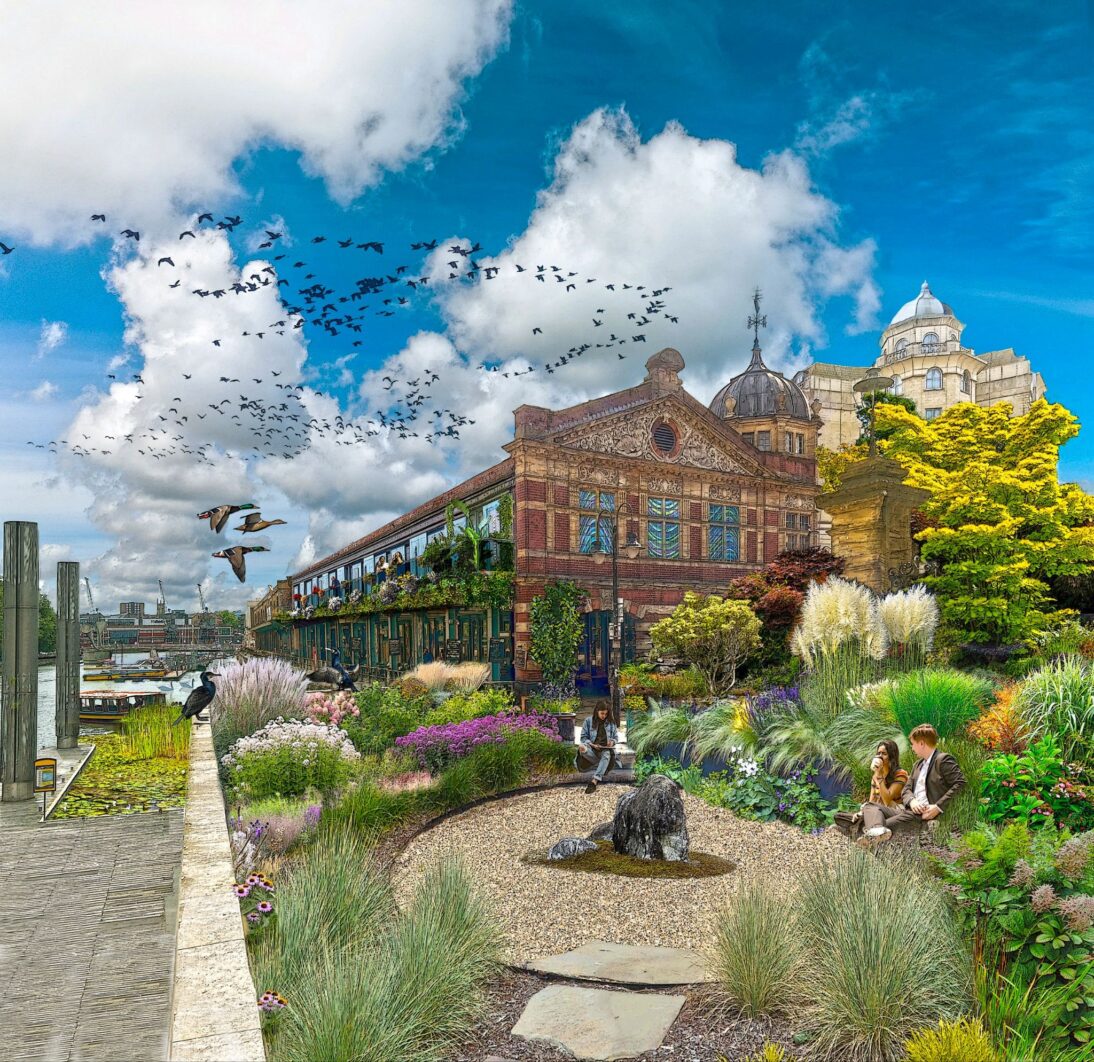
The future of Bristol Harbourside
Stewardship of a regenerative approach that centres humans and more than humans moves us away from unsustainable growth, defined by political cycles, and towards value measured in wellbeing. Where communities remain rooted and nature thrives, in a stabilised climate; and in culture and diversity that is uplifted and celebrated.
I think about the ducklings on the floating wetland, the child eating locally-made ice cream by the water, the swimmer on a cold Sunday morning and the running clubs tending the community vegetable gardens. For me, these are the things that make a place worth tending.
The future of Bristol Harbourside will be shaped by the choices we make about land, access, memory, ecology and responsibility. I hope the future will be shaped by repeated acts of care – by the people who love a place enough to ask not just what do we want here now, but who do we want to be here long after we are gone.