
Power of Place is a personal essay series that explores the transformative power of places around the world and how they are being used by communities as sites of resistance and worldbuilding.
Mitzi Jonelle Tan discusses how a plaza by the ocean in Manila has become the home of her family, community building and activism against corruption and climate injustices.
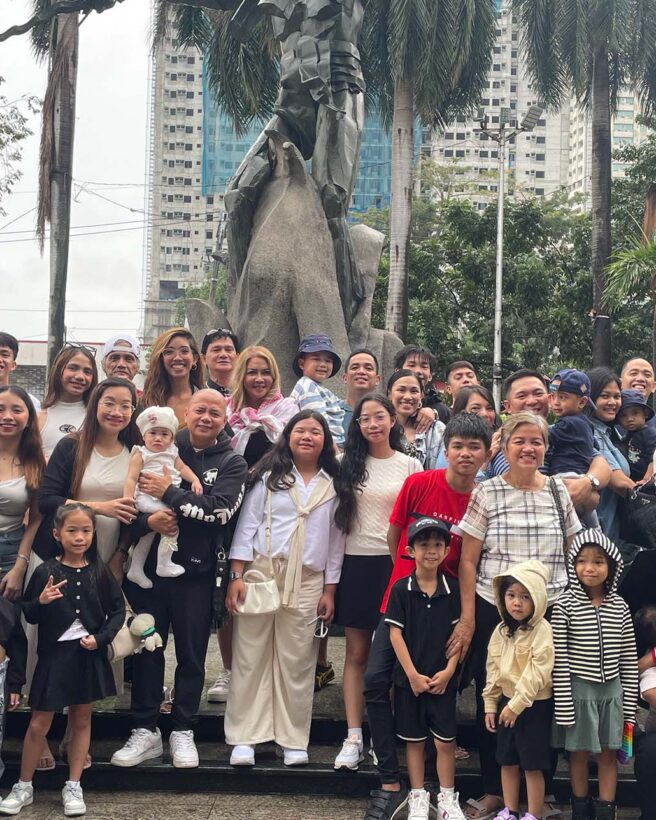
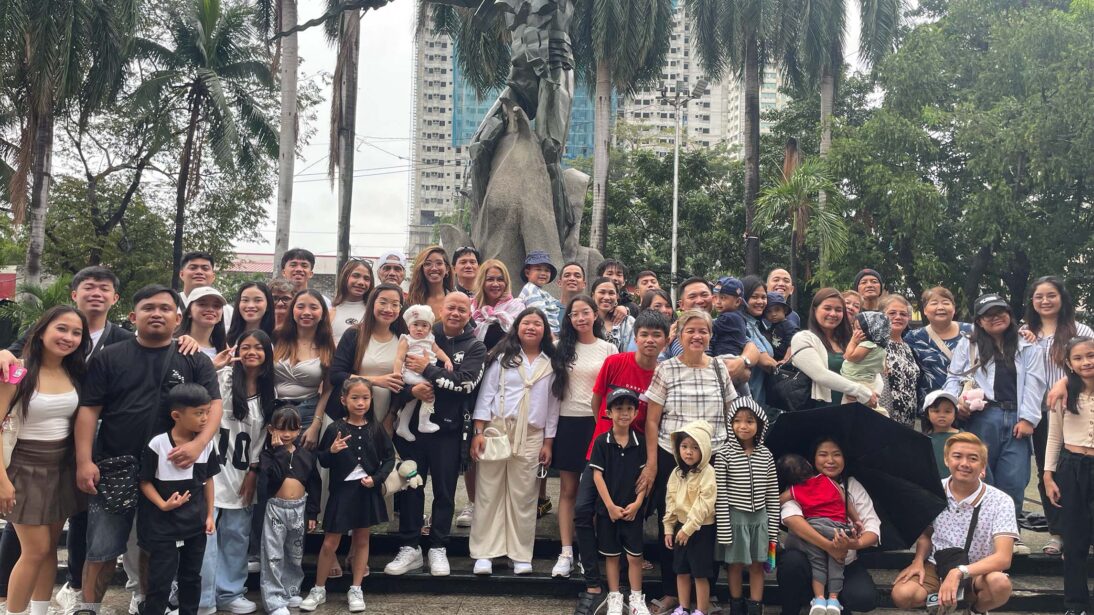
Every Christmas morning, for over 75 years, my family has gathered at Rajah Sulayman Plaza in Malate, Manila. After mass at the church beside it, we line up in front of the plaza’s statue to take a family photo.
My mother has eight siblings, so we’re a big family. It’s loud, chaotic and full of laughter. We call out each generation, elders hold each other’s arms, cousins, nieces and nephews shuffle into position: “One, two, three, smile!”
As the family grows, we start to overflow from the statue steps. My cousins joke that it’s now our generation’s turn to keep the tradition alive. But I smile and nod hesitantly, looking towards the sea.
Celebrating life and freedom after the war
When my grandparents unknowingly started the tradition, it was more than a photo – it was a celebration of life and, finally, after 381 years of colonisation, of freedom.
My grandparents fell in love during the US occupation of the Philippines and were separated during World War II. My grandfather had to fight and after surviving the brutal battles against colonial Japan, he looked for my grandmother, who had been sent to the provinces for refuge. When he found her, he asked her to marry him and they settled in Malate, in Manila; a place by the ocean, brimming with opportunities and possibilities.
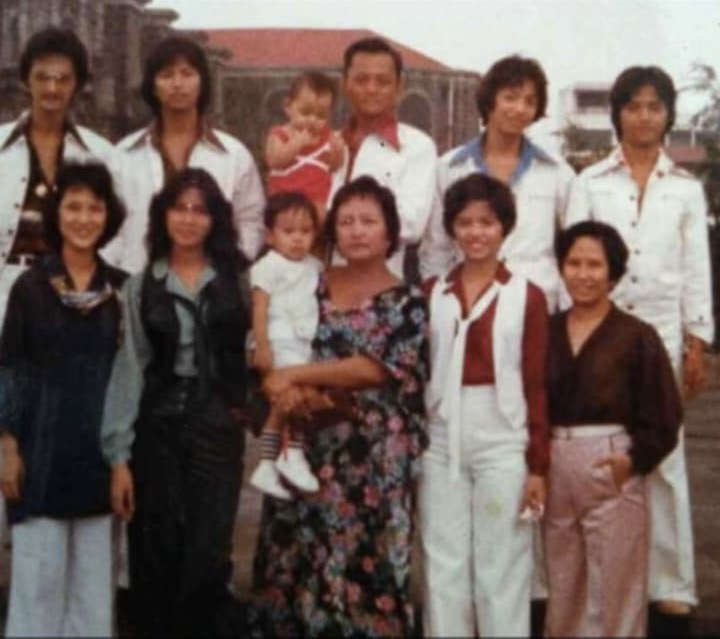
But Malate today is not what it was. My family lives in what is now a deprived urban area, often referred to as “slums”. It has narrow streets, where only two people can walk side by side, and homes squeezed together, stacked upwards.
Over the years, I’ve witnessed how much more violent and frequent typhoons have been, and the impact this has had on us and the city. Water surges in from the rain above, the groundwater below and the ocean surrounding us.
A recent study showed that in 30 years’ time, entire regions of the Philippines will be underwater because of sea level rise.
A recent study showed that in 30 years’ time, entire regions of the Philippines will be underwater because of sea level rise. One of these regions is the nation’s capital, Metro Manila. Zooming in on the projected map, I see the statue of Rajah Sulayman in Malate, turned into an island. I don’t have the heart to tell my cousins that our family tradition might not continue past our generation.
From joy to climate anxiety
As a kid, I loved playing in the rain. When the first droplets began to fall, I’d begin our rain dance, smiling and calling for more. Now, when the rain starts, I run inside and pray it doesn’t get heavier. My body tenses with climate anxiety and trauma, memories of flooded streets, strong waves, and overflowing rivers seeping in.
With the sea level rising slowly and steadily, and Manila already one of the densest cities in the world, I wonder where all the people will go. Will my area be deemed a necessary sacrifice zone for the government? Will they allow my streets to flood and overflow? My body tenses with climate anxiety and trauma.
The city estranged from its waterways
Malate, and Manila as a whole, didn’t always look like this. It was once a city in symbiosis and harmony with water, protected from the worst tidal waves by mangroves. The people living by Manila Bay speak Tagalog, which is short for taga-ilog or “from the river.” Manila is ‘Maynila’ in Tagalog, meaning ‘there are mangroves’.
Now though, we’re estranged. Geologist Mahar Lagmay explains that the reason why we are experiencing such extreme flooding is because water is still flowing from its original path – from rain to river to ocean. But, the Spanish colonisers paved over that path when they established Manila as the colonial capital. This was then worsened by the US and the Philippine governments who continued to urbanise the surrounding areas. They buried waterways beneath concrete and, in doing so, cut us off from our relationship with our water source.
Sinking streets and empty promises
In July 2025, Manila faced its worst flooding in years when, in a span of a few weeks, a monsoon and three typhoons devastated the city. People waded through chest-deep water with no proper warning system or support, only fear, false promises and haughty praise from our government for our “resilience.”
At the State of the Nation Address right after the series of typhoons, President Marcos Jr. talked about supporting evacuation centres and flood resilience, and that his administration has invested billions of pesos in flood control and adaptation projects. Yet new reports have shown that as much as PHP 1.089 trillion, supposedly for climate, has been stolen through corruption since 2023.
He also claims that they’ve suspended the reclamation projects to create new land, yet fisherfolk report that the dredging hasn’t stopped, adding to the issues. With his father being Marcos Sr., the Philippine dictator whose administration was plagued with heavy corruption and human rights violations, it is no wonder that the people’s money has been washed away along with homes and belongings, straight into the politicians’ pockets.
Where celebration meets resistance
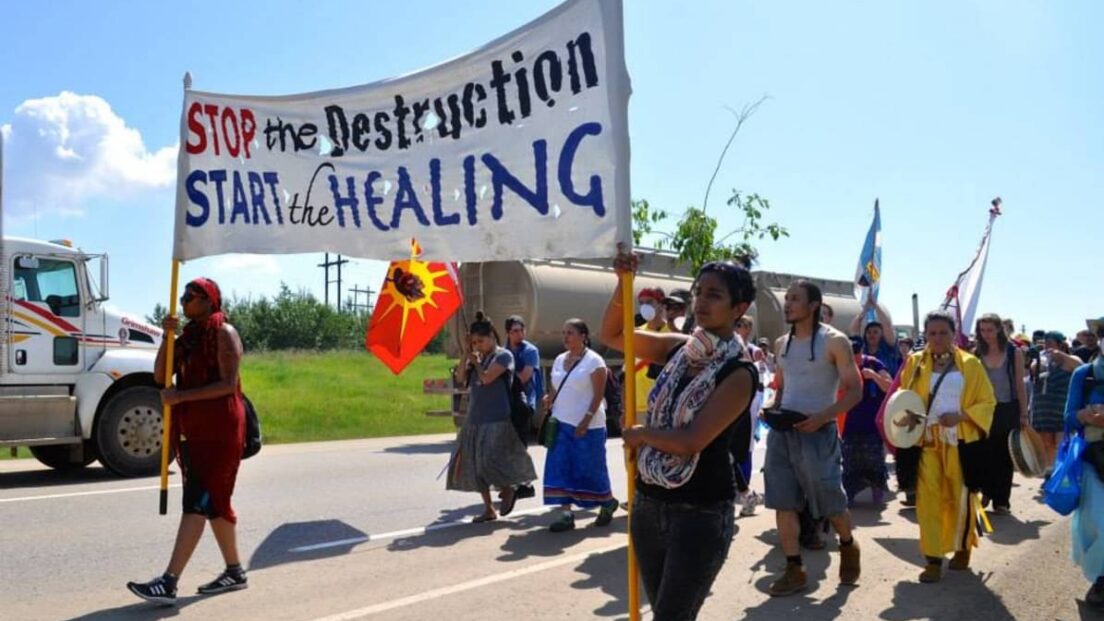
In response to this, I find myself at the same plaza where I celebrate Christmas with my family, now uniting with fisherfolk in anti-reclamation protests and climate strikes. Here we resist plans to bury the ocean for casinos and highways. We hold signs calling to “Save our Seas” and “Save our Sunset.”
Activists choose to gather here because of strategy and memory. It’s close enough to the centres of power to be heard and cherished enough to move people.
Public spaces are not just backdrops – they are vessels for transformation and containers for love and defiance. Our memories are tied to the physical spaces where they happen, and when what you love is under attack, when the ground that has held our joy and our grief is threatened, wouldn’t you do everything that you can to protect it?
Activists choose to gather here because of strategy and memory. It’s close enough to the centres of power to be heard and cherished enough to move people.
Returning to the memory of Maynila and its waters
Fisherfolk have long called for the protection of our oceans and rivers. They understand how dangerous water can be and how life-giving it is. I’ve seen how the ocean has taught them to lean on each other and work collectively.
The national federation of fisherfolk organisations, PAMALAKAYA, is testament to this. They’ve coordinated protests on their fishing boats across Manila Bay, led alliances with a range of environmentalists, scientists, human rights groups, and church leaders, held dialogues with the government, hosted youth and students in their communities and organised fishers’ markets to help sell produce sold directly by the fisherfolk.
It is through them that I have understood the need to live in harmony with each other and with our waters. What would it take to live in a city that doesn’t bury creeks and waterways under concrete once again? It is only through this rebalance and reciprocity of care, that we’d be able to reshape and transform into a place that is truly ‘may nilad’ and home once again to those from the river.
The ocean is rising now, and we must learn how to dive into her depths and ride her waves – towards change, towards a world where no one is designated to drown, towards joy, justice, and home.
To remember is to resist
Traditions anchored in these places, ours and the countless others in the Philippines and across the world, were created as refuge, as respite, to celebrate joy amid oppression and injustice. To celebrate is to honour this fight for freedom, to celebrate and remember is to continue our journey to liberation.
The ocean is rising now, and we must learn how to dive into her depths and ride her waves – towards change, towards a world where no one is designated to drown, towards joy, justice, and home.
Then maybe, just maybe, when I’m 60 years old, we will still be standing together in Rajah Sulayman Plaza. This time it’s my turn to be the elder in the centre, arms wrapped around each other, with big smiles at our ever-growing family.
And this moment won’t just represent a photo – it will be proof that we remembered and acted in time.