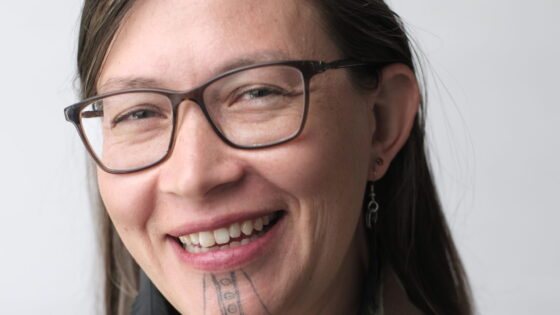
Power of Place is a personal essay series that explores the transformative power of places around the world and how they are being used by communities as sites of resistance and worldbuilding.
Land-based arts and the power of the communal for individual transformation
“When you are feeling lost outside or feeling lost inside, remember to listen to the quiet of the moon.”
— Ethel Kuutuq Burke
There is a time of year in my hometown when the sun does not rise.
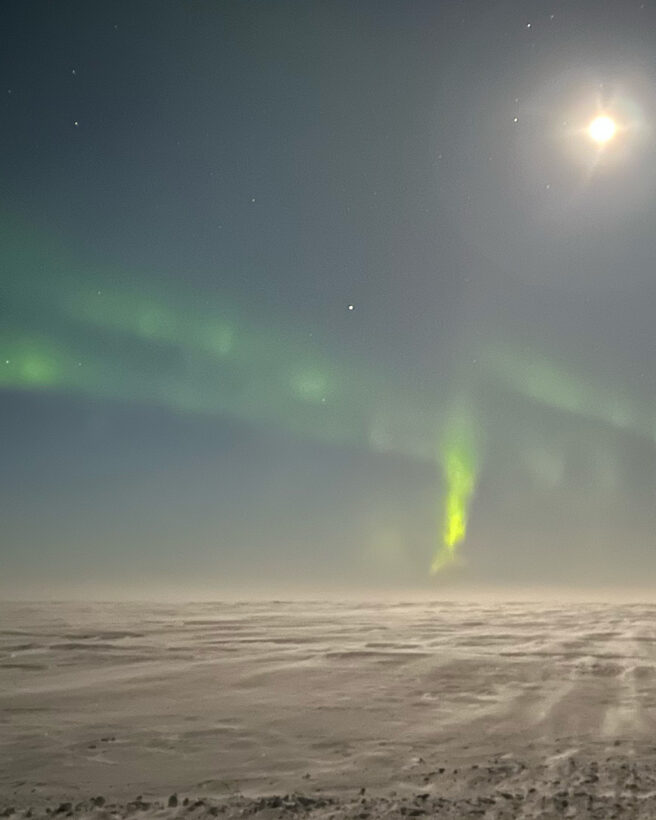
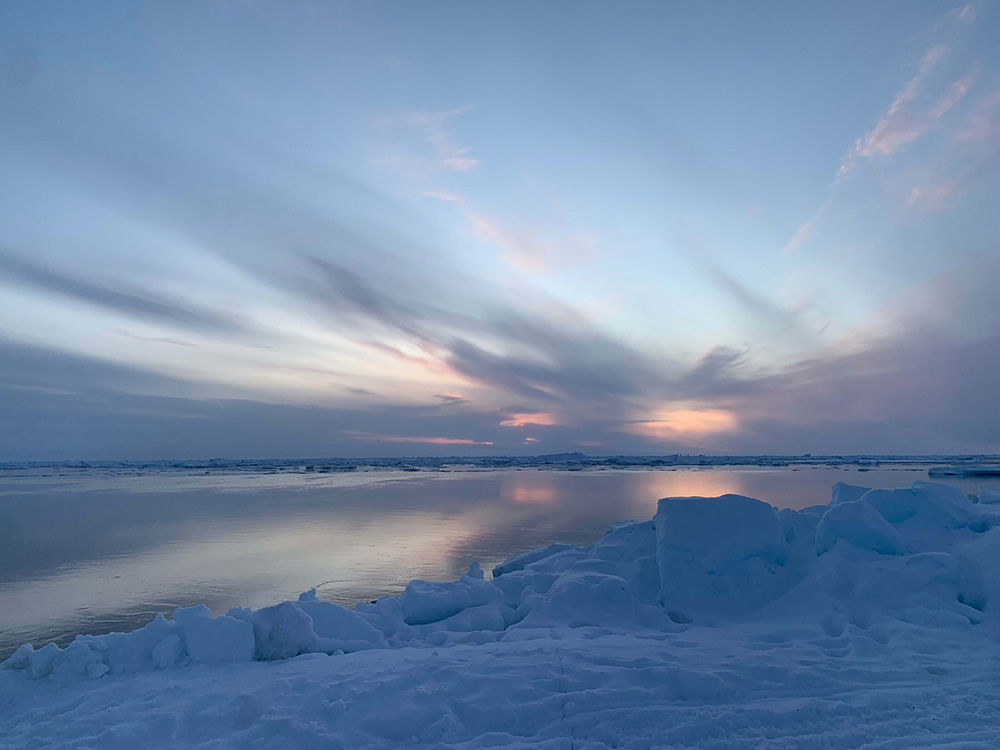
For 67 days, the Arctic night stretches itself around Utqiaġvik, Alaska, and the brightest light in the sky is the moon. There are no trees here, no mountains, no cityscapes to crowd the view. The sky is everything — an endless expanse that confronts you, humbles you, fills you.
These nights and the quiet stillness of winter often stir something deep inside me. A force so strong and undeniable that it reminds me of truths I know but cannot name, lessons I carry not from memory but from inheritance. They live somewhere between the marrow of my bones and the breath of the wind.
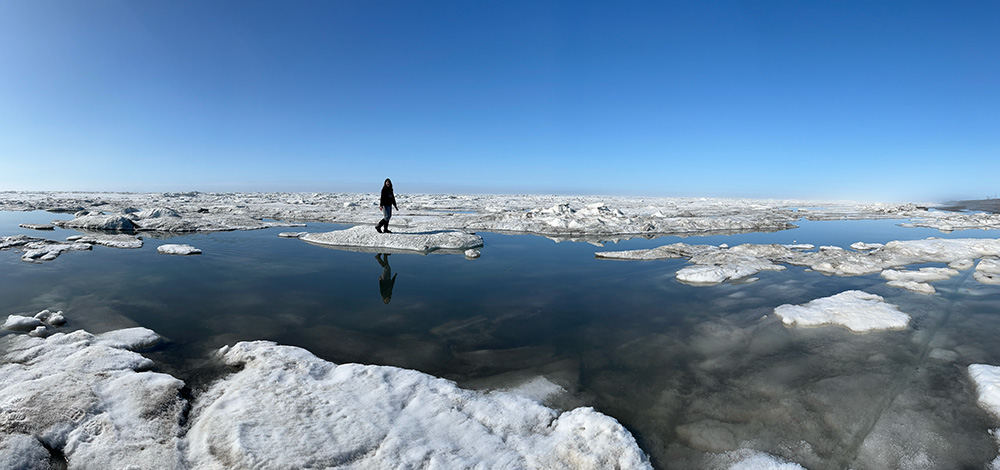
Our village is small — just 4,500 people — but our lands are vast. 400 miles inside the Arctic circle,out toward the point of Alaska, a road north of town leads you away from the hum of modern life and into the quiet stillness of Iñupiaq country.
Out there, under a dome of stars and a landscape of such vastness, I have often gone to stitch together the pieces of my life that have come undone. It is here I return when I need something stronger than words to remind me where my strength lies. Here, the threads of my soul are braided back together under the quiet of the moon.
Here, the threads of my soul are braided back together under the quiet of the moon.
The anchor of ancestral arts
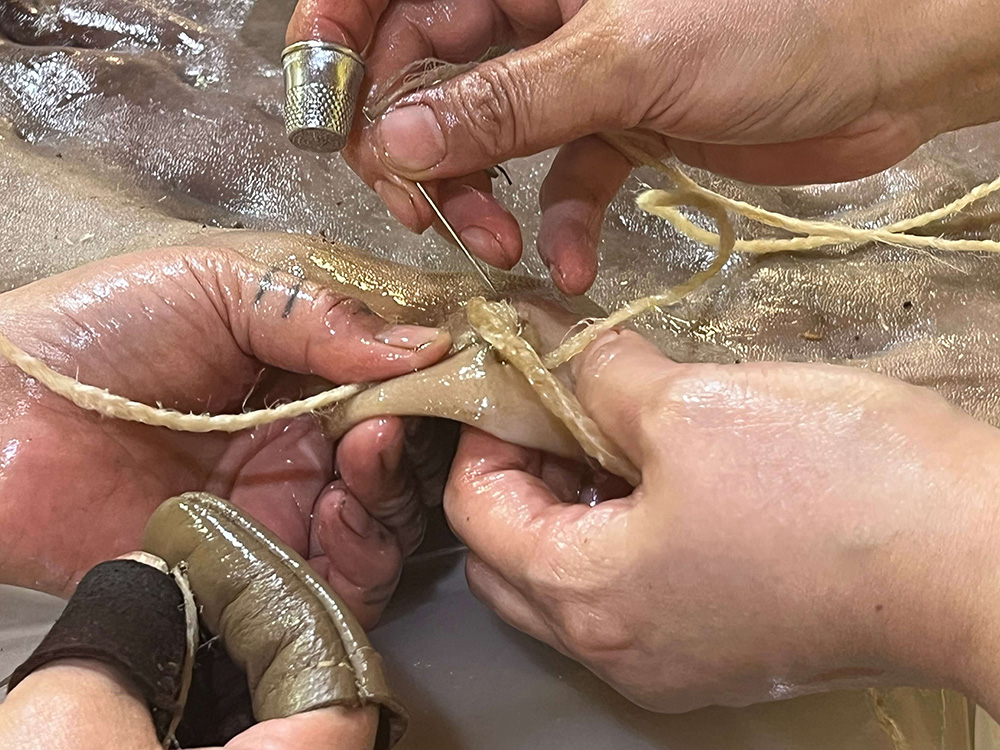
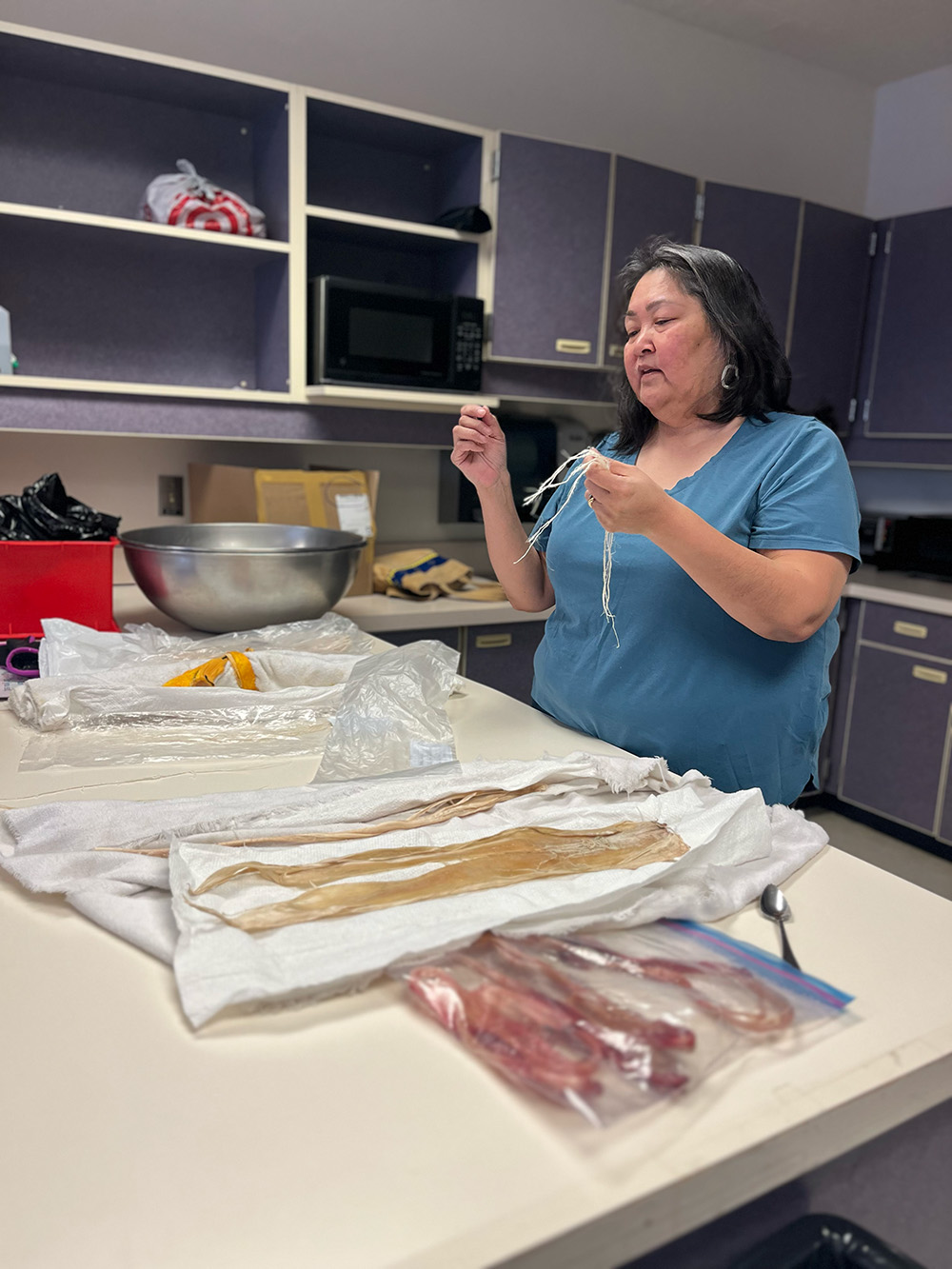
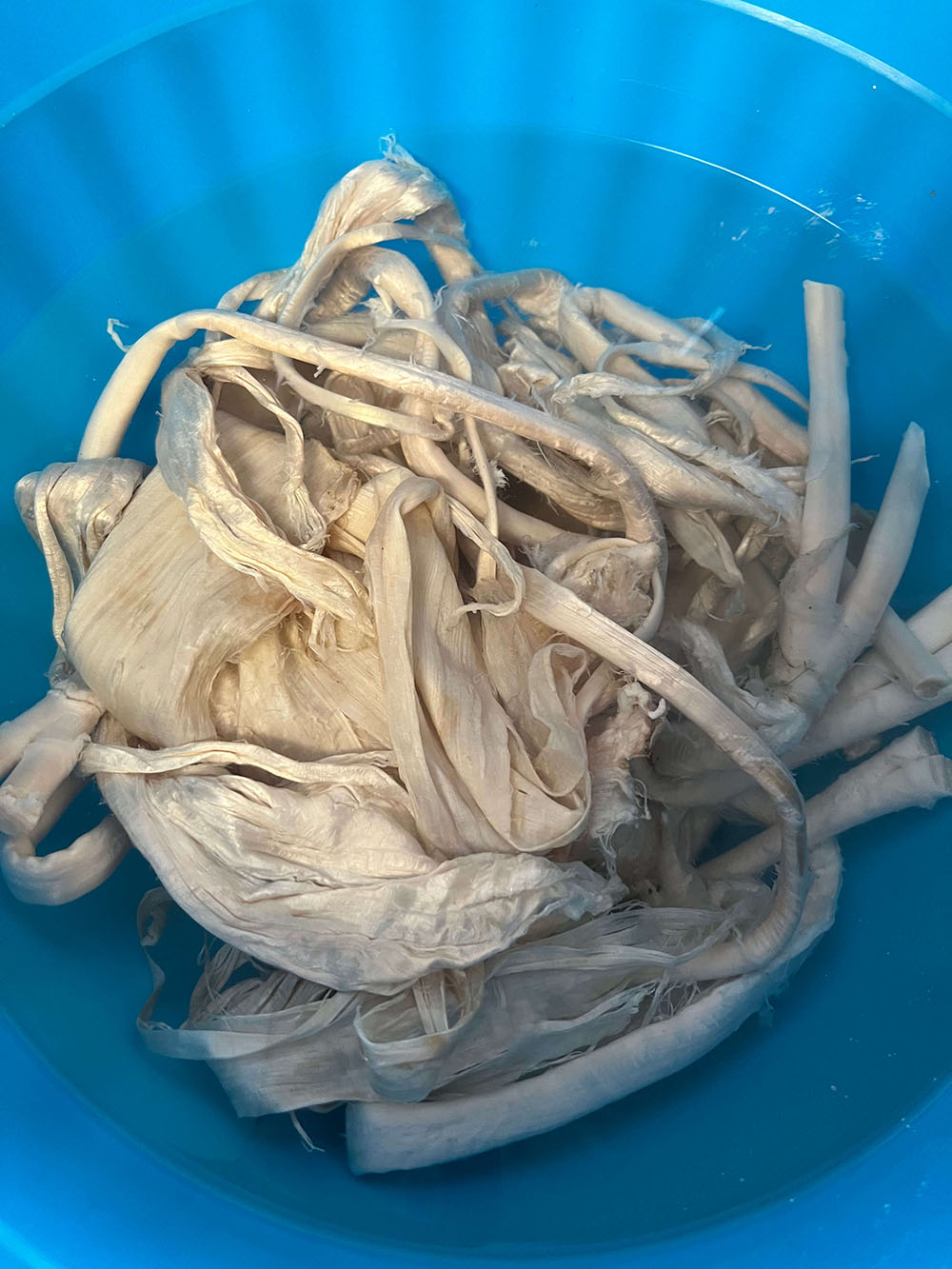
Last winter, after a season of deep trauma and loss, I found myself sitting in our community hall. My Aunty was hosting an informal workshop on splitting and preparing tuttu (caribou) tendons to make ivalu, the braided sinew thread used to stitch together our seal-skin boats in the spring whaling season.
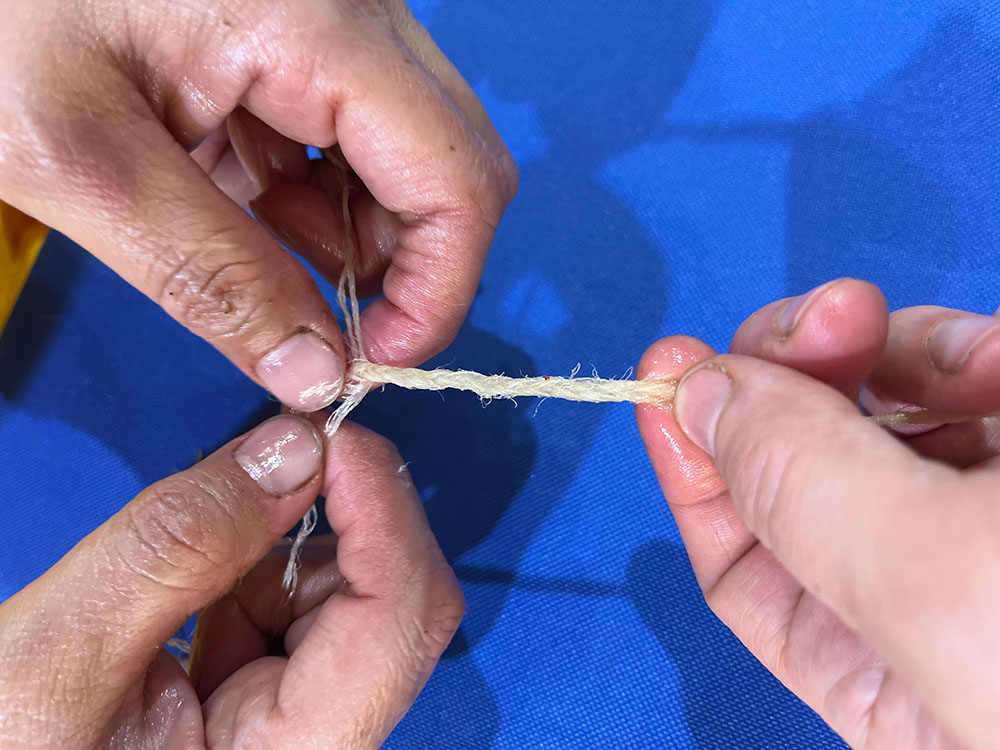
Making ivalu, like all things in whaling, is sacred work. The tendons we braid are not just thread — they are lifelines. Each one will hold a section of the seal-skin boat together, carrying our whalers into the icy waters of the Arctic Ocean during the hunt. If a thread breaks, lives can be lost. If it is crafted with care, with love and skill, lives are preserved and saved.
Making ivalu, like all things in whaling, is sacred work. The tendons we braid are not just thread — they are lifelines.
My father once told a story of a whale hunt where a crew’s boat was struck by a whale’s flipper and the wooden frame of the boat split in half. The skin and sinew held long enough for the men to make it to the ice’s edge. It was the strength of the ivalu, and the care of the women who made it, that brought them to safety.This is why Iñupiaq work is meant to be done with reverence; with quiet hands, full attention and hearts anchored in gratitude. The making of ivalu – like all our sewing and subsistence arts – are a meditation, a prayer and a gift.
You have to feel it, your fingers will know
That night in the community hall, I sat beside my Aunty, my cousin, and a handful of women. Around us, laughter mixed with the rhythmic soft sounds of tendons being split and softened. Tenderness filled the air.
The making of ivalu – like all our sewing and subsistence arts – are a meditation, a prayer and a gift.
I opened the bag of dried tendons my Aunty had given me and began to split them with determination. As I pulled them to separate them, the strands kept breaking into pieces too short to braid. I took a deep breath, held it and started again. Again the tendon broke short.
As each tendon broke so too did my confidence. Was I doing something wrong? Why were they all coming out too short? My Aunty, without looking up, said gently, “It’s ok, let it go the way it wants to go. It will split as it needs to.” I could feel the stresses of my life were influencing the movement of my fingertips, despite my best efforts to ignore them.
I breathed. I slowed down. I reminded myself to let the tendon guide me. The splits grew longer, cleaner. I began to see the rhythm of the material, how it carried within it its own strength, how the tendons reflected the tuttu’s speed and migration lines across the tundra.
I thought about how everything in our world moves in cycles. Life and death, winter and summer, migration and return. Pulling apart, putting back together. The tendons split along their natural paths, just as our lives do. Our job is to listen, to follow the rhythms that already exist. We cannot control all the paths our lives take us down.
The tendons split along their natural paths, just as our lives do. Our job is to listen, to follow the rhythms that already exist.
After an hour of breathing slowly and following the natural path of the tendon, I looked at my splits. They were neater, longer, starting to fall into the right sizes.
Noticing my progress, my Aunty next showed me how to soften the strands. “Like this,” she said, running her thumb gently along the sinew, scraping the rough edges until it felt soft like the underbelly of a duck. I tried to follow her lead, but again my threads kept pulling apart.
“Don’t look at it,” she guided, “you could almost close your eyes. You have to feel it. Your fingers will know.”
Glitter in the darkness
Through a large window, we watched as a lunar eclipse was beginning. The Earth’s shadow moved slowly across the face of the moon, dimming its light.
That Arctic night was deep. Despite the moon softening, snow glittered in the darkness. I took a slow breath and released control. My fingers began to move again, slower this time, more tenderly. The tendon responded, softening under my touch and not breaking.
The slower I breathed, the softer the tendon seemed to become. And suddenly I felt it, a subtle but defiant shift, like being put onto the right path after wandering lost.
I started to realise that these big problems we were facing at home and in the world, these enormously complicated situations filled with trauma and chaos, were actually the result of being cut, being torn, being untethered and disconnected from ancestry.
The chaos of my life had separated me from these simple everyday tasks and ceremonies. There had been no time, or I had not found a way to make time.
Take life-give life
“The way I was taught,” my Aunty said, “you take a life when you take the tuttu, and you give it back life when you braid the tendons for boat skins.”
Her words carried the echo of generations. I thought of the first split, the hardest one, the moment when belief must be stronger than fear. That first split takes more than physical strength; it takes faith that the pieces will come apart as they should, that you can rework them into something new, something strong enough to hold life.
This is what healing feels like. Taking what has been torn, open it up gently and with care, softening it, and weaving it back together anew, stronger with greater purpose, building toward wisdom.
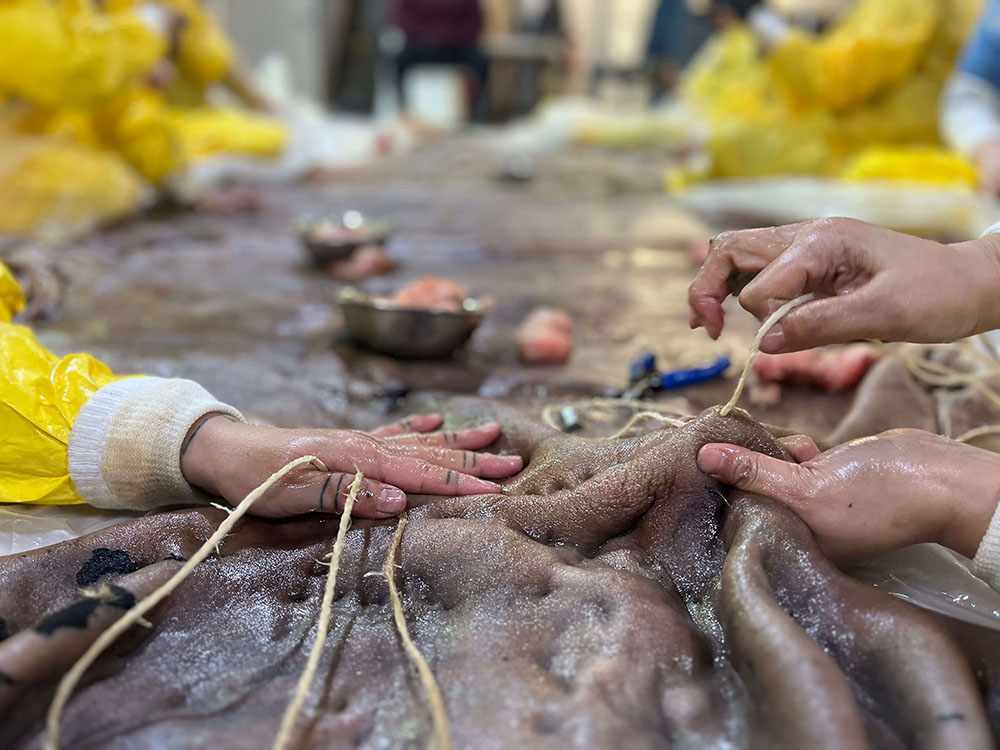
Sitting together in that hall, under the dark skies, we were doing more than braiding thread, we were weaving back the fabric of our community. As women who carry the weight of colonisation, violence, addiction and grief, sitting side by side we rediscovered the power at our fingertips.
Sitting together in that hall, under the dark skies, we were doing more than braiding thread, we were weaving back the fabric of our community.
Sometimes these strands that connect us to our past are thin and almost imperceptible. But, they are always there holding us safely together, connecting us not only to our past but to each other and to our future. These are the strands we must build up and strengthen when we sit together and relearn the wisdom of those who have come before. This is what these spaces do, they open up the opportunity for us to braid ourselves together again, to feel whole again.
Through work the wounds heal
Colonisation came to our people like a long, unending winter. It brought with it systems that separated us from the land, the animals and from each other.
Colonisation came to our people like a long, unending winter. It brought with it systems that separated us from the land, the animals and from each other.
Children were taken to boarding schools and taught to be ashamed of their language and their ancestors, and we entered into a seemingly never ending battle for control of our own lands and seas. Men were told their knowledge of the ice and sea and land was inferior to maps and machines; women were told that the work of their hands—sewing, preparing, creating—was not valuable in the world of commerce and ‘progress.’
Generations later, the echoes of that violence live inside our homes, our community, our bodies and lands. You can see it in the loss and in the trauma that moves through all of our families like a storm, leaving destruction in its path and seeming to grow with each generation. The social fabric that had always held us in balance — between humans, animals, lands and spirit — has been split apart.
Remembering, reconnection and regrowth
In learning to make ivalu, and being together in this hall, we are not just remembering a skill. We are remembering ourselves and our collective Iñupiaq spirit. We are undoing the lie that our ways are lesser, that our knowledge is outdated. We are reasserting a truth that was never fully extinguished: that our survival has always been rooted in relationship, reciprocity and connection.
I was shown that through the coming together of women to revive, relearn and reconstruct the old ways, something profound happens. Each split tendon, each stitch of sinew, each shared story reclaims a thread that was violently taken. The space between us, the ground underneath us becomes again a place of ceremony, a site of resistance and renewal.
When our fingers move in rhythm, when we braid the sinew together, we are also braiding a new future — one anchored in our past but flexible enough to hold what is coming. This work allows space for reimagining what healthy, grounded communities can look like, what we ourselves can look like.
It allows us to reconstruct futures where strength does not mean hardness, but soft and unshakable connection. Where healing is not in isolation, but community; where the old songs and collective wisdom still provide the north star for new generations.
This is how we repair the wounds of colonisation; not through forgetting, but through remembering, deeply. Through listening, through doing and through connecting our core to our roots.
Dedicated to Sylvia Ahsoak, thank you for making the space and holding the space. In recognition of your service to our community and family as a whaling captain’s wife and the guidance and the many gifts you share.
Dedicated to Ethel Burke, your love will be missed but always felt and your lessons will continue to light our path forward.
** NB, this piece may not be republished without permission from Storythings and the writer. Please contact us at team@futuresindraft.com if you would like to republish this piece.