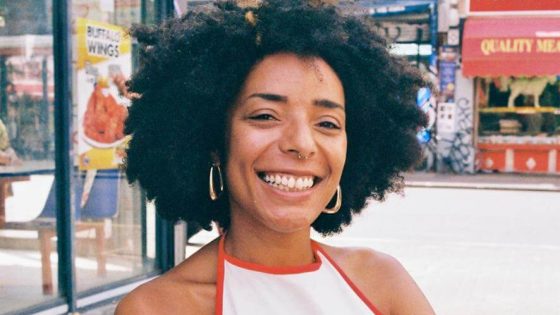
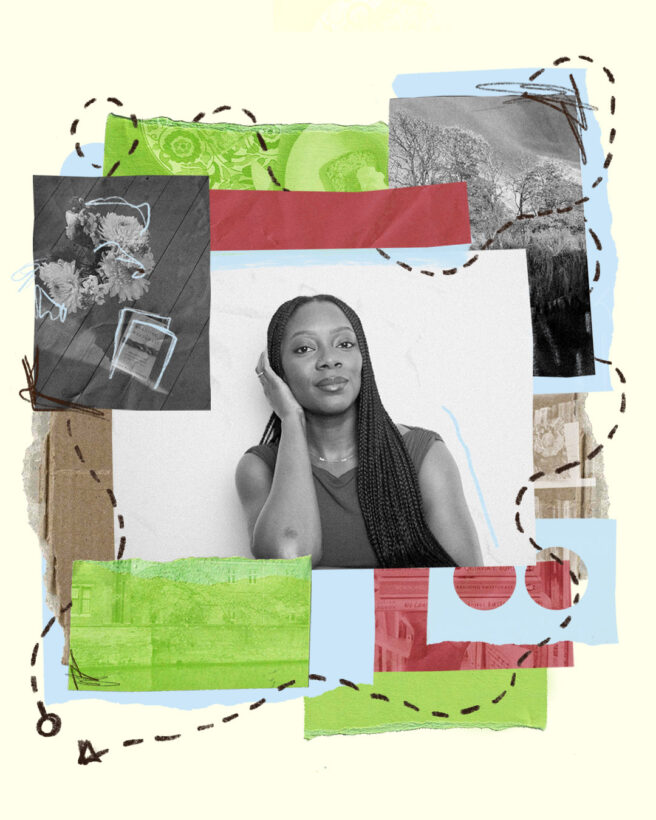
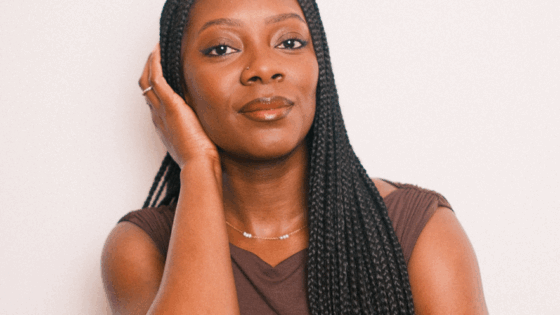
The image shows a collage with a scrapbook effect. There is a headshot of Joycelyn in the middle and overlaid drawings and sticky tape around it.
Image credit: Naomi Gennery

Joycelyn Longdon on collective memory

Reclaiming our collective imagination through Global Majority cosmologies

Environmental justice technologist, communicator and author, Joycelyn Longdon curates a reading list of texts and resources about our ever-evolving cosmologies.

The world as we know it is ending and a new one prepares to be born. 

Yet, as we prepare to usher in a new world, the claws of colonialism and capitalism, which hold our imaginations captive, grip tighter, setting seemingly unalterable limits on our visions of alternative futures, keeping us from seeing, clearly, the world as it was, is and could be. 

Paraphrasing the Anishinaabe and Ukrainian writer Patty Krawec, we are first colonised when our collective sense of future is taken away. We must come to know that our imagination is a tool of resistance that, when sharpened collectively, allows us to transcend the limits of the world that is dying and transform our collective dreams into reality.

Although capitalism and colonialism have reigned supreme for much of our recent history, in comparison to the knowledge systems of the Global Majority, they are infantile. What we must do then, in reclaiming our collective imagination, is also develop and nurture our collective memory. 

This list seeks to connect you to the histories and ever-evolving cosmologies of those most exposed to ecological collapse, yet most connected to the living world, that must guide and shape the way we imagine and build more just futures.


Seven books that changed my perspective

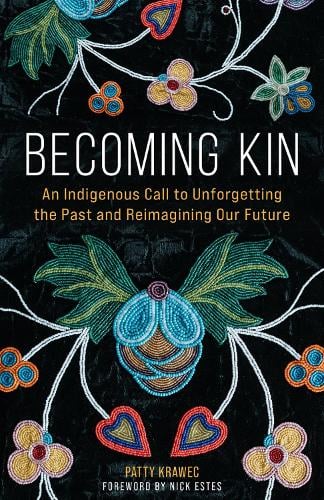
  • Book jacket: Becoming Kin: An Indigenous Call to Unforgetting the Past and Reimagining Our Future

    This book was a work I referred to constantly when writing my first book ‘Natural Connection’, and which shapes my own, ongoing journey of remembering and reimagining. 

    Spanning time and place, Patty Krawec weaves her story and lived experience with those of her ancestors, and takes us on a journey of creation, belonging and becoming kin with the living world. Through her words, we learn to untangle the narratives of disconnection seeded by systems of oppression, unforgetting our collective past to nurture and root our visions of the future. 

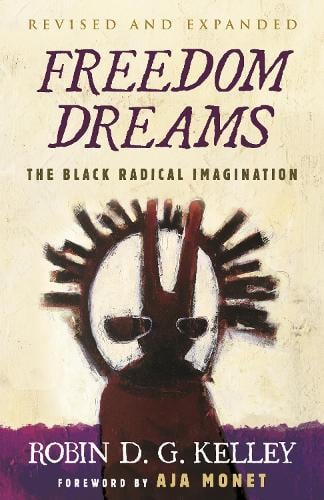
  • Book jacket: Freedom Dreams: The Black Radical Imagination

    Freedom Dreams: The Black Radical Imagination

    by Robin Kelley

    (non-fiction)

    This was another book that sat firmly by my side as I wrote ‘Natural Connection’. It’s a staple text in the lineage of the Black Radical Tradition, a practice of Black resistance rooted in collective consciousness and resistance. Freedom Dreams uncovers and reflects on the histories of Black radicals across academia, activism and the arts, whose struggles can and must shape our own in birthing new worlds.

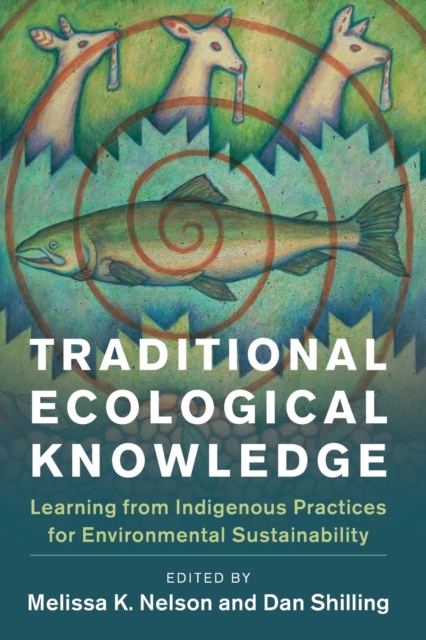
  • Book jacket: Traditional Ecological Knowledge: Learning from Indigenous Practices for Environmental Sustainability

    A collection of essays written by a diverse group of scholars, this book explores and highlights the importance of Traditional Ecological Knowledge (TEK) as a foundation of environmental action. From Maori cosmologies and economies of well-being to the Nsylixcin Speaking People’s Tmix Knowledge as a model for sustaining collective and place-based ‘life force’, this is an informative text that provides a deeper understanding of the Indigenous worldviews and practices that shape holistic relationships with community and the living world.

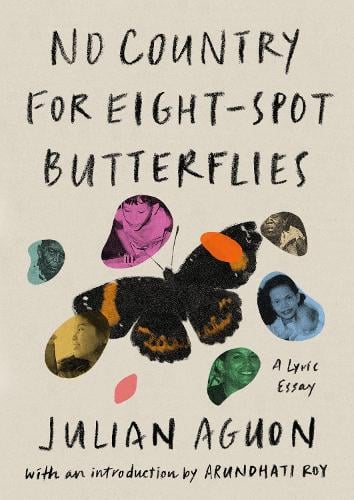
  • Book jacket: No Country for Eight Spot Butterflies

    No Country for Eight Spot Butterflies

    by Julian Aguon

    (non-fiction)

    If I could quote every line of this book, I would. Julion Aguon is a powerful storyteller. In this book, he weaves stories of his experiences working as a human-rights defender, but also as a Guamanian child living through and bearing witness to the extraction and violence that wreaked havoc on his people and the land. Through his reflections on grief, love, loss and connection,  he “illuminates a collective path out of darkness”.

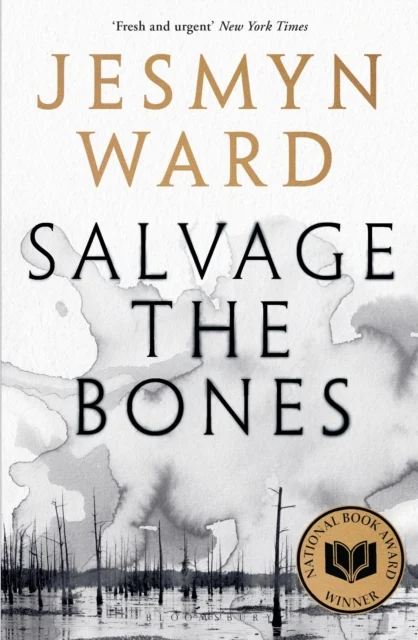
  • Book jacket: Salvage the Bones

    Salvage the Bones

    by Jesmyn Ward

    (fiction)

    Rarely do I ever cry when reading, but I did with Salvage the Bones. It’s a story of destruction, fear, and sorrow, and Jesmyn Ward paints a poignant vision of how radical care and the strength of community spirit can overcome the chaos and rupture systems of oppression. The story is a powerful counterpoint to dominant narratives about disconnection and division in times of collapse. It mirrors back to us the possibilities of life rooted in deep interdependence on each other and the land.

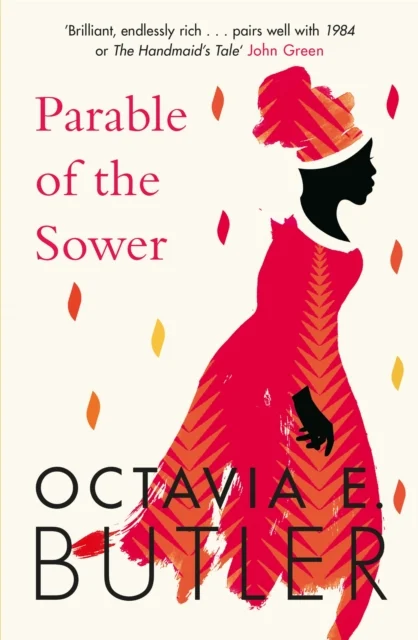
  • Book jacket: Parable of the Sower

    Parable of the Sower

    by Octavia Butler

    (fiction)

    This book has become a staple in the genre of climate fiction and is a core text in the Afrofuturist tradition. It’s not about imagining utopia or the world ‘saved’ by a single person or technology. Instead, it amplifies the power of community and collective vision in building new worlds as the dying world persists. About imagining and deeply believing that we deserve more, better, and being brave enough to believe that we can build more generative loving paths to the future.

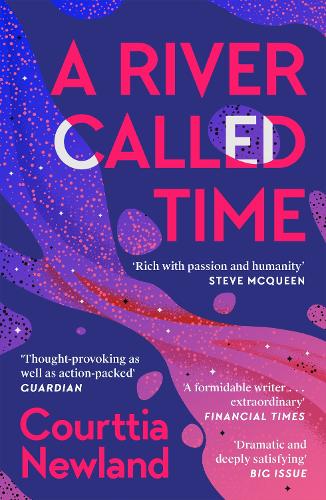
  • Book jacket: A River Called Time

    A River Called Time

    by Courttia Newland

    (fiction)

    Reading this book was an incredible journey filled with love, spiritual reflection, contemplation, heartache and reverence. Set in an alternative London, in a world where colonisation never existed, River Called Time explores the perils of outsourcing the imagination and creation of our futures, willingly desensitised and disconnected by extractive technologies presented as sustainable solutions. It’s a book about the power of spiritual (re)connection and collective dreaming in resisting systems of oppression.

On The Go and Online

  • In this podcast, Aboriginal scholar Tyson Yunkaporta weaves stories, imparts knowledge and paints an expansive vision of the world as it has been and will be through Indigenous cosmology and the practice of deep time thinking. It’s one of the most memorable and expansive podcasts I have listened to. A key resource in “ushering in new systems of order amid the chaos of the current moment”.

  • This article presents a critique of the limits put on not only what we imagine but, importantly, who is given the power and agency to imagine.  Highlighting the coloniality within mainstream, green-capitalist responses to ecological collapse, the authors warn against “tinkering at the margins of change” through limited Western visions of ‘progress’ and ‘sustainability’. Instead they engage and centre knowledge, experience, resistance and practices of those on the frontlines, particularly Black African women, through which “an alternative world is possible [and] that hope for all people and the planet lies”.

  • Neptune Frost

    by Saul Williams (Film)

    I first watched this earlier this year, and it was one of the most unique, expansive, touching and creative screen experiences I’ve had. Neptune Frost is a radical, dreamy, hypnotic, Afrofuturist ‘cyber-musical’ that imagines worlds beyond resource extraction and digital waste colonialism in Burundi. The story centres on the coming together of an anti-colonial hacker collective connected by cosmic forces to reclaim land and technology from authoritarian regimes and returning them into the hands of the people. It’s a parable for the power of collective spirituality, connection and vision.

Musings and more

  • What is the book you've gifted the most?

    Braiding Sweetgrass by Robin Wall Kimmerer is a book I will constantly gift if a close friend has not read it already. It’s a staple in questioning dominant systems but also reconnecting to and imagining more rooted futures.

  • Where are you currently finding joy?

    As I write, it is autumn, my favourite season. I am finding joy, it seems, in everything. The angle of the light and the way it makes everything seem to be glowing from within. Picking apples in my garden and turning them into cakes and chutneys. Sharing soups and space with family and loved ones and filling the air with music.

  • If you could go on a walk with one author, who would it be and why?

    It would have to be Zora Neale Hurston as I’ve just finished reading Their Eyes Were Watching God. The way she writes about the land and people is transformative, it makes me feel truly alive in all the messiness and beauty of human existence. I would love to just walk and talk with her, seeing the world, in real time, through her eyes.

  • Written by Joycelyn Longdon

    Joycelyn Longdon

    Joycelyn Longdon is an award-winning environmental justice technologist, communicator and PhD Candidate at the University of Cambridge. Her research centres on the design of justice-led conservation technologies for monitoring biodiversity with local forest communities in Ghana, specialising in biodiversity monitoring through bioacoustics. As an environmental educator and storyteller, Joycelyn has made more accessible topics of environmental justice, climate colonialism, conservation, nature technology and design.

  • Illustrated by Naomi Gennery

    Naomi Gennery

    Naomi is a UK-based graphic designer and illustrator working at the intersection of creativity and social impact. Her work is colourful, playful, and often rooted in collage, crafts, and DIY culture. Exploring themes of culture, identity, and social change, she hopes people see their own thoughts, ideas, or experiences reflected in her work. Combining design and illustration, Naomi aims to make big ideas feel more approachable and human.

Read More

  • The image shows a landscape with a dark sky and a bright moon. There are wisps of the northern lights in green. The ground is covered in snow.

    Under the quiet of the moon

    Land-based arts and the power of the communal for individual transformation

  • People are dancing outside, and a woman in the foreground is mixing music. The party is very inspired by queer nightlife culture.

    A world with free public dance parties

    For the final episode of the season, New York based activist, resource mobiliser and cultural organiser, Thanushka (Thanu) Yakupitiyage brings free public dance parties to the world.

  • The image illustrates Mohammed's vision for a world with one nation. In the image small drones are dispatched, carrying democratic votes across three different biomes, showing how easily we would move from one region to another without borders. There are two people on the right hand side posting their votes and smiling. In the image there are three different biomes moving from an arctic biome on the left to a temperate biome in the middle and a desert biome on the right.

    A world with one nation

    Director of the Decolonial Centre, Mohammed Elnaiem, invites us on an exploration of a world with one nation. Mohammed offers a powerful case for border abolition, charting the potential of a world where arbitrary lines on the map, competition, and othering are dismantled.