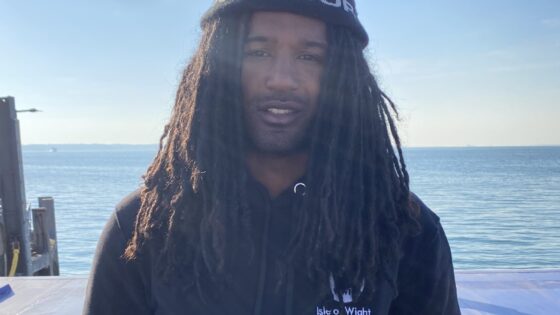
Power of Place is a personal essay series that explores the transformative power of places around the world and how they are being used by communities as sites of resistance and worldbuilding.
Birdwatcher and storyteller Nadeem Perera explores how spaces are being used to transform who gets to tell stories about nature and how this can transform our spaces, species and futures.
The importance of place, it must be said, is an importance that could never be lost on me.
For a long time, I didn’t feel like I belonged anywhere. Bumbling through late adolescence, I learned lessons in the hardest ways. A small boxed room, cockroaches, a zero-hour job. Trauma manifest.
But one day, in my early 20s, I looked around at the life I was living and decided that couldn’t be it. And, returning to my childhood memories was where I found my direction.
When I looked back, I remembered who I was before, a kid growing up in London who found joy in the outdoors. I remembered watching old nature documentaries, David Attenborough narrating worlds that felt impossibly far from the estate I grew up on. I started noticing the wildlife around me – most of the time it was just the city birds, pigeons, gulls, sparrows, the ones that survived the concrete. I didn’t get taken to reserves or parks much, but the flashes of wings in playgrounds and tower-block courtyards were enough to keep me transfixed.
My world was small then, but birds made it feel open.
I didn’t understand it at the time, but those moments planted something. Once I started paying attention to the birds, I wanted to know their names. No one around me really knew about birds, so I taught myself through phone notes, cheap binoculars, hours on Google and YouTube and RSPB pages trying to match their calls to faces. I remember how the illustrations in the Collins Bird Guide stayed in my mind and the excitement I would get seeing those same birds for real out my window, their wings cutting through the noise of the city. It wasn’t romantic or idyllic, it was escape. My world was small then, but birds made it feel open.
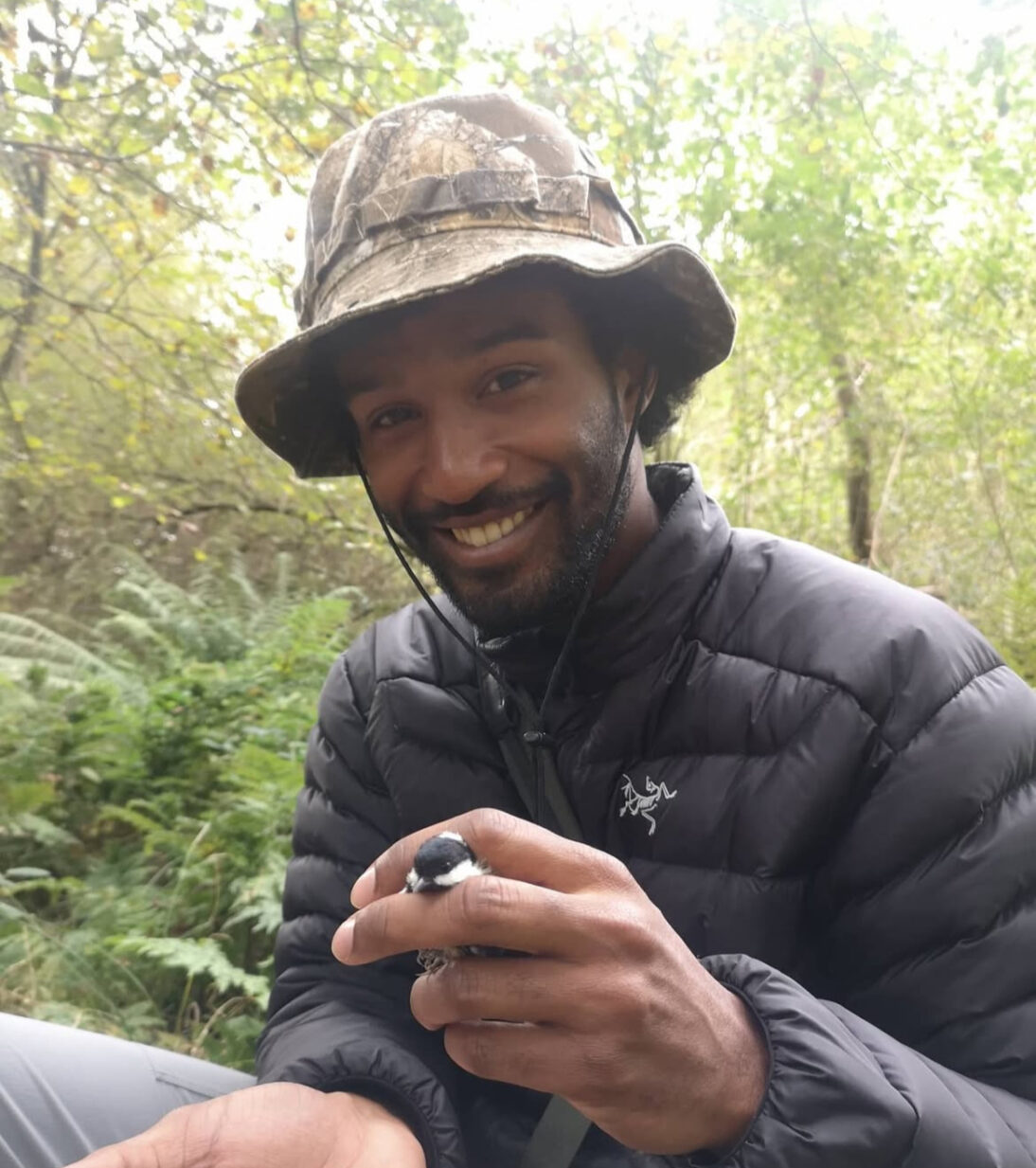
The London view
Growing up in London taught me how to see. Not in the scenic sense, but the spectacle that lives in the mundane. After I started birdwatching, I started to see the city differently; the gulls on rooftops, the sparrows in supermarket car parks, the peregrines nesting above office blocks. The same streets that once drained me now fed me. The environment that had afflicted me with sorrow and turmoil was now alive with wonder and potential.
When I started working in hospitality, I saw how people came to London from all over the world. I remember thinking at the time: why should outsiders be the only ones allowed to thrive in a place I know inside out?
The environment that had afflicted me with sorrow and turmoil was now alive with wonder and potential.
So I decided that I wanted to be part of how wildlife is understood, managed, and, most importantly, told. I saw myself one day being in a position to change how conservation and natural history are spoken about, and to build platforms that looked and sounded like the world we actually live in. So there it was: purpose. I knew I could build a life around birdwatching.
Buss the door open
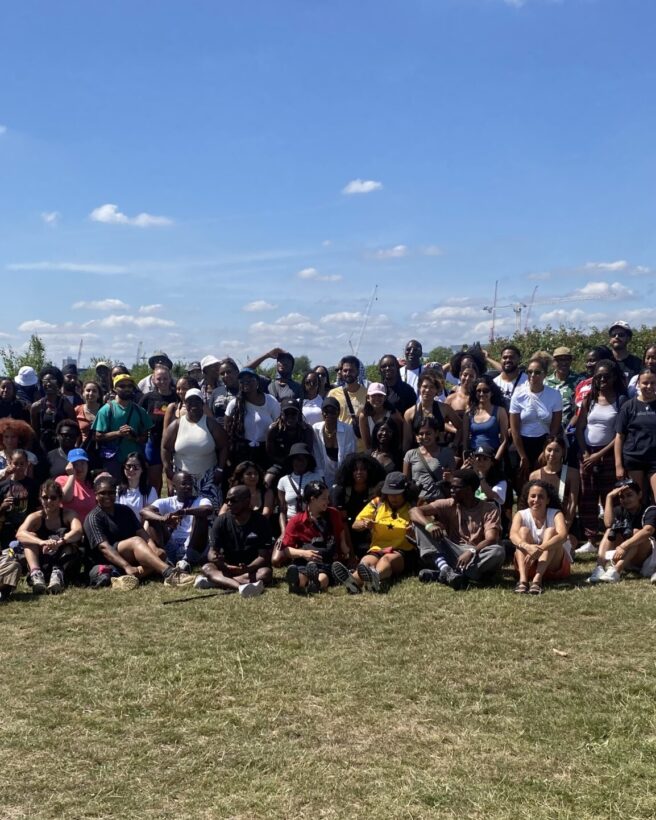
Eventually, I moved to Bristol to pursue a career in natural history television, the mecca for wildlife storytelling. I arrived full of hope, carrying years of experience from founding Flock Together (a birdwatching collective for people of colour), my work as a youth football coach, and my growing voice in the outdoors.
At this time, Flock Together had already started to make waves. What began as a small community birdwatching club had become a global movement. We featured in magazines, documentaries and campaigns that reimagined what belonging in nature could look like. The spotlight it brought gave me a platform, but also a new kind of responsibility, to show that this wasn’t a moment; it was a movement.
When the same small group of people hold the power of how stories about nature are told, the scope of those stories narrows.
I was lucky to meet some good people early on in my work – shout-out to Chris Howard, Debbie Hinnigan, and Jo Sarsby. Three people who saw something in me and gave me real opportunities. Through them, I went on to work on productions for National Geographic, built my presenting skills and learned from all sides what goes into crafting stories that reach millions.
But even with those opportunities, there was an invisible resistance. Not personal hostility necessarily, but more like the soft boundary of an industry shaped by a very specific culture. Rooms that were kind but not open. Conversations that were polite but limiting. It became clear to me that the issue wasn’t that people didn’t care. It was that when the same small group of people hold the power of how stories about nature are told, the scope of those stories narrows. Certain landscapes, accents and lives disappear. The idea of who belongs in nature, on screen and behind the camera, becomes quietly coded.
Pass the limit, build new worlds
After three years in Bristol, I’d built enough of a career to know what the industry could offer as well as what it couldn’t. The problem wasn’t a lack of interest or opportunity; it was a lack of imagination and a fear of changing who gets to hold the camera.
Wildlife television is extraordinary at what it does; epic cinematography, iconic narration, astonishing science. But the limits are that it often struggles to make nature feel close. When the stories are told from only one worldview, the connection many people could have with nature is never fully realised. So when my TV contract ended, I decided not to chase the next job. I wanted to build something that could make space for new voices, new aesthetics and new emotions in the way we talk about the natural world. That’s how Hero Hyena began.
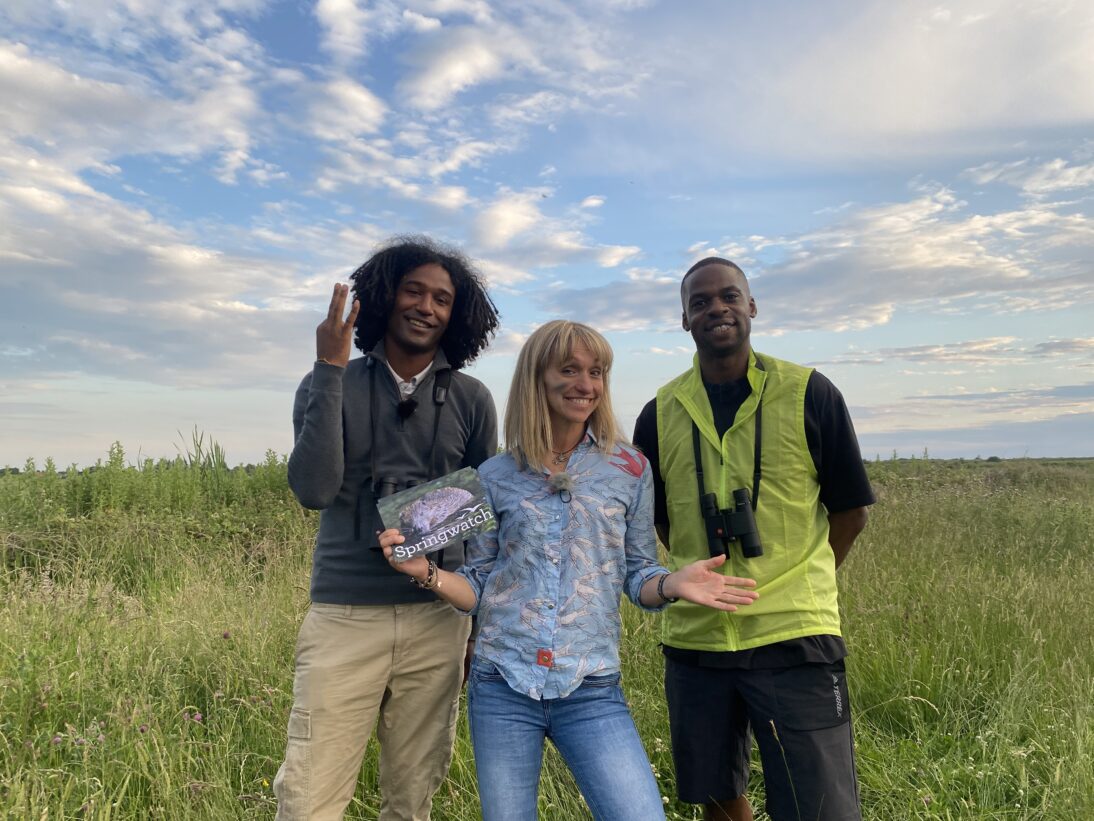
Hero Hyena, worldbuilder
Hero Hyena is a creative production company built from the ground up by people who don’t typically get the keys to the nature storytelling world. We bring together artists, writers, photographers and performers who love wildlife, but also love culture. We don’t see why the two should ever be separated.
When you put wildlife and culture in the same frame, you reach people who never thought nature was speaking to them. It opens up space for humour, music, sport and everyday life to sit next to the wild again. And that changes how people connect. It’s about belonging as much as biology. Our work explores this overlap and each project is a small act of worldbuilding; bringing imagination, humour and emotion into spaces that have long felt sterile.
We need people to care differently, to see nature as part of their own story rather than a background setting.
Through Hero Hyena, I want to change not just who gets to tell these stories, but what those stories feel and look like. The damage being done to our world isn’t just environmental, it’s cultural. And the more detached people feel from the wild and the outdoors, the easier it becomes to ignore what’s disappearing. We need people to care differently, to see nature as part of their own story rather than a background setting. Because one of the first things needed in order to communicate effectively is to speak the right language. That’s how we build lasting connections. You cannot fabricate that. We need to have the final say in how our story is told.
This isn’t about tearing down the industry that came before me. It’s about expanding it. It’s about saying: there’s more beauty out there than one style of storytelling can hold.
It’s about saying: there’s more beauty out there than one style of storytelling can hold.
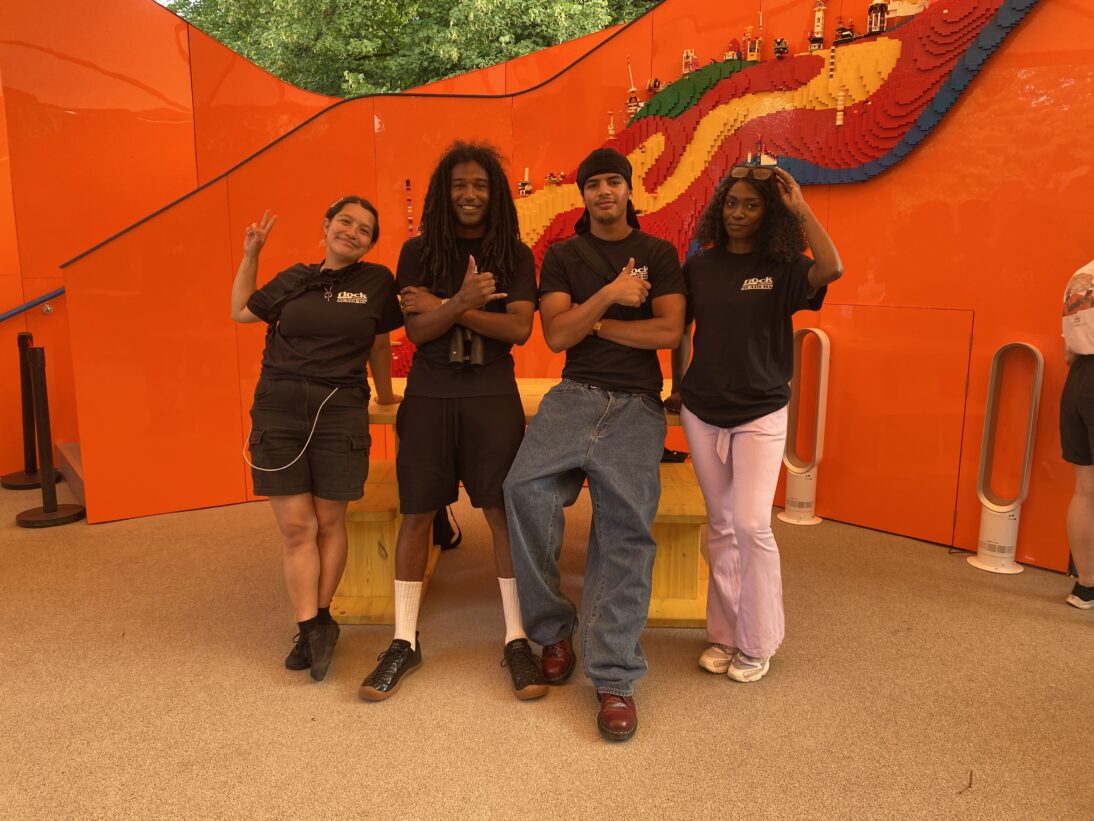
Legacy
If only one kind of person tells our stories, we risk losing not just perspectives, but species, spaces and futures.
Representation in nature storytelling isn’t just about fairness. It’s simply about survival. Right now, over half of UK wildlife species are in decline, yet the stories reaching global audiences are still told through the same narrow lens, and in 2022 only around one in ten people featured in British nature programming come from ethnically diverse backgrounds. That imbalance shapes what gets protected. If only one kind of person tells our stories, we risk losing not just perspectives, but species, spaces and futures.
I want Hero Hyena to be part of building a world where connection to nature isn’t mediated by class, race, or access. A world where creativity, curiosity and care are the only qualifications that matter. Because when people who’ve never seen themselves in nature start telling their own stories about it, everything changes and it’s not just the screens that change, but the world outside them.