
Power of Place is a personal essay series that explores the transformative power of places around the world and how they are being used by communities as sites of resistance and worldbuilding.
In September 2023, freshly 30, I relocated from London to Naarm, Melbourne, in so-called-Australia. It was a decision made on a whim, seeking both purpose and adventure.
It took me a while to warm up to the city – I appreciated its delicious tap water, easy access to nature and endless Asian food joints, but missed London’s culture-filled neighbourhoods and going to the pub.
Whilst questioning the objective and length of my stay, a month in, the world changed forever. In the aftermath of 7th October 2023 the brutality of the Israeli state became more lucidly and violently displayed on our screens. The carefree intentions of my move promptly capsized by the witnessing of a genocide, whilst living on a colony with an analogous genocidal history.
Lost and lonely, I looked for community: people that were choosing not to numb themselves, who chose to feel rage and grief, who interrogated their actions and took action also.
Lost and lonely, I looked for community: people that were choosing not to numb themselves, who chose to feel rage and grief, who interrogated their actions and took action also.
Palestinian solidarity in Naarm
The city promptly activated, with solidarity marches and new grassroots collectives forming. One of them being Block The Dock: taking over Port Melbourne with folks blocking vehicles transporting military goods to Israel.
Seeing an action advertised, I asked one of my few friends in the city if they’d like to go. It was a sunny day, people of all ages lay on the ground and sat on camping chairs, Palestinian flags waving throughout. During the day we ate together, sang songs and booed right-wing reporters. At night we linked arms, ready to face the police.
Some of the people I met that day ended up becoming some of my best friends.
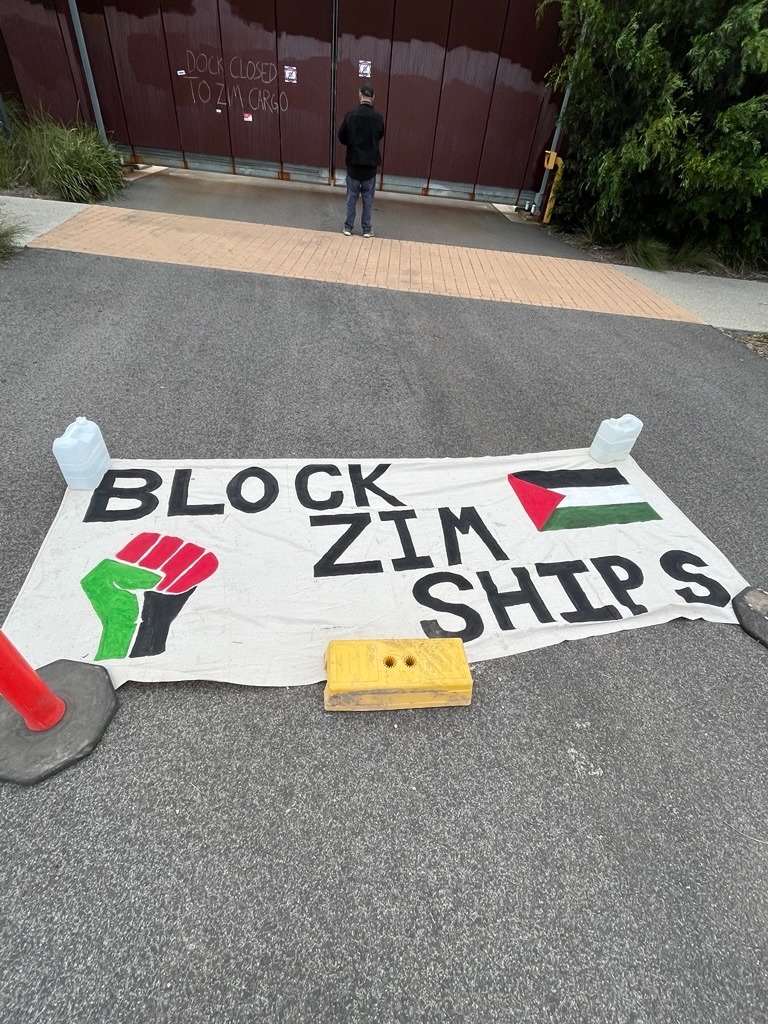
Sunday after Sunday, we marched in solidarity with Palestine across Naarm’s city centre. We listened to speeches from union delegates and nurses, young and old Palestinians, and marched, chanted and blocked traffic. We weren’t saving lives, but we were disrupting the norm, reminding passersby “whilst you’re shopping, bombs are dropping”.
And after each rally, we always shared a meal, in Chinatown at Paramount Food Court.
The food court as a site of collective connection
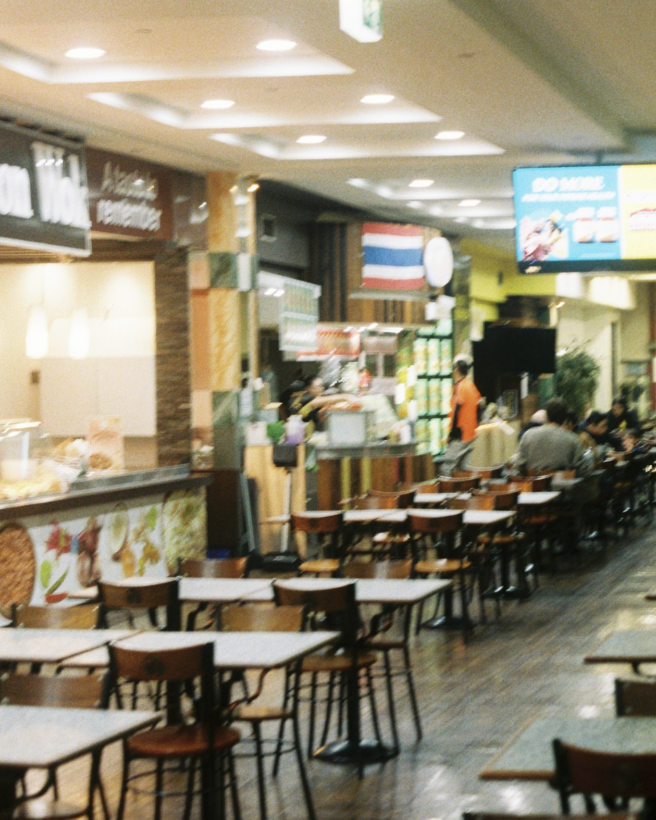
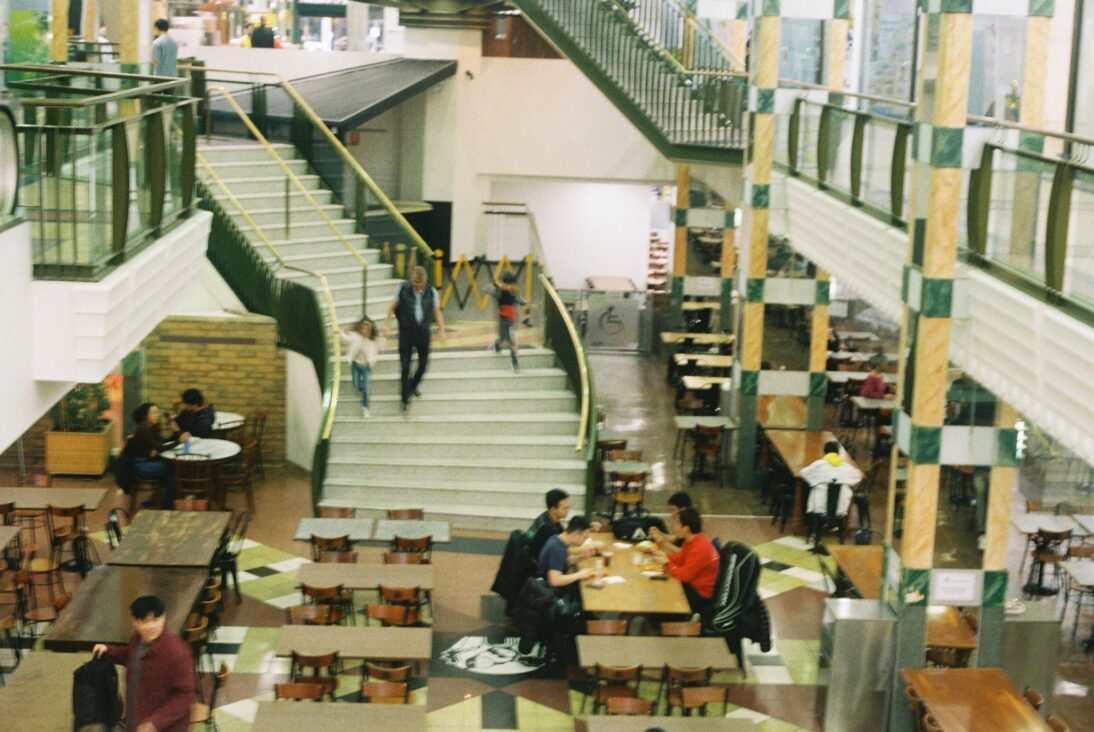
Established in 1979, Paramount is a food hall in the basement of a quiet mall. Unlike more recently gentrified courts and ‘street food’ markets, Paramount looks unassuming and I imagine not too dissimilar to what it did at its inception. Perfumed across it is an aroma blending smells from its East, South and Southeast Asian stalls, serving everything from grilled fish to pad see ew to boba.
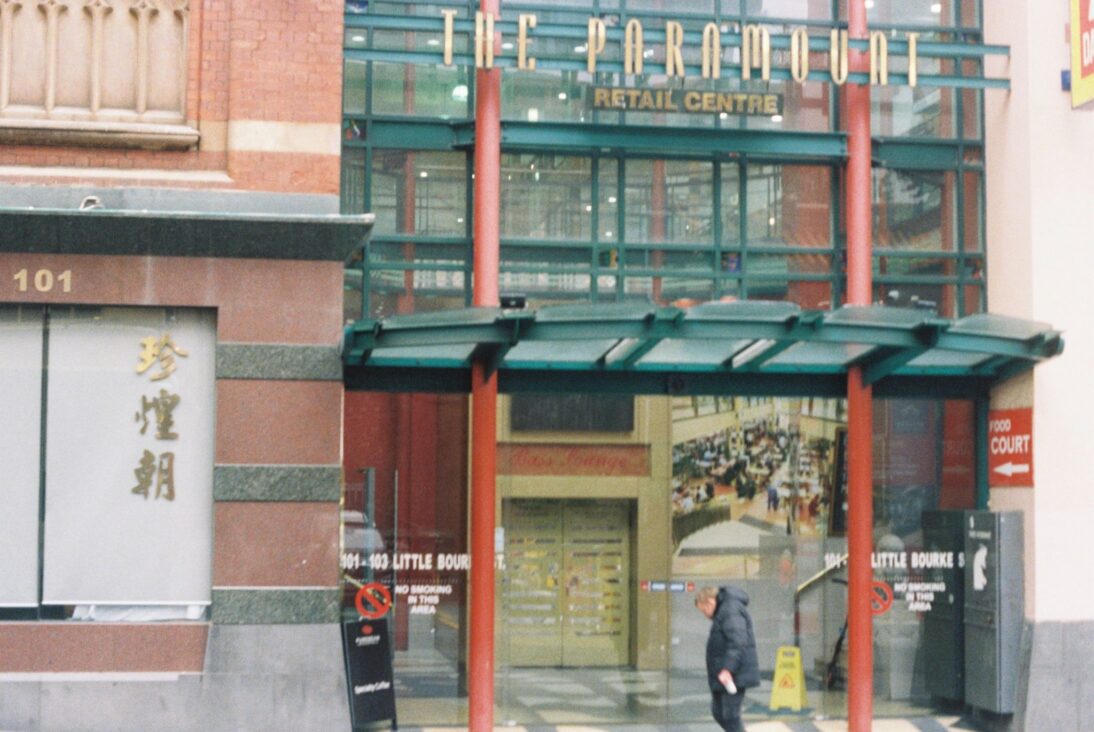
Evolved from markets, such as ancient Rome’s Market of Trajan, or the (still running!) Grand Bazaar in Istanbul, food courts today bring together different vendors from diverse cultural backgrounds to offer affordable and accessible meals, under the enclosed safety of a roof. I grew up in a small town in Italy and, whilst I had an affinity to the diverse cuisines found in food courts, I also held scepticism for the monopoly of chains often found in them, coming across as an arid display of capitalism – and I could also never find a seat.
At Paramount, however, all vendors are independent, not a single chain is in sight and an odd feeling of communion emerges. On early Sunday afternoons, tables are filled with individuals, couples, families and groups of friends enjoying meals – surrounded by folks in keffiyehs and signs supporting a free Palestine. Its informal setting lending itself to a post-rally ritual, tables can be joined, allowing for four, six, 10 or 20 comrades to gather, express their sorrow, share their grief and release laughter.
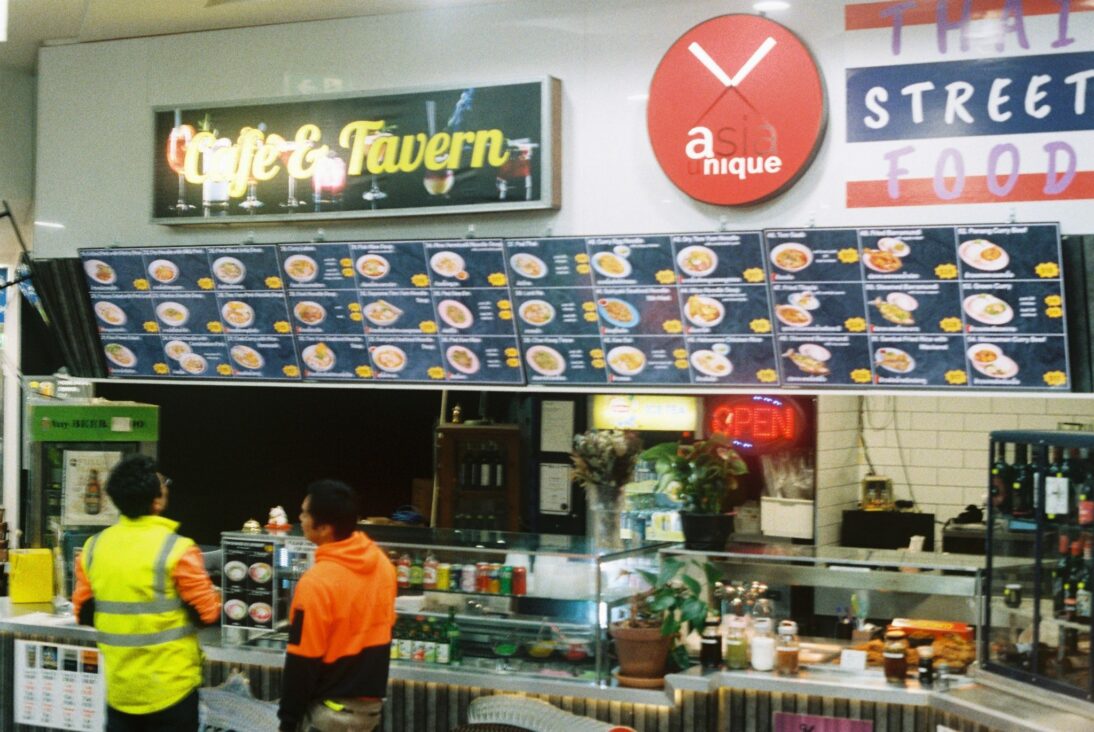
Spaces such as Paramount feel like an anomaly: whilst for older generations it wasn’t uncommon to assemble in third places such as the barber shop or a friend’s cafe, spending hours and hours in conversation, without ever getting a fade or a coffee, today the expectation to consume feels ever present. To exist, without a time limit or the pressure of having to spend is a rarity. But here, you can help yourself to a £7 Sri Lankan curry whilst your friend eats a sandwich brought from home, a family can recuperate after marching and a worker can have a break without the pressure of buying an overpriced latte.
Food courts don’t inherently create a community, but I’ve seen it facilitate the nurturing of connections.
And whilst the food court doesn’t inherently create a community, I’ve seen it facilitate the nurturing of connections. In asking someone what stall they got their dish from, smiling at another person who’d been at the rally, or being motivated to call a friend after seeing someone’s birthday being celebrated, these small moments remind us we’re not individual bodies navigating the world on our own, but beings always in relationship to one another.
In a society that’s become increasingly disconnected, with one in six people are experiencing loneliness, and where even eating out has transmuted to eating in, to surround yourself with others, to intentionally gather, feels significant.
The political power of food courts
I am sceptical of centring the politics of ‘pleasure as resistance’, so often seeing this manifesto weaponised by those partaking in all of the pleasure but none of the resistance. I am also sceptical of highlighting the value of a meal shared with friends, whilst famine is decimating the Palestinian population.
But I do often come back to LGBTIQA+ activist Dan Savage’s quote, when asked how he navigated each day of the HIV crisis, “During the darkest days of the AIDS crisis, we buried our friends in the morning, we protested in the afternoon, and we danced all night”. Whilst its application to an international solidarity context may seem murky, what does stand out is the collectivity of the ‘we’ in grief, in protest, in pleasure. A reminder that all resistance needs a collective – that choosing to be together is not a neutral act, that communion cripples apathy and spaces are needed for that communion to take place.
After the nth rally I attended, I started questioning the purpose of going; what felt incentivising when we first began, started feeling pointless. But then a friend would remind me of how the action of disrupting traffic has an enormous financial aftermath on our government – how loss of money is often what forces authorities to pay attention.
Another friend updates me on a mutual aid campaign she’s been running in support of a Palestinian family, which sparks us to organise a trivia night to fundraise further. A different friend updates me on the trial they are facing after an arrest, offering knowledge and tips provided to them by a pro-bono lawyer.
Whilst food courts are far from being utopias, they offered a place to dream
I am unsure of the amount of organising or political involvement I would have done had I not met these folks. I wonder if I would have become complacent and how limited my knowledge would have remained. Our values in some ways brought us together, but the space to cultivate them collectively, over a hot meal, is what fortified them.
Whilst food courts are far from being utopias; still securitised and still inaccessible to many, for me and my newly found community in a city seemingly unaffected by the violence we were witnessing, they offered a place to dream.