Full transcript text
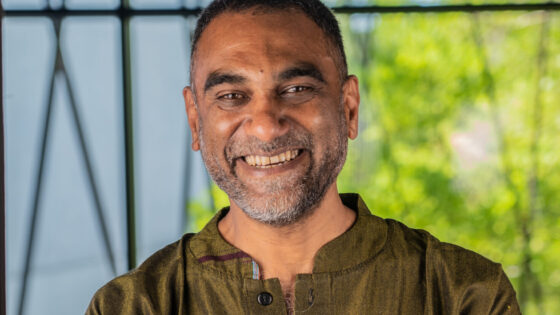
My name is Kumi Naidoo and you are listening to A World With. I am a South African human rights and climate justice activist, and in today’s episode, I will be adding a world with trouble-makers for justice.
I am speaking from Johannesburg, South Africa, but in many ways, I come from Chatsworth, the township outside Durban where I grew up under apartheid. Chatsworth was noisy, alive, complicated... There were the sounds of neighbours arguing, children playing in the streets, music blasting from old cars, and mothers calling children back home before trouble found them first.
I grew up in a small home full of love, discipline, and contradictions. We were not wealthy, but we had more than many around us. And from very early on, I could see that the world was not fair. Apartheid did not hide its cruelty. It showed on signs, in schools, in hospitals, in where you could live, who you could love and what future you were allowed to imagine.
When I was 15 years old, my mother took her own life. That loss shattered me. It is not something one “gets over.” You learn to carry it. Some days it is a stone in your pocket. Some days it is a mountain on your chest.
In the weeks after my mother died, a family friend and activist, Uncle John Pillay, said something that helped shape my life. He did not tell me not to grieve. He said, in essence: there are people suffering even more deeply, and one way to live with this pain is to live with purpose, to work for the dignity of all people. That advice stayed with me.
Soon after, I became involved in the student boycotts against apartheid education. We were told that we were disruptive, disrespectful, ungrateful. I was called a troublemaker. Some people said my mother would have been ashamed of me. Those words cut deeply.
But over time, I came to understand something. When the rules are unjust, obedience is not a virtue. When silence protects violence, making noise becomes a moral duty.
And at a time, where we’re seeing a rise in the criminalisation of our protest powers globally, I believe a world with troublemakers for justice is more important than ever. But, what do I actually mean by a world with trouble-makers for justice?
I mean a world where every child is taught that good trouble is not a crime, but a responsibility. A world where young people learn that peace without justice is only the silence of the oppressed. A world where we honour those who disturb the comfort of the powerful in order to protect the dignity of the vulnerable.
But, this doesn’t mean trouble for the sake of ego, chaos, or performance. We have enough of that already. I mean disciplined, loving, courageous trouble. Trouble rooted in care. Trouble that asks: who is being harmed, who is being ignored, and what must we risk to stand with them?
The problem is that too many societies teach children to be well-behaved in the face of injustice. We reward politeness more than courage. We tell young people to follow the rules, but we do not always ask who wrote those rules, who benefits from them, and whose lives are crushed beneath them.
Under apartheid, we were told to accept separate schools, separate communities, separate futures. Today, children are asked to accept a burning planet, obscene inequality, racism, patriarchy, war, and leaders who behave as if the future is a private bank account they can loot.
And here is the painful truth: many of the greatest injustices in history were perfectly legal. Slavery was legal. Colonialism was legal. Apartheid was legal. Today, the destruction of our climate, forests, rivers, and oceans is also protected by laws, contracts and subsidies. I believe that in years to come, our children and grandchildren will look back and ask: how could something so destructive have been treated as normal?
A world with troublemakers for justice is about saving ourselves from our own madness.
Our world is producing despair faster than it is producing hope. But despair is not a strategy. And hope is not a lottery ticket. Hope is something we make together and a world with troublemakers could help us achieve this.
So, what would change long term if we built a world with trouble-makers for justice?
First, we would change education. Schools would not only prepare children to pass exams, but to ask better questions. They would learn the history of resistance, not just the history of kings, colonisers, and corporations. Second, we would change activism itself. We would stop pretending that movements are made only by heroic individuals. Every troublemaker is held by a community. In my own life, there were siblings, neighbours, teachers, comrades, aunties, uncles, and ordinary people who took extraordinary risks. As we say in Africa, “If you want to go fast, go alone. If you want to go far, go together.”
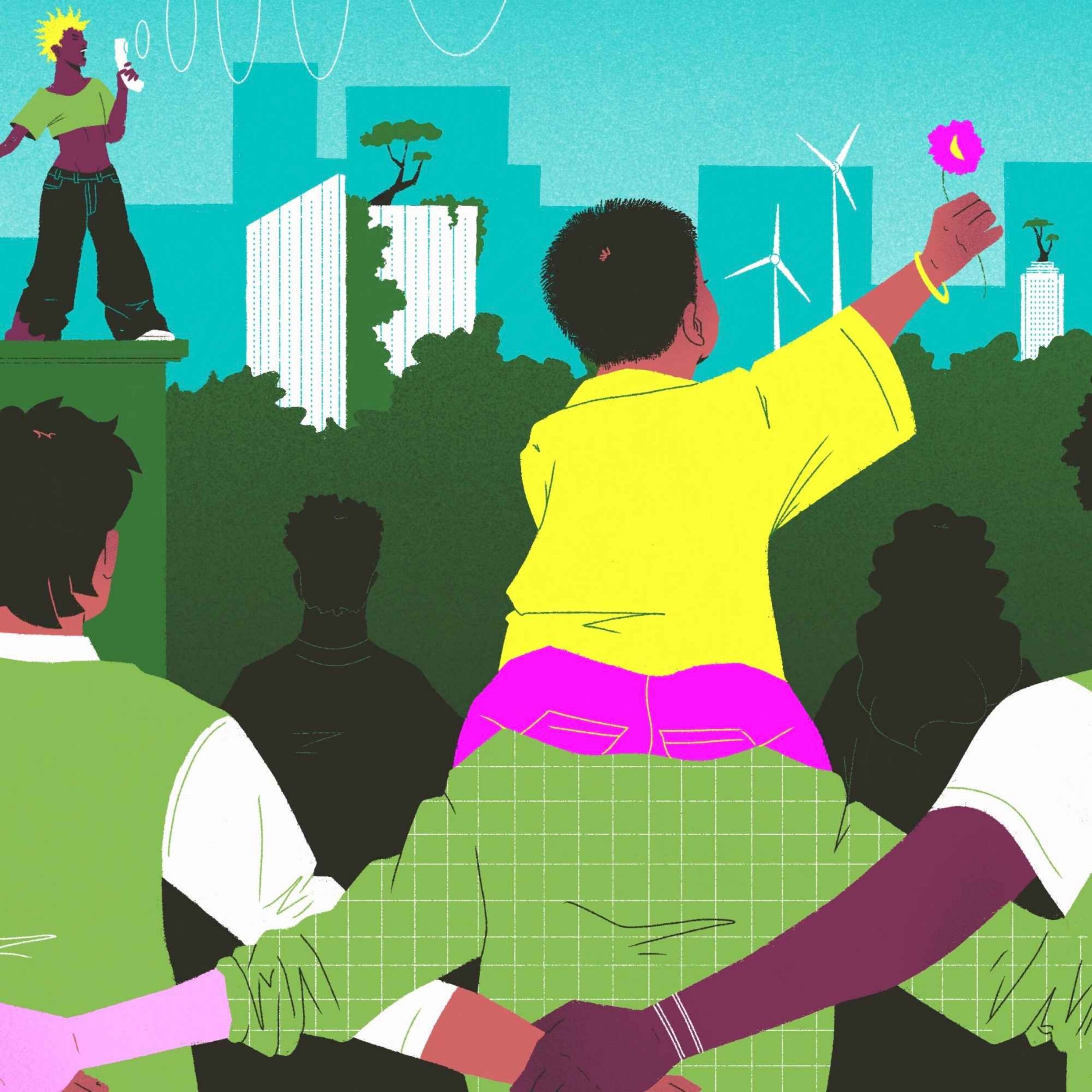
Third, we would replace fear with moral imagination. Imagine children being taught how to organise a meeting, how to listen across difference, how to protect one another, how to use art, humour, music, and storytelling to shift hearts. Imagine every neighbourhood having a “good trouble club” where people identify one injustice around them and act on it together.
So how do we achieve this? We start small, and we start where we are. Around a kitchen table. In a classroom. At a place of worship. In a WhatsApp group. At a taxi rank. In a community garden. We ask: what is the injustice closest to us that we have learned to tolerate?
Then we gather others. Not the perfect people or the people in power. Just people who care enough to begin.
We teach our children that courage is not the absence of fear. Courage is what we do when fear is right beside us.
We tell better stories. We celebrate the troublemakers who came before us: the women who marched, the workers who organised, the students who boycotted, the artists who sang forbidden truths, the elders who hid activists, the young people who refused to bow.
What excites me about a world with troublemakers is that troublemaking is contagious. One community refuses to accept poison in its water, and another refuses eviction. One young person speaks truth to power, and suddenly the emperor looks a little less dressed than he did yesterday.
American civil rights activist, John Lewis, that great maker of good trouble, once said:
‘Do not get lost in a sea of despair. Be hopeful, be optimistic. Our struggle is not the struggle of a day, a week, a month, or a year, it is the struggle of a lifetime. Never, ever be afraid to make some noise, and get in good trouble, necessary trouble.’
I believe a world with trouble-makers for justice has the potential to turn grief into purpose, fear into courage, and isolated pain into collective power.
May we raise children who are kind enough to care, brave enough to question, and troublesome enough to change the world.
I can't wait to hear what else we’ll add in the next episode.