Full transcript text
My name is Elizabeth Couse, I’m an environmental activist based in Costa Rica, and you are listening to A World With. In today’s episode I will be adding a world with no saviors.
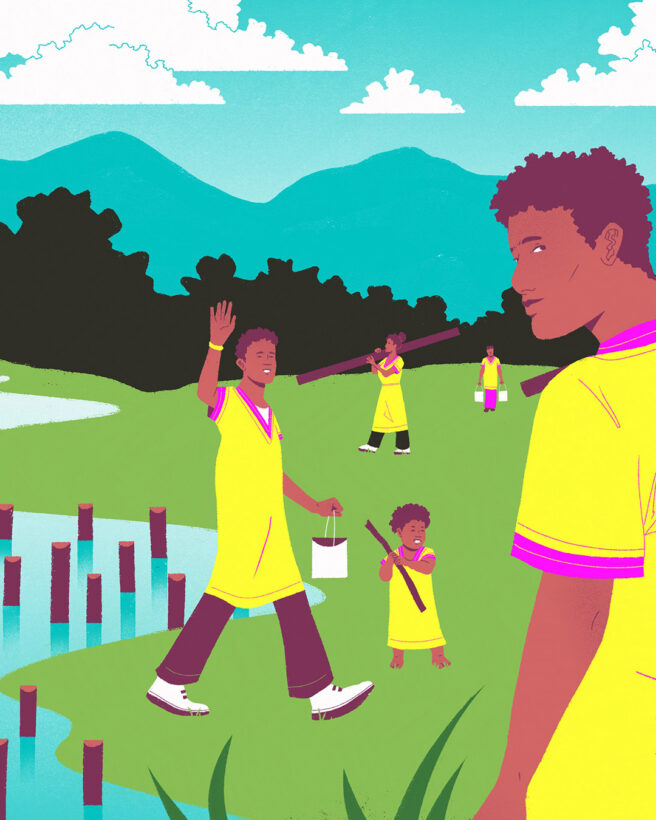
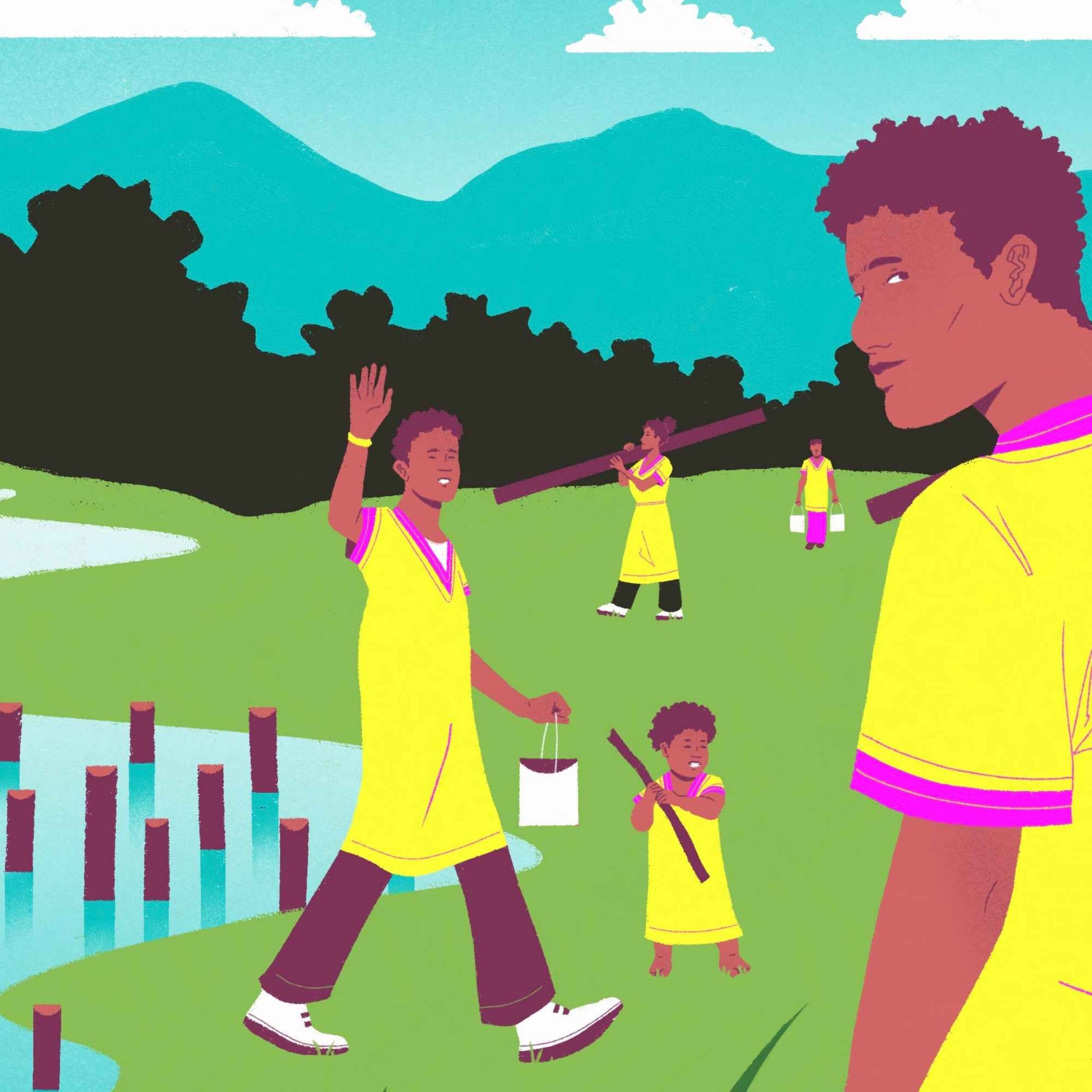
I was born in China, grew up in New York, and have spent the past 8 years living in a small Caribbean town in Costa Rica. It is a rich and culturally vibrant community, diverse and layered, much like the landscape itself - alive, loud, and wild. Picture the lush jungle up against the Caribbean sea. I can hear howler monkeys jumping between the trees and calypso music hums along with the ocean breeze. At first glimpse of the jungle, you’ll just see green. But look more closely and you’ll notice an abundant food forest filled with breadfruit, noni, cacao, wild bananas, plantain, and coconuts.
My town has strong roots - a proud AfroCaribbean community and local Indigenous groups, the BriBri and Cabecar, who have been stewarding this land for millenia. Living here for the majority of my adult life has had a huge impact on how I see the world and how I believe we can build a better future.
I’ve spent a lot of my life straddling between different worlds. The East and the West, the North and the South, those with and those without... I learned very early on that many of our circumstances are simply an outcome of where we were born geographically and that it is very very unfair.
Understanding my immense privilege being an American living and working in the Global South has been a reckoning. I have worked primarily in the environmental and climate spaces with organizations and projects of all scales from small grassroots community projects to huge international NGOs. And, what I have learned and witnessed time and time again, is that people are not waiting to be saved. Everyone wants to live a life of dignity and communities already have solutions and understand their problems better than any outsider ever could. This is why I am adding a world with no saviors.
I believe a world with no saviours is needed as the dominant narrative within the environmental movement is one of western and white saviorism. I see too often how in many seemingly progressive spaces we mimic the same harmful systems of colonization and hierarchy and don't even realize it.
I've found that in many climate spaces, people often don't want to believe that Black and brown people have solutions, that people in the Global South have solutions, that Indigenous people have solutions, that people living in poverty have solutions. Marginalized people everywhere are still positioned as beneficiaries rather than the leaders of their own stories.
And, even within projects that center and uplift global majority voices, they are often framed as ‘passing the mic’ or ‘giving a voice to the voiceless’. These narratives still center the Global North as the primary audience with whom the Global South need to appease to and perform for. But no one is voiceless. And this framing perpetuates systems of power that benefit some while keeping others marginalized and it is stagnating our progress towards a climate just future.
BIPOC land defenders have been resisting oppression and colonisation for centuries. The problem is not that they do not have a voice or a mic but rather who we position as the authority.
The savior complex isn't just about individuals with seemingly ‘good’ intentions. It's about structure and it’s about power. Power is at the center of many of our problems today and there will be no sustainable future without first addressing who holds power and radically shifting and re-distributing it.
And so, I believe a world with no saviours is needed because the Global South is not a problem waiting for a Northern or Western solution. It is a living archive of solutions that predate the problems the North have created. A world with no saviors is not a world without allies. It’s a world where resources, platforms, and power flow towards and then from the communities who have always held knowledge, rather than being dispensed by those who assume they hold the answers.
It’s a world where a farmer in Costa Rica who has been stewarding the land for generations is treated as an expert. It’s a world where an Indigenous water guardian isn’t a beneficiary of conservation but its author. It’s a world where we choose solidarity over saviorism.
Solidarity means showing up in service of someone else's vision. Saviorism means showing up with your own vision and asking them to implement it. The difference may sound small but the outcomes are completely different.
In my eyes a world with no saviours is simple: it’s a world where the communities most impacted by climate collapse are not waiting to be rescued but recognized and followed as the leaders they already are.
Long term, a world with no saviors would ultimately be a world where power lives where it belongs - with the communities closest to the land, the harm, and to those who have the solutions.
No sustainable future has ever been built by the systems that caused the problem. The savior complex is about power and who holds it. It determines who gets the funding, how the story is told, how the problems are defined, and most importantly, who gets to define the solution. Without agency, communities will never be able to implement genuine lasting solutions. But when the coin is flipped, and communities are recognized as the solutionaries that they are, real change can happen.
So how do we achieve this? We start by checking ourselves. Decolonisation is a lifelong practice in which we probably will never fully arrive in this lifetime. The most educated, the most well-intentioned, the most ‘aware’ people still need to check in from time to time.
To achieve a world with no saviours we need to stop subscribing to extractive storytelling and the commodification of struggle. We follow power and funding and we aren’t afraid to question or challenge it. This starts with a mindset shift more than anything else and has to be followed by a shift in power including money, resources, and how stories are told.
The majority of global climate finance still flows through Western institutions toward Western-designed solutions and interests. Redirecting resources directly to Global South-led organisations not as subcontractors but as decision makers is one of the most concrete things that can change right now. We have to ask who is holding the budget and who signs off on the strategy? If the answer is always someone far removed from the community the work is meant to serve, that's where the work begins.
So much excites me about adding a world with no saviours because it is already happening. I know countless community leaders and organizers on the ground in Latin America who are doing such incredible work and making real change without the approval or waiting for a Western audience to recognize or respect it.
A world with no saviors is ultimately a more honest world. One that stops mistaking proximity to power as power. And that honesty, I believe, is where real change begins.
I believe a world with no saviors has the potential to make meaningful strides within the environmental movement by addressing root questions of power and framing.
I can't wait to hear what else we’ll add in the next episode. Thanks for listening!