
Power of Place is a personal essay series that explores the transformative power of places around the world and how they are being used by communities as sites of resistance and worldbuilding.
Simmone Ahiaku explores how The Point in Lewisham provided a much needed space for organisers and community members to come together to resist gentrification and start building collective futures.
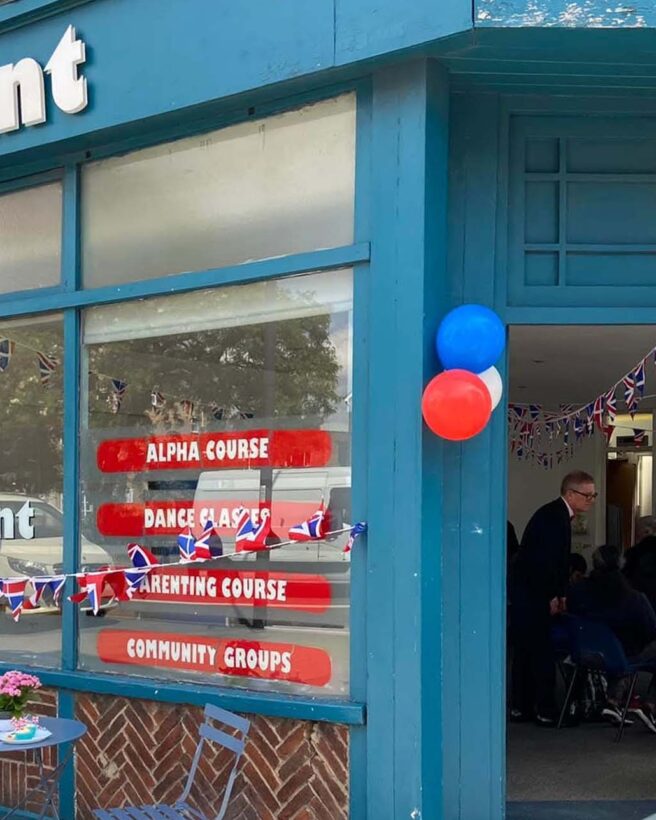
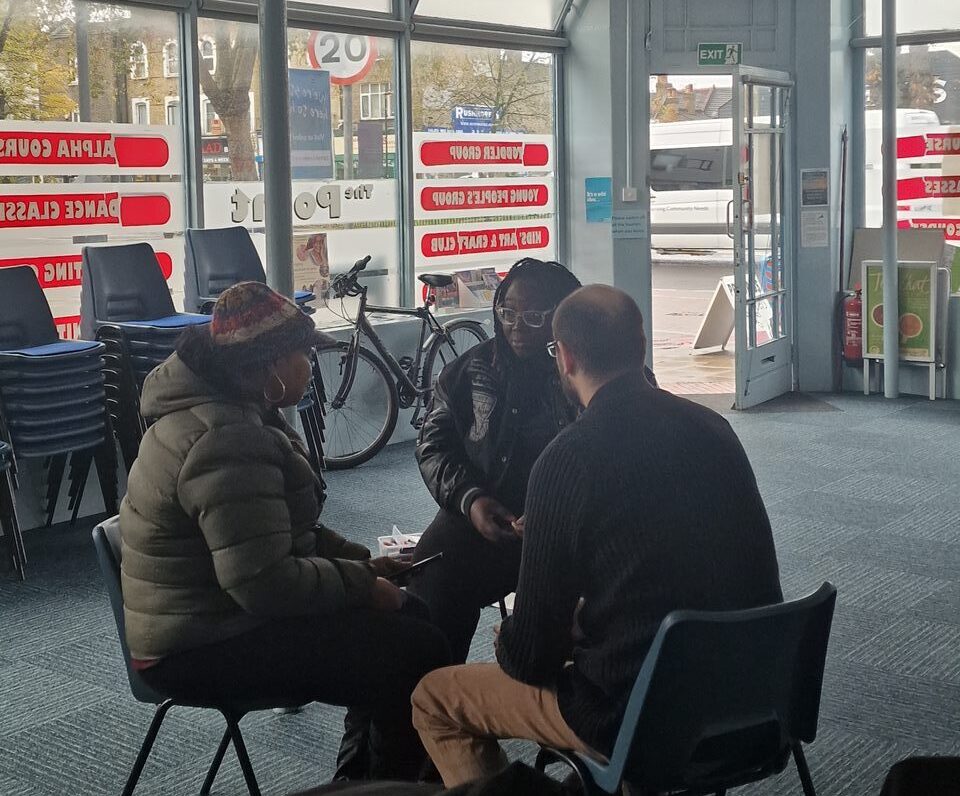
Our journey starts at 401 Lewisham High Street, in Catford, London, better known as The Point. It was a small building, painted navy blue with a white sign that said ‘The Point’. In its windows were red signs with notifications of all kinds of activities: toddler and young people’s groups, kids’ arts and crafts clubs, English and dance classes, and community groups.
The inside had white walls and a grey pinstripe carpet. There were lots of foldable tables, chairs, toys, a functioning kitchen and – my goodness – you could tell the place was loved. I say all this to give you a physical image of the space, but that’s not all it was – it was a pinnacle of the local community. If you speak to anyone in Catford, they either know of The Point or used it at one point. I thought, for that reason, it being called ‘The Point’ was so apt; it was where everyone met.
A chance meeting, a chosen home
My story with The Point started on a spring day in 2023. I was the Lewisham branch organiser for the London Renters Union (LRU) and I was passing out flyers to local businesses.
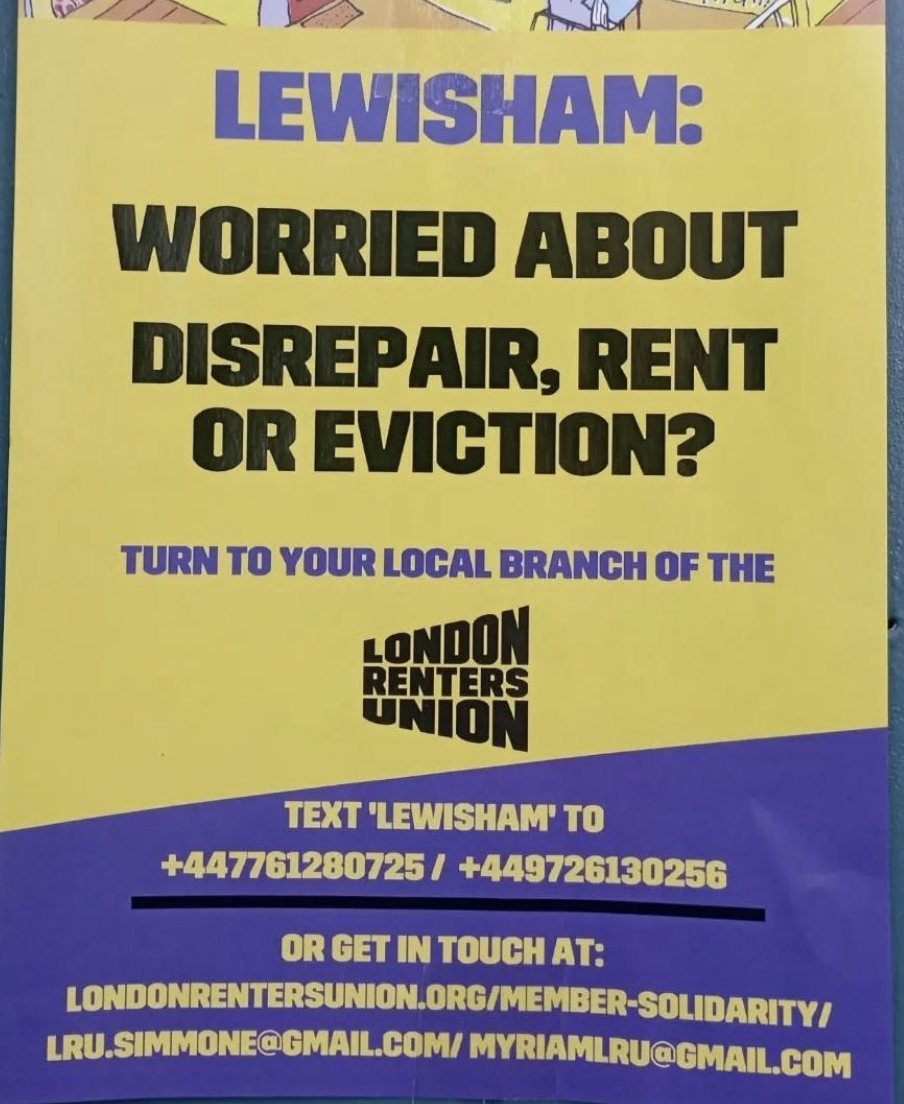
London is one of the most expensive cities to rent in. Yet renters always receive the worst end of the stick for housing, whether it is rising rents or homes full of mould and disrepair. LRU’s aim is simple: to unite renters in London against a rigged housing system. Because if we hold the power, then organised together, we have the ability to transform the housing system for all.
LRU’s aim is simple: to unite renters in London against a rigged housing system.
My role day-to-day was to support new members, identify and organise campaigns on issues that renters were facing, and build relationships with community leaders, spaces and local people within the borough of Lewisham.
I arrived at The Point and met its owner Maureen, a sweet older white woman who has lived in South East London, and mostly Catford, all her life. We immediately bonded over rising house prices and fears of gentrification in the area. Being from Brixton, I know this fear all too well and could see the sparks of it lighting in Catford.
She made me a cup of tea and I mentioned that I was looking for a space to host some branch activities. She said The Point was currently looking for long-term hirers of the space. I knew it was meant to be.
A place we could call home
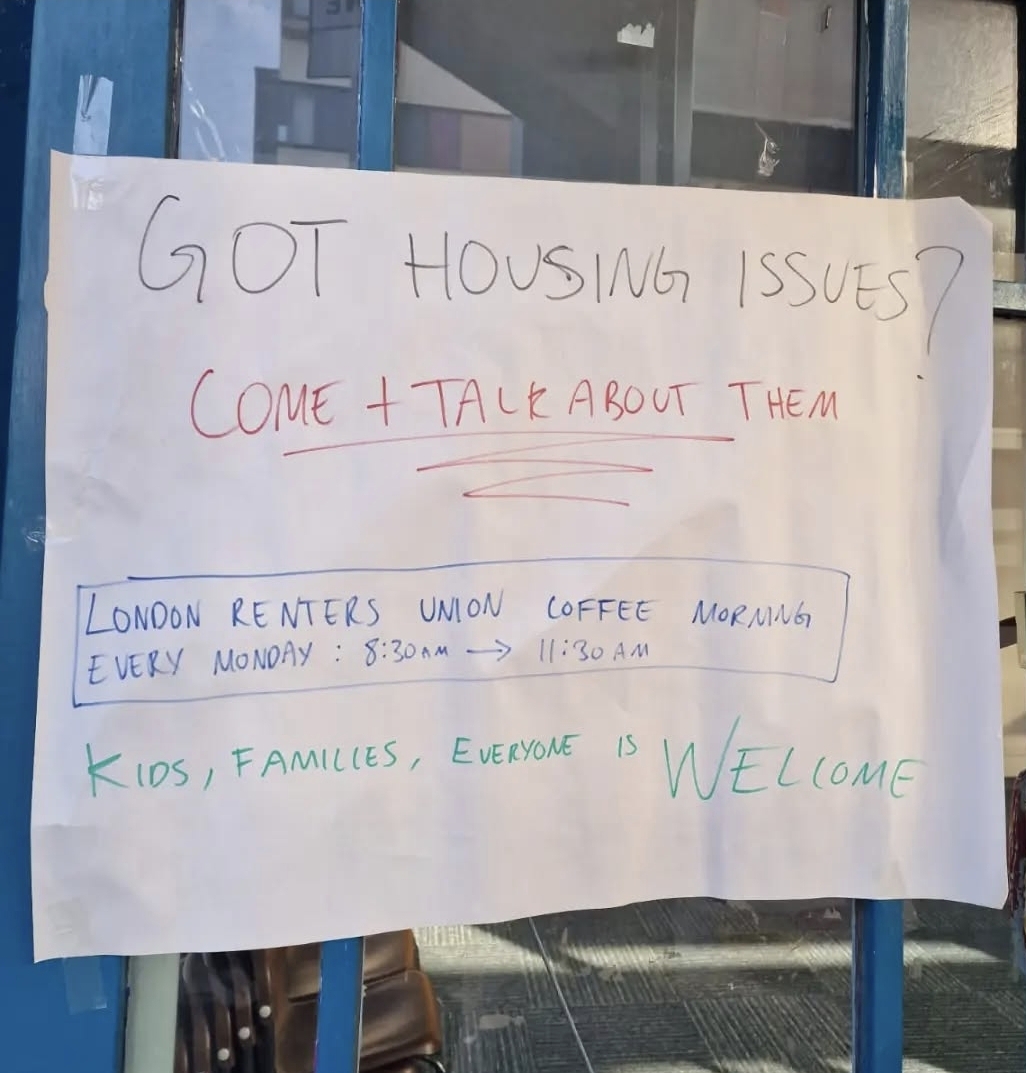
The first meeting I hosted there was great; filled with LRU members who loved the space immediately, drawn to the cosy and safe environment it provided. From then, our organising flourished. We treated it as the home of our organising activities, hosting ‘ring rounds’*, political education workshops, training for members and one of our largest projects: regular coffee mornings.
It was a place I, and so many in Catford, could call home.
We hosted these every Monday. People could drop by to have a hot drink and food and talk about their housing worries. We’d meet people with harrowing housing stories that affirmed how deliberate and brutal our housing system is. But the relief for them in being able to open up about it and meet others in similar situations meant we were able to build important trust-based relationships with the people around us.
We ran this space for a year, and I credit The Point as a place that allowed us to build these relationships and points of organising from scratch. It was a place I, and so many in Catford, could call home.
We tried, we failed, we tried again: the making of organisers
More than a home though, it became an incubator for fierce organising. It sparked collective conversations about who holds the power in Lewisham, how we can shift this power into our hands and how we could bring other people onside with us.
It was here my members and I grew the most. We mapped, planned, tried, failed, and tried again. All in that order, and repeated many times.
But, our biggest win came from organising with the residents of Milford Towers, a housing estate in Catford doomed for demolition, disregarded by the media as a ‘crime hub’. In reality, there is a tight-knit community where people know and look out for each other.
The residents had been in a long-standing battle against the council about the disrepair in the estate – broken lifts, broken doors, mould and disrepair. We joined their fight in 2023.
Winning repairs, building futures: the legacy of Milford Towers
We hatched a plan from The Point of how to make our voices heard. We intended to unite a group of people to march to the council and not leave until they agreed to our demands. In the meantime, we doorknocked the community of Milford Towers, printed leaflets and identified the key power holders in the council. We contacted the press to build the story, decorated banners and built the confidence of residents to tell their own story, as well as their resistance.
It was all hands on deck, but it was worth it when, by 1st February 2024, we won over £14 million in repairs from the council.
While this was incredible, the even bigger win for me was the greater community cohesion built on the estate. As well as more parents who know each other and more neighbours saying hello, there’s now an established committee of block reps and other residents who continue to run the campaign and keep the council accountable.
The residents learned how to become organisers, how to campaign and win, and did all of this while embedding care and empathy into their approach.
Place as praxis: what The Point taught us
Unfortunately The Point closed its doors in May 2024. It was something Maureen had pre-warned me about, but the day still came like a devastating loss. She wasn’t able to get enough community groups to hire The Point as so many were moving out of the borough, the city or just closing down.
I remember breaking the news to LRU members and Milford Towers residents, and everyone being so distraught, commenting on how many community centres have closed in the borough over the last five years.
The Point was our home, our soil to grow from.
We’d had so many late nights, laughs and interpersonal conflict (and conflict resolution) in that space. But it was our own and led to transformative changes in us and our local area.
The Point was our home, our soil to grow from. The loss of it was symbolic of the changes happening across London; the gentrification that happens when rent prices rise means only a few people can remain in the same area that they’ve lived in all their life.
With London becoming more transient in its demographic than ever, this affects how we’re able to organise. Nothing feels permanent. You organise with someone today and they’re out of the borough tomorrow because of rent rises. You build a community structure like the coffee mornings and the next moment the space they happen in is closing down. Our sense of belonging is so deeply tied to the places we live in or frequent, that the loss of a space like The Point makes you feel all the more jaded.
Gentrification and the housing crisis has always been about the land and who owns it. It is a tale as old as time, consistently written by the landlord. But, saying this, what would it mean for neighbours to collectively write the story of their area? The Point makes you realise that everything worth fighting for is found within every interaction with the area, whether it’s an Imaam, shopkeeper, community cinema worker, eclectic Catford resident or the market. That’s the seed; and the collective organising is the germination process.
The seed we carry forward
Social scientist and geographer Dorreen Massey “conceptualises place as an “event” produced by relations and processes that stretch across time and space. Yet places are not just constituted by relations. The opposite is also true: places make relations. They gather people, things, and stories into a variety of configurations, with effects dispersing across time and space. Put simply, places are not just events, they are also eventful”.
That is to say, that it is the people that make a place a space but we wouldn’t have been able to build that without the existence of the Point, so place(s) shapes us too. The Point was really special to me, it was special to us. Who I was, how I am, and how I will be is so heavily shaped by the people and four walls that encapsulated our collective dreams for each other, Catford and the rest of the city.
The Point was many things in its lifetime and will be deeply missed by me and the people of Catford. It taught me that space, like organising, is a living seed that must be nurtured, or its potential to transform us and the world can’t come to fruition. While it is no longer physically with us, the seed and spirit of transformation it instilled is, and we now have the tools to grow anywhere. Surely, that’s The Point of it all.
—
*A ring round is where you call a list of people to gather information about an issue and/or to invite them to a specific organising activity e.g. a branch meeting, doorknocking, a workshop, an action, a social.