
Power of Place is a personal essay series that explores the transformative power of places around the world and how they are being used by communities as sites of resistance and worldbuilding.
In this article Mai-Anh Vũ Peterson explores the power of radical bookshops for creating solidarity and activism and as sites already bringing into existence different models of community care.
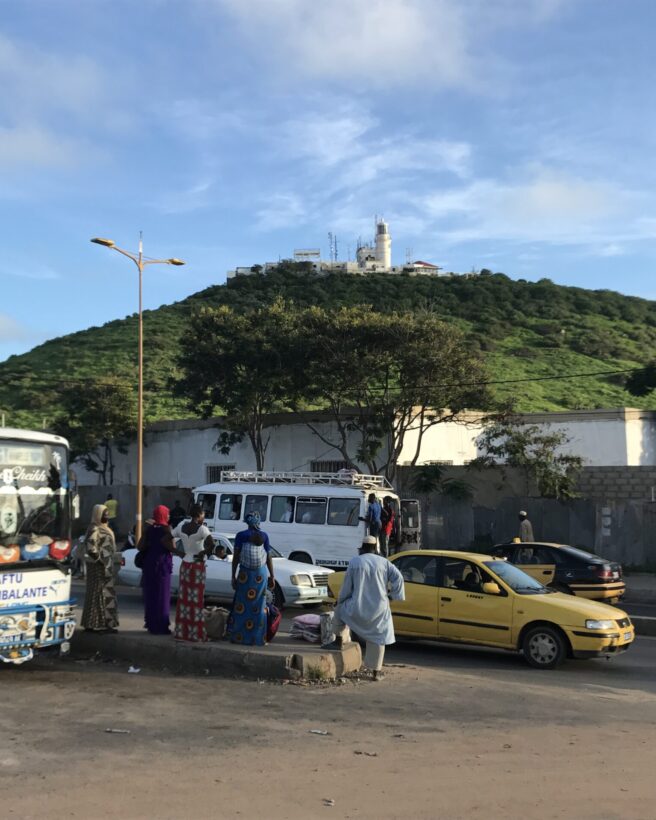
The Phare des Mamelles (Mamelles Lighthouse), at the westernmost point of mainland Africa in the city of Dakar, Senegal, has stood watch over the Atlantic for over 160 years.
For about nine months of the year, the hill it sits upon is brown and arid. But in the month of August, a couple of weeks after the first heavy rains, something glorious happens. An explosion of green life takes over the city, and the lighthouse’s throne – the second of the Deux Mamelles, a pair of distinctive hills that give their name to the surrounding neighbourhood – is dressed in verdant finery.
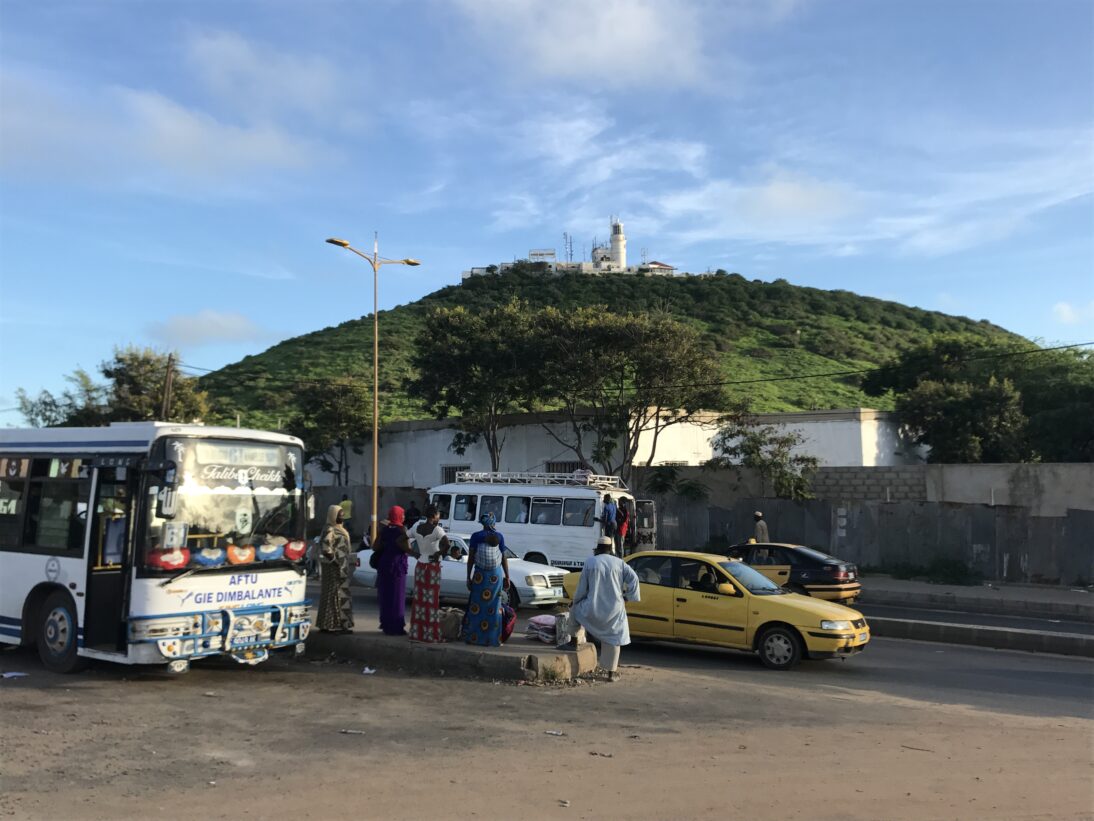
I lived in Mamelles for almost a decade, during which time I developed a strong connection to the Phare. Being one of the only places to escape the city’s choking pollution, it was my refuge for evening walks, 6am runs and sunset vistas.
During my darkest periods, the Phare grounded me in my adoptive home. It was a place where I could always rely on the kindness of strangers. I was invited time and time again into people’s homes, where every utterance of gratitude was met with a phrase so ubiquitous among Senegalese that it might as well replace the motto on the national coat of arms: ‘Niofar’, which loosely translates to ‘we are in this together’.
More than a polite phrase, Niofar underpins a moral ethic of solidarity, community and mutual care. It is used for expressions of joy, sadness, hardship and ordinary life.
The return
But, in April 2023, I left Senegal to return to Edinburgh. The decision was a complex one. While I had been welcomed fiercely by the country of teranga (‘hospitality’ in Wolof) in Dakar, I always felt disconnected from any kind of political identity in West Africa. And although Senegal has strong decolonial movements and youth political engagement, I respected and followed these initiatives from a distance. I felt that my efforts were better concentrated in the belly of the beast, in the imperial core, and specifically in the UK.
The change tore me up with unexpected intensity. The stress of an international move aside, what struck me the most was how lonely and individualistic people’s lives seemed. In Dakar, a simple trip to my local ‘buutik’ (corner shop) would involve several greetings, to neighbours and strangers alike. In Edinburgh, I could go to numerous shops and never utter a word, scanning my items mindlessly at the self-checkout machines.
The cold reality of returning to the UK was felt in more than just the low temperatures and lack of interpersonal connections. When I left, the country was deep in the grip of austerity politics, the hostile environment and rising polarisation around immigration. What I returned to was somehow even worse: a cost of living crisis so extreme that large parts of the population can no longer afford to heat their homes; racist and anti-migrant riots and rallies; and draconian measures to crack down on protest and freedom of speech.
What I craved was local, on-the-ground engagement and a chance to make connections in my new city.
Like many others, I felt that the antidote to the increased social isolation and individualism caused by our institutions and systems was to be found in grassroots movements. However, I found that the seed bed of grassroots organising was no longer in the streets – it was online.
I became disillusioned with what I saw as hyper-reactive, superficial social media activity, which I felt catered more to the monetisation of big tech platforms than to the foundations of political movement building. I felt exhausted sifting through the noise. What I craved was local, on-the-ground engagement and a chance to make connections in my new city.
Another lighthouse
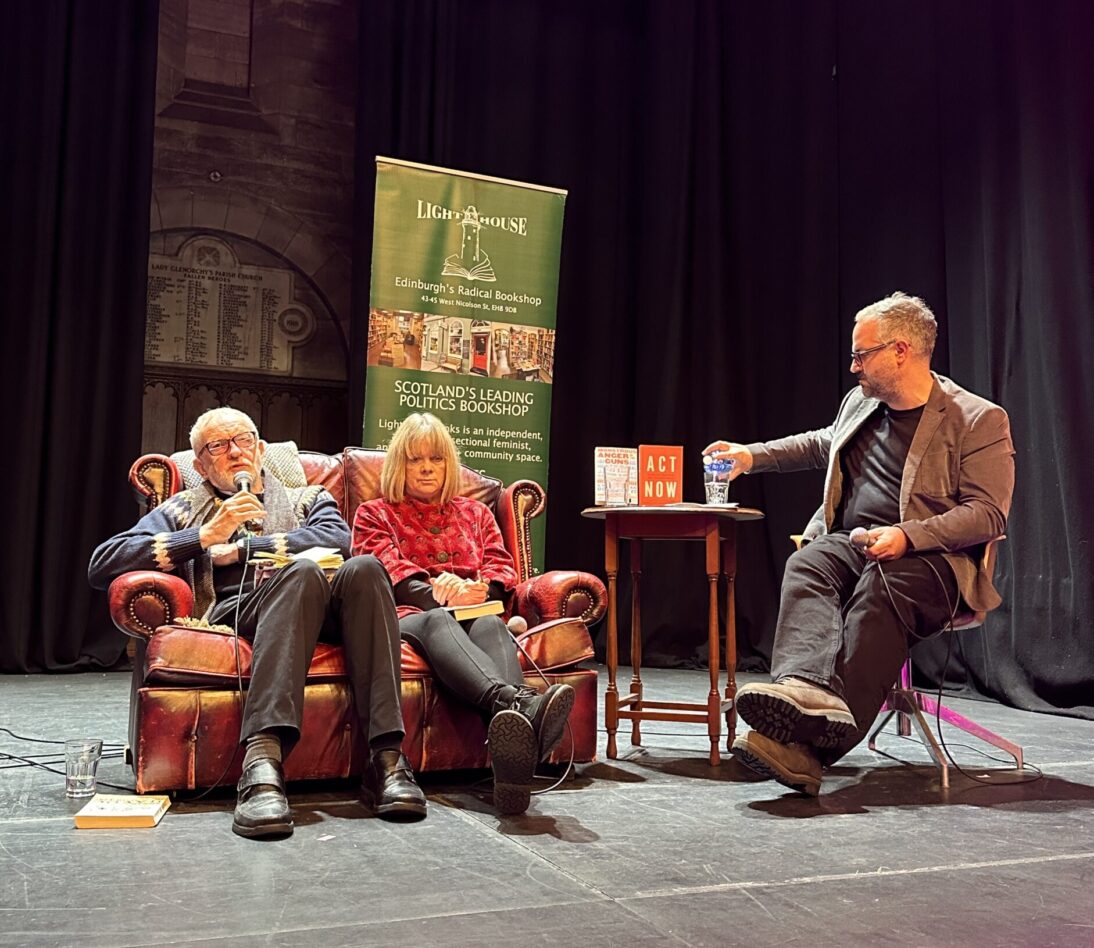
There has been a political bookshop on West Nicolson Street in Edinburgh for over 30 years. When I moved back, I was gratified to find its current incarnation, Lighthouse Books – an independent, queer-run, women-owned bookshop that prides itself on cultivating a radical community space through an intersectional feminist and anti-racist lens.
It follows a long tradition of radical bookshops in the city that came before it, such as Word Power, Lavender Menace (Edinburgh’s first LGBT bookshop), First of May and Womanzone. The Palestinian flag hangs proudly from the door, while inclusive Pride flags and caring notes around the shop signal a refuge that is further consolidated in the bookshop’s Safe Space policy.
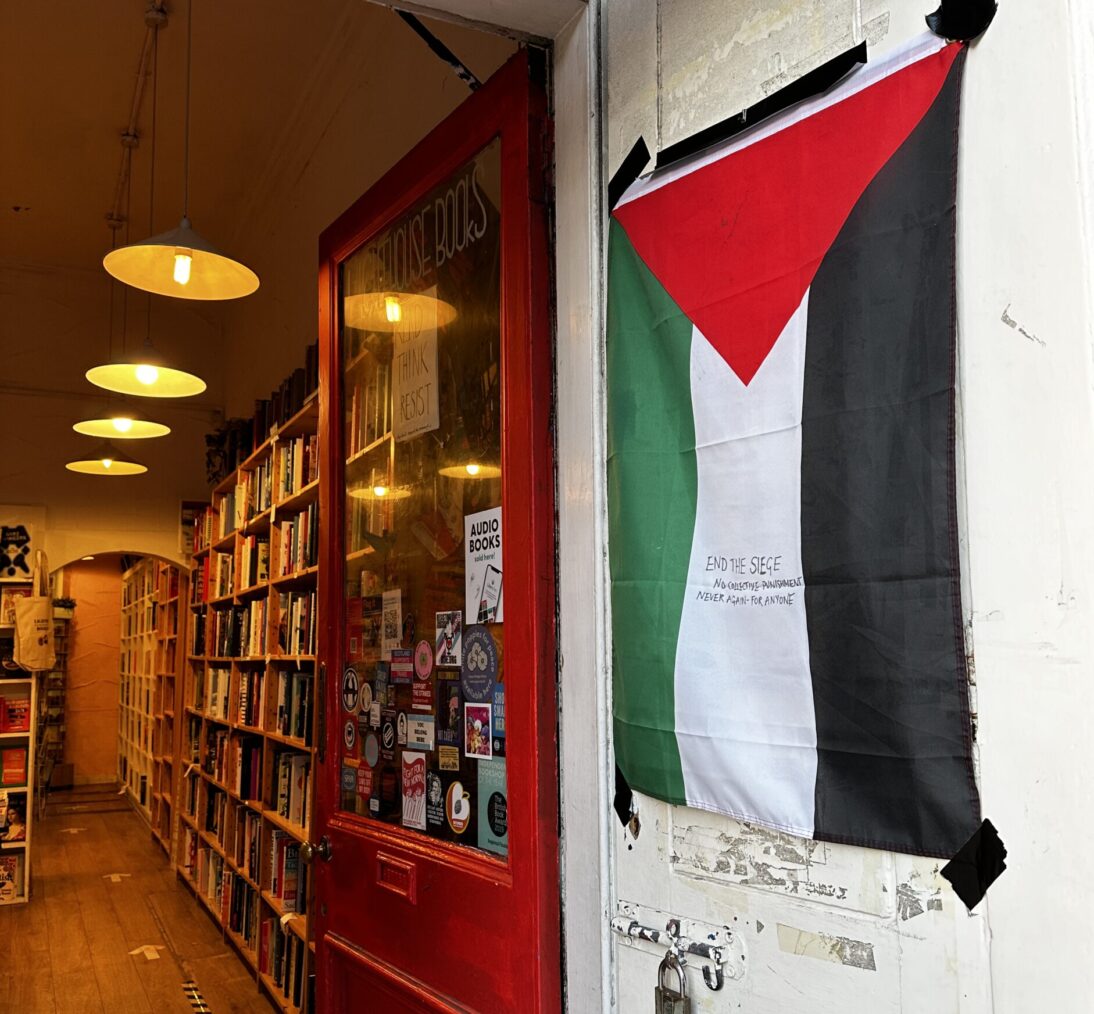
From my first visit, I understood that it was more than a space to sell books. Here was a nucleus for community building, solidarity and most importantly, hope. The more I frequented the shop, attended events and met people through its hosted spaces, the more I understood how possible it is to have solidarity practices embedded into the very operating models and culture of an establishment.
Though visibility may be rare for spaces like this, their existence is not – independent bookshops in the UK hit a 10 year high in 2022, and the Alliance of Radical Booksellers charts at least 75 current ‘radical’ sites in the UK.
In a world where most public spaces have been privatised, radical bookshops, despite being businesses, offer a space that is more than transactional. Bookshops like Lighthouse are quietly reinventing what a public space can be: open, messy, political. They may be small, but they hum with the world’s possibilities.
Bookshops like Lighthouse are quietly reinventing what a public space can be: open, messy, political.
In addition to paying a living wage and refusing zero hours contracts, Lighthouse also allows staff time away from the shop to attend protests and engage in other forms of activism. For the wider community, Lighthouse provides space for organising, such as meetings and fundraisers, as well as supporting environmental campaigns and anti-raids action. For a small business to put itself on the front line of liberation organising – with the kind of consistent solidarity our country’s leaders have never managed – is no small achievement.
One of the initiatives I have most enjoyed contributing to is a simple ‘pay it forward’ scheme, built on the principles of mutual aid: choose an amount you want to contribute towards a book for someone who can’t afford one, pay at the till, and write your own ticket with the amount and a note. Perhaps you offer £10 for a book about Palestine, £20 for someone who is unhoused, or even £5 and a haiku about a cat. They decorate a pinboard in a quiet corner of the shop – the transactions are discreet, with no questions asked.
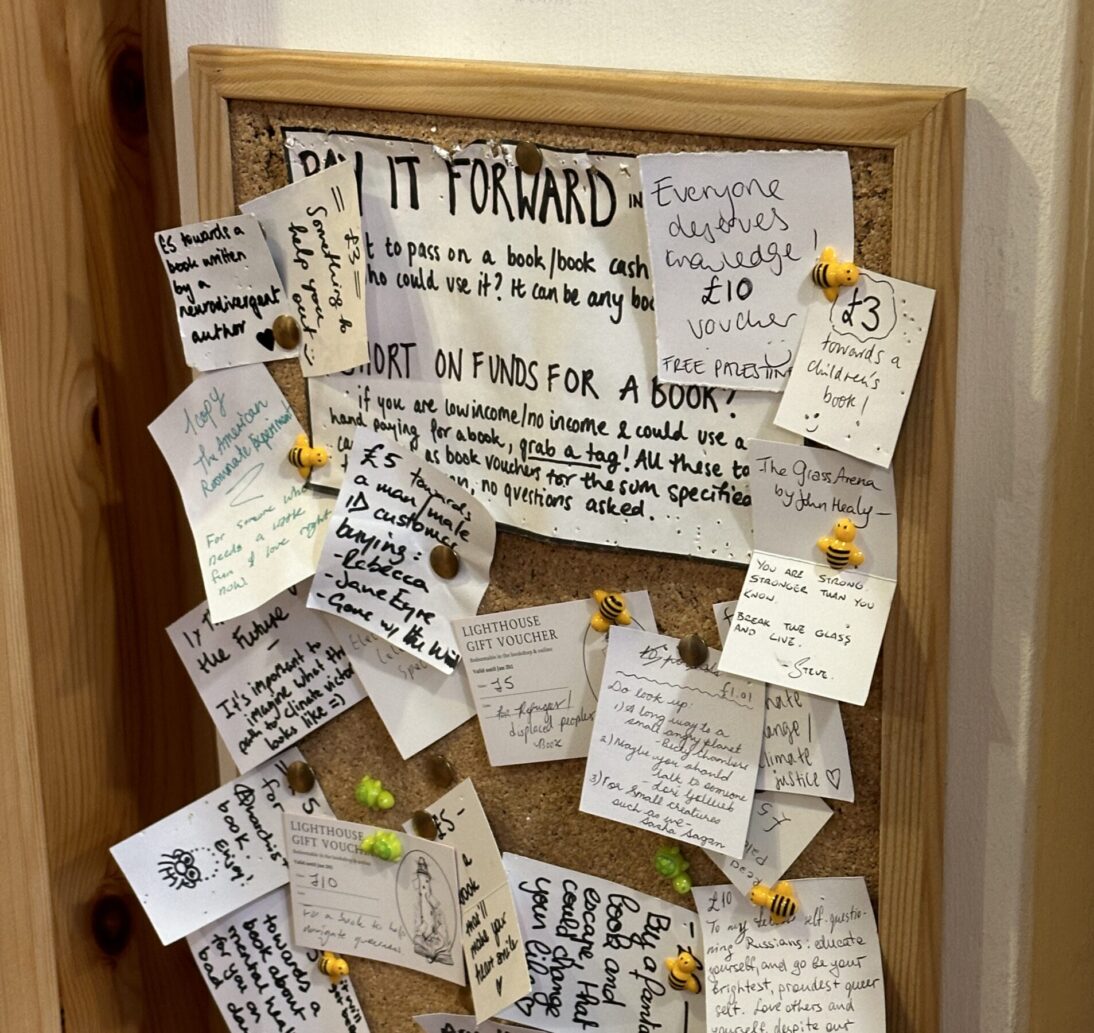
Exchanges like these gave me hope in community, while the space itself – which is a draw for many people from marginalised backgrounds – was a sweet relief for me, a racialised woman, having had many years away from the majority white city I now found myself in once more. However, it was the events organised by Lighthouse that gave me the political home I had been seeking.
Read, think, act: Lighthouse events
Lighthouse’s ethos is ‘Read, think, act.’ Social change often starts with reading, and radical spaces like theirs empowers readers to reflect and make positive change in the community, in sharp contrast to the isolated and hyper-reactive world of social media.
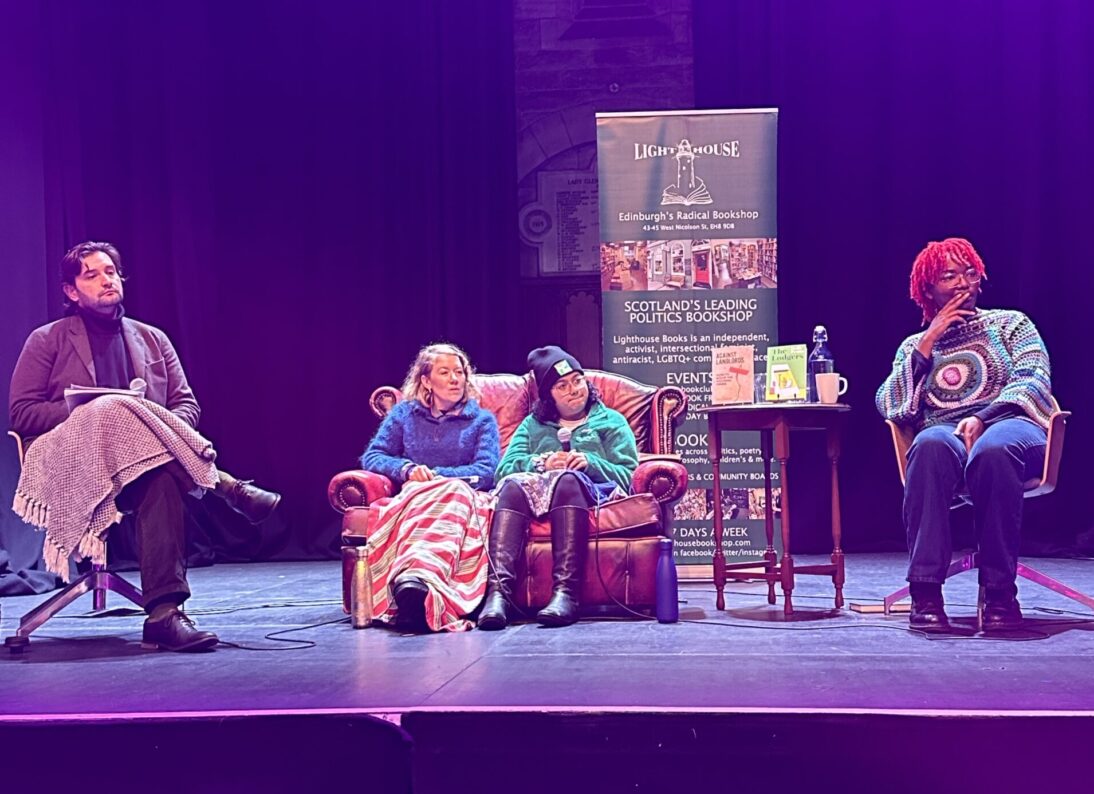
While event spaces may not solve the polycrises directly, they do connect people to movements and individuals making a difference, often giving them much-needed energy to continue the exhausting work of organising. And, every Lighthouse event I have attended has been an incubator for hope and momentum.
I’ve found this solidarity to be particularly precious with the Lighthouse events connected to the Palestinian cause. Through discussions, author interviews and readings to raise money for Gazan families, I have found spaces to connect with others through my rage and grief.
Earlier this year, I was processing grief, severe burnout and struggling with multiple projects I didn’t feel connected to anymore. Again, it was Lighthouse to the rescue. Listening to the voices of Evie Muir, Joy Atkinson and Hannah Proctor discuss burnout, when I also felt like this, and hearing about hopeful futures rooted in radical rest, resistance to productivity mantras and real collective care, I felt something click in my brain. The way I now organise in community movements has been fundamentally influenced by the insights I took from that space – offered in a context that is shielded from the grip of online algorithms or the governing structures that limit the activities of public and academic institutions.
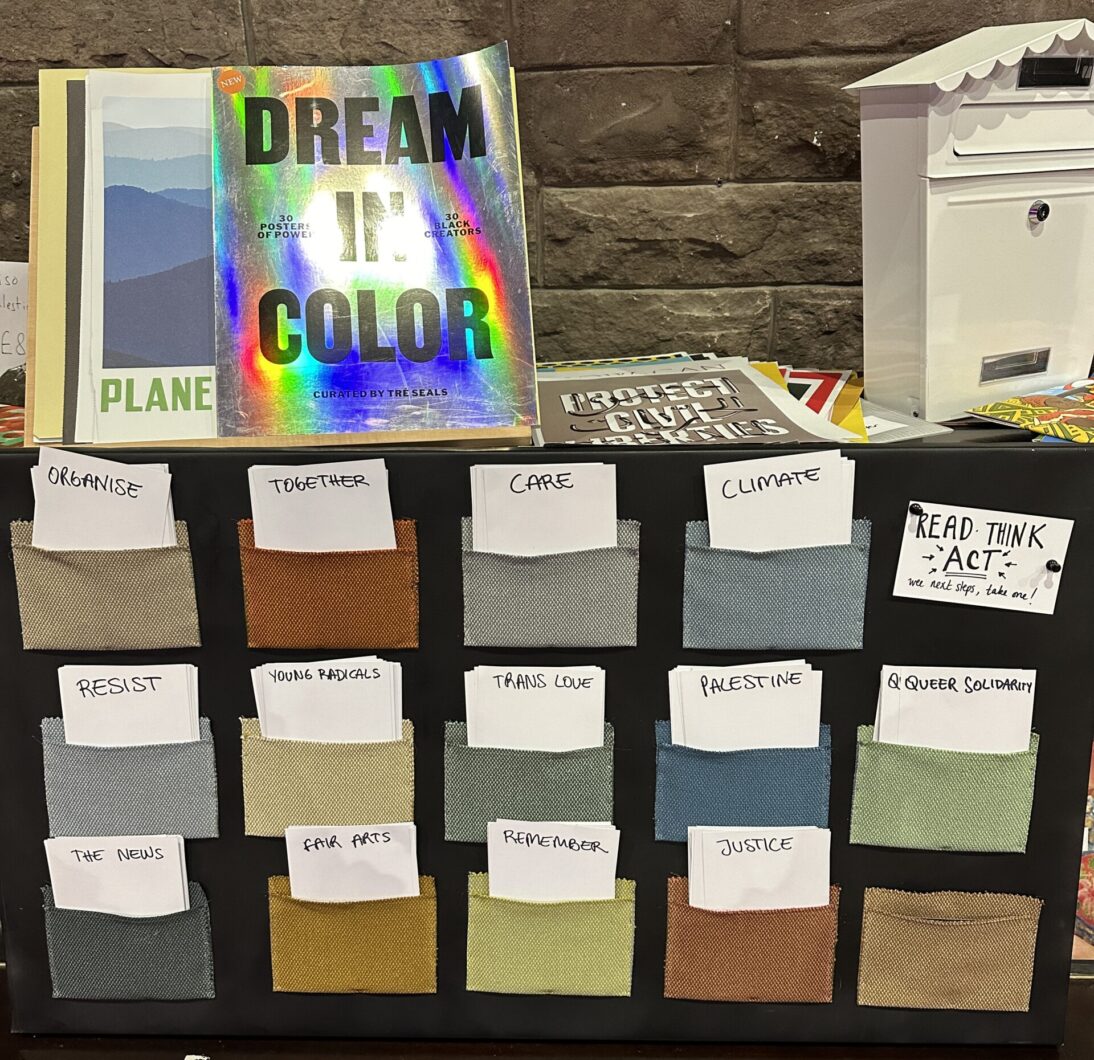
Think global, act local
What I have found at Lighthouse is an example of worldbuilding through practice, not theory. Its focus on community care as an operating principle means that it doesn’t neglect the inward-facing needs of organising. I came to understand the bookshop as a site to incubate and process emotions collectively: the systems that want to keep us in place don’t understand the kind of radical love, grief, joy and anger channelled in spaces like Lighthouse.
What I have found at Lighthouse is an example of worldbuilding through practice, not theory.
My connections there helped me to understand, more than ever before, that if individualism is destroying us, then community spaces like Lighthouse, surely, are the cure. Here, I found expressions of emotion and solidarity that I had missed so sorely after leaving Senegal. Solidarity wasn’t necessarily embedded into everyday society in the UK, but that didn’t mean it wasn’t there – I just had to look for it.