
Image credit: Naomi Gennery

Joon-Lynn Goh on border abolition

Getting unstuck when it’s hard to imagine a world without borders

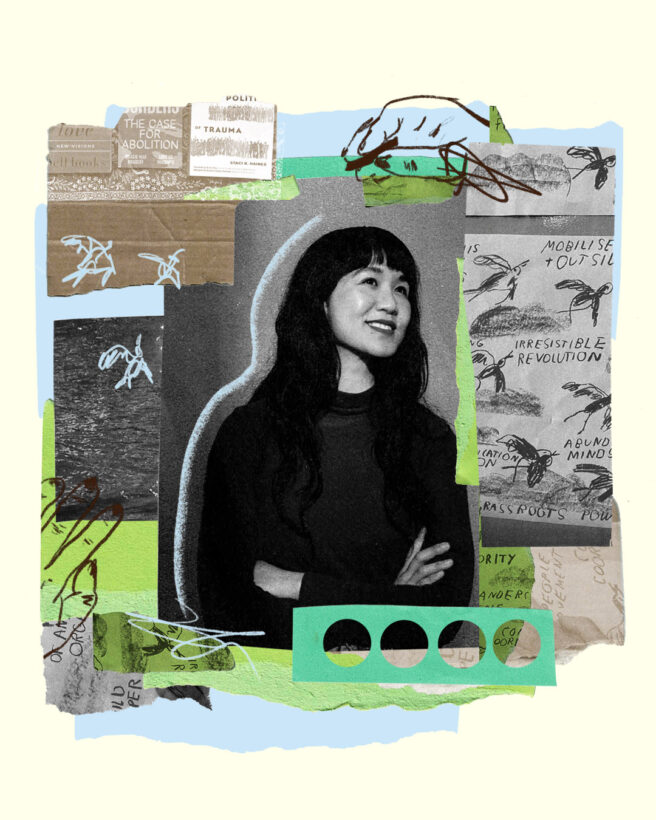
Co-founder of Migrants in Culture, Joon-Lynn Goh curates a reading list of texts and resources about border abolition and for those looking for inspiration on how we move beyond our current systems.

As a migrant and cultural organiser, much of my current preoccupation is how we sustain a social movement that can dream and organise more boldly than the capitalists and fascists of our time. I co-founded and work within a migrant-led art and design studio for social movements called Migrants in Culture. Together we aim to grow a collective capacity to imagine and to live without borders. 

The other night, I dreamt I was being rebuked by an old man. ‘No borders? Well this is just fantasy!’ he said. Really, I didn’t need to dream him to recognise how hard it is for the majority of the world to survive, let alone imagine beyond the status quo, which is what Border Abolition requires us to do: remove violent state practices such as prisons, detention centres and deportation, and instead cultivate ways of caring and organisation that makes bordering a redundant solution. 

Unfortunately I woke up too soon to reply that we have imagined beyond the status quo before – with slavery, apartheid and restricted suffrage – and can do so again. So this is a reading list for anyone (including phantom man) looking for ways to get unstuck.


Seven books that changed my perspective

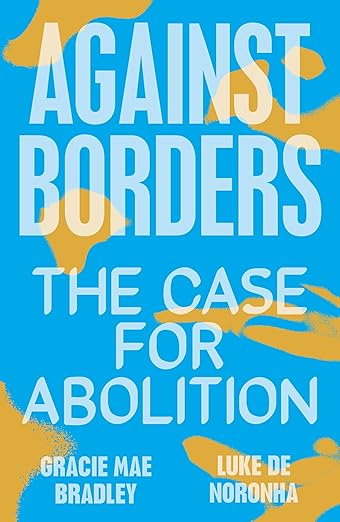
  • Book jacket: Against Borders - The Case for Abolition

    Against Borders - The Case for Abolition

    by Gracie Mae Bradley & Luke de Noronha

    (non-fiction)

    Before this book was published, I was writing an essay on UK migrant organisers with much difficulty. I remember being unable to properly describe a movement working not just for migrant rights, but for a world so transformed that nation states and borders did not exist. So it felt like a thunderbolt to read the precise framing of ‘Border Abolition’ in a UK context within this book’s pages. It’s been pivotal to me in situating migrant justice firmly within a wider abolitionist project.

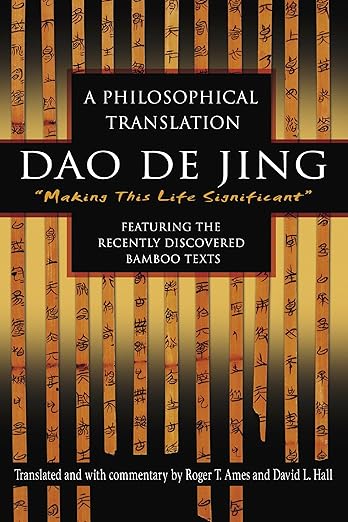
  • Book jacket: Dao de Jing - A Philosophical Translation

    Dao de Jing - A Philosophical Translation

    by Roger T Ames & David L Hall (translation)

    (non-fiction)

    My partner gave me this book and it’s the translation that I would recommend. The Dao de Jing is a 2000-year-old Daoist text, which encourages a self-cultivation that is in alignment with nature and its cycles of change. Of its teachings, two forms of self-cultivation are ‘wuwei’ and ‘wuyu’.  Literally translated, they mean ‘no action’ and ‘no desire’, but can be better understood as cultivating a non-coercive relationship with the world and not seeking to possess or control what you desire. To me, this is an ancient abolitionist text with much relevance for today.

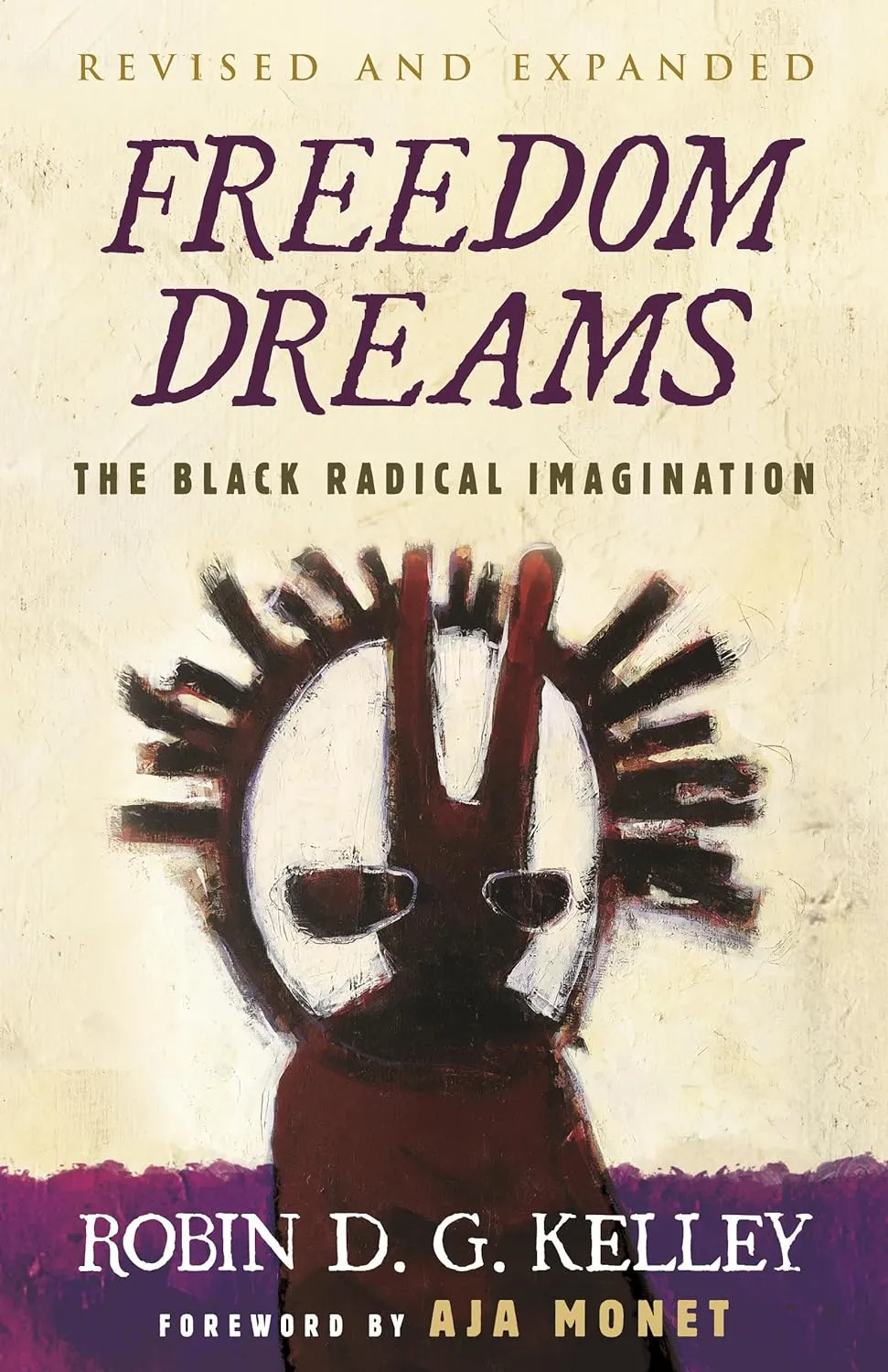
  • Book jacket: Freedom Dreams, The Black Radical Imagination

    Freedom Dreams, The Black Radical Imagination

    by Robin D G Kelly

    (non-fiction)

    The words ‘creative’, ‘imaginative’ or’ visionary’ can be casually thrown into any manner of organisational or political document. But this is to belittle the significance and vitality of how our social movements have imagined and built new worlds. This book vividly documents how Black movement leaders have and continue to imagine new ways towards liberation. In particular, I loved reading about how collaborative this process was in the 50s-60s, where Third World Independence and Communist movements brought leaders across Africa, Asia and South America together in peer reflection, learning and solidarity.

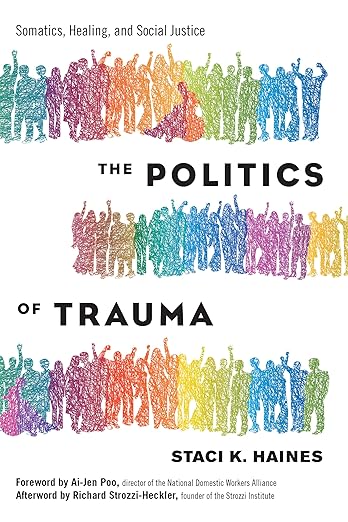
  • Book jacket: The Politics of Trauma - Somatics, Healing and Social Justice

    I was introduced to the teachings of Staci through Healing Justice London, and will forever be grateful. Politicised Somatics is a practice and a way of understanding that sees our individual transformation as complementary and inseparable to our collective transformation. It is a must read for organisers, especially those traumatised, burnt out and/or finding themselves perpetuating harm. How can we expect others to fight for liberation when we don’t know what it feels like in our own bodies?

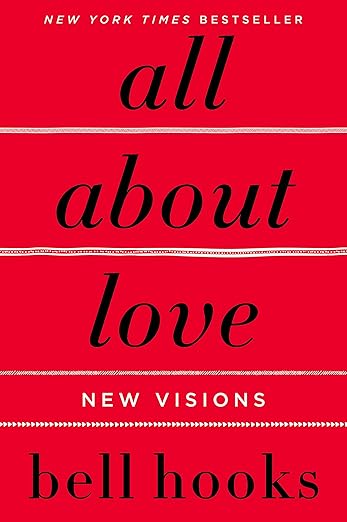
  • Book jacket: All About Love

    All About Love

    by bell hooks

    (non-fiction)

    Coming back to the phantom man in my dream – if I described a borderless world as a world rooted in love, he would roll his eyes and utter ‘how corny’. But how have we belittled and simplified its significance? In this book, bell hooks extricates love from the romcom, and recentres it as a purposeful ethical and spiritual commitment to our individual and collective growth. I am braver whenever I read this.

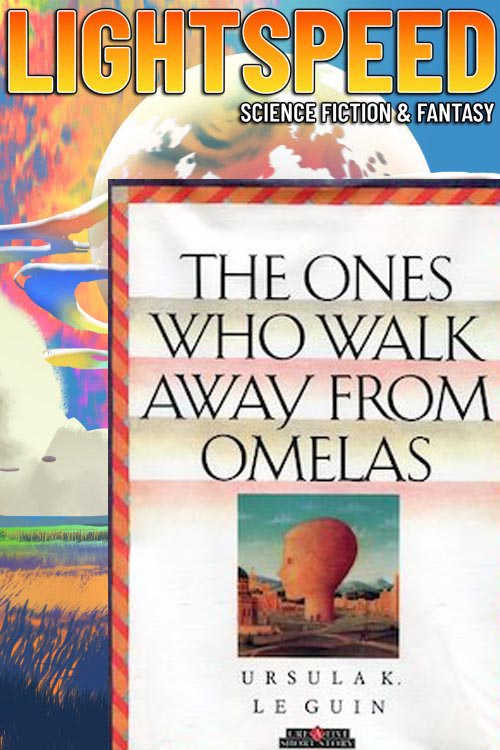
  • Book jacket: The Ones Who Stay and Fight and The Ones Who Walk Away from Omelas

    The Ones Who Stay and Fight and The Ones Who Walk Away from Omelas

    by N K Jemisen and Ursula K Le Guin

    (fiction)

    These two short stories can be read as a pair. Without spoiling anything, Le Guin and Jemisen ask  – what do you do when you see something that you cannot unsee? What choices do you make? What sacrifices are you willing to take? These, and many other questions, will stay with you.

    The Ones Who Stay and Fight

    The Ones Who Walk Away from Omelas

Online and on the go

  • A gorgeous collection of community-based projects that expand ideas about what keeps us safe. If we ever needed to see the future, here are a million examples in the present day.

  • This book was one of the inspirations for us at Migrants in Culture to start a sci-fi writing programme for frontline organisers. It’s part short story, part writing exercises and discussion prompts to explore abolition in a way that is fun, fantastical and very possible.

  • You’re either going to hate or love this. The Artist’s Way is an OG workbook and 12-week programme for artists who are blocked, but I think it’s applicable to all of us. I recently discovered this rare audio recording of the author Julia Cameron, taken from a cassette tape. Some of the language is dated but give it a go.

Musings and more

  • What is the book you've gifted the most?

    All About Love by bell hooks – because it’s such a fundamental text on how to live more fully. It is such a powerful invitation for growth and transformation. It’s also the book I have been most gifted!

  • What is your favourite bookshop?

    There was this brilliant graphic novel shop, just near where I live, but it sadly didn’t survive the pandemic. So in second place – Gosh! Comics on Berwick Street, London.

  • If you could go on a walk with one author, who would it be and why?

    Ursula Le Guin so I can quiz her about ‘Ones Who Walk Away from Omelas’. But also to hear more about her own published translation of the Dao De Jing, which I love and read alongside the Ames & Hall translation.

  • Written by Joon-Lynn Goh

    Joon-Lynn Goh

    Joon-Lynn Goh is a cultural organiser and strategist for social movements. Her practice focuses on growing creative capacity and infrastructure for our collective transformation, rooted in the world-building imaginary of migrant and global majority communities. Joon-Lynn is co-founding director of Migrants in Culture, a Thirty Percy Changemaker, GLA Civic Futures Fellow and UNHCR Champion. She is training in politicised somatics, and DIT-educating herself in daoism and traditional chinese medicinal principles.

  • Illustrated by Naomi Gennery

    Naomi Gennery

    Naomi is a UK-based graphic designer and illustrator working at the intersection of creativity and social impact. Her work is colourful, playful, and often rooted in collage, crafts, and DIY culture. Exploring themes of culture, identity, and social change, she hopes people see their own thoughts, ideas, or experiences reflected in her work. Combining design and illustration, Naomi aims to make big ideas feel more approachable and human.

Read More

  • People are dancing outside, and a woman in the foreground is mixing music. The party is very inspired by queer nightlife culture.

    A world with free public dance parties

    For the final episode of the season, New York based activist, resource mobiliser and cultural organiser, Thanushka (Thanu) Yakupitiyage brings free public dance parties to the world.

  • The image illustrates Mohammed's vision for a world with one nation. In the image small drones are dispatched, carrying democratic votes across three different biomes, showing how easily we would move from one region to another without borders. There are two people on the right hand side posting their votes and smiling. In the image there are three different biomes moving from an arctic biome on the left to a temperate biome in the middle and a desert biome on the right.

    A world with one nation

    Director of the Decolonial Centre, Mohammed Elnaiem, invites us on an exploration of a world with one nation. Mohammed offers a powerful case for border abolition, charting the potential of a world where arbitrary lines on the map, competition, and othering are dismantled.

  • In the image there is a city scene with flats in the background. On the left are two people riding a red motorcycle. The person on the back is carrying groceries and waving to another inhabitant on the right hand side of the image. There are cables going from the buildings to show the nature of shared community.

    A world with no landlords

    In this episode, UK-based writer, creative producer and educator Sara Bafo presents the potential of a world with no landlords.