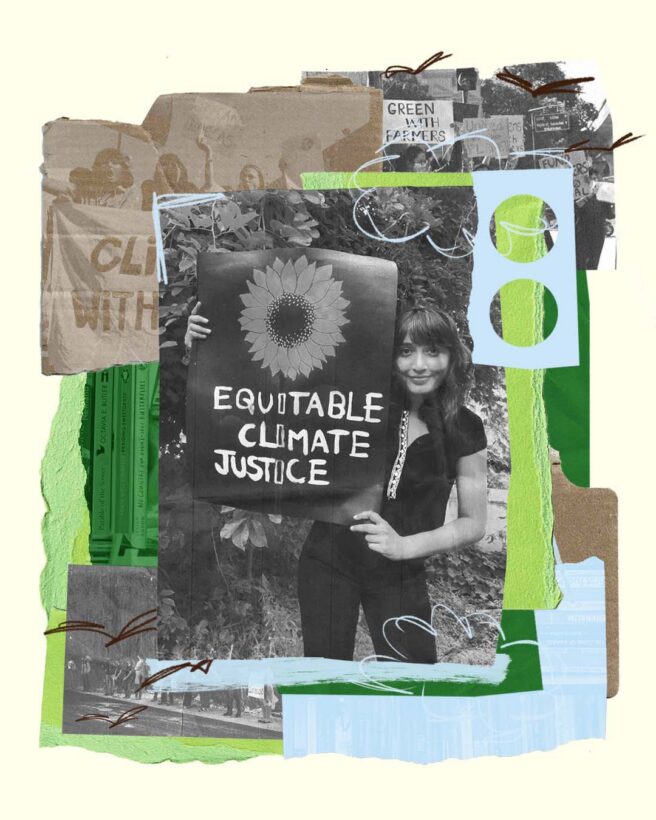
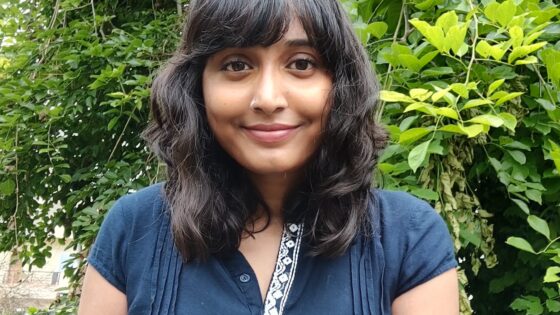
The image shows a collage mix of photographs and hand drawn illustration overlain with scrapbook images such as tape and rough edged paper. In the centre of the image is a photo of Disha
Image credit: Naomi Gennery

Disha A Ravi on fiction for change

Using imagination to build a world where we can live in harmony with all that exists around us

Climate justice activist Disha A Ravi curates a reading list of fiction books and other resources that asks us to reconnect and reimagine a new and better life with the natural world. 

I met my first friends on a tree. 

I was nine years old and I had borrowed a copy of The Enchanted Woods by Enid Blyton. Wanting to join the children from the story, I climbed my very own magical faraway tree opposite my house in Bengaluru, India. 

It was the ants and the birds who inhabited the green giant who became my friends and it was my first lesson in imagining a world where we live in harmony with our co-beings. 

As a teenager, however, I soon realised that we’ve taken the earth for granted. I started to see how we’ve lost our appreciation of the magic it carries. Instead, I learned that we’ve plundered and looted our planet to a state of breaking point. 

Every piece of fiction that I’ve read has distended my imagination to understand the science and the political will that is needed to protect our home. And it was this curiosity and  love for our natural world, sparked by fiction, which, at 19, led me to start getting involved in climate justice organising. I’ve never looked back. 

Fiction taught me that being able to imagine a better world is the first step towards creating one. The renowned writer Amitav Ghosh has often spoken about how the climate crisis asks us to imagine other forms of human existence and I’ve found this a task that fiction is best suited to do. 

So today, I’ve chosen to share pieces of literature that help to expand our imagination and show us alternative ways of being in the hope that we can slay the greatest dragon of our times – climate change.


Seven books that changed my perspective

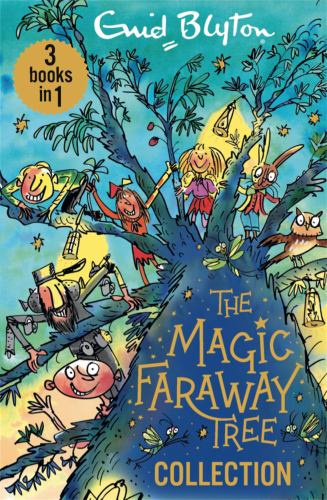
  • Book jacket: The Magic Faraway Tree series

    The Magic Faraway Tree series

    by Enid Blyton

    (fiction)

    The Faraway Tree series is a set of children’s books about adventures that take place in magical lands in an enchanted forest. This book helped me develop a fierce bond with my neighbourhood trees and I have never stopped seeing trees as anything less than enchanted since. 

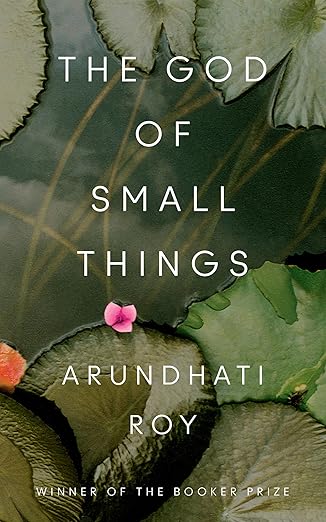
  • Book jacket: The God of Small Things

    The God of Small Things

    by Arundhati Roy

    (fiction)

    I find myself going back to Arundhati Roy’s poetic prose every time I’m upset about the world (which is a lot!). Roy often talks about how writing is political and this is particularly evident in The God of Small Things – a book that explores the intersection and destructive nature of caste and colonialism. This book represents my formative entry into Roy’s all-consuming, mind-altering way of seeing our world and my inauguration into India’s political landscape.

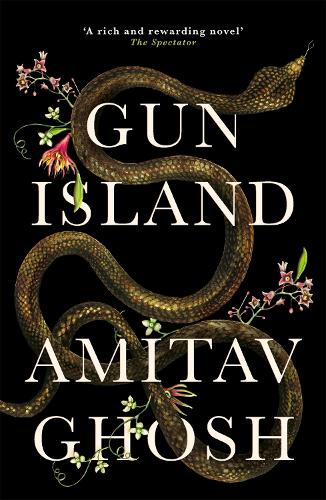
  • Book jacket: Gun Island

    Gun Island

    by Amitav Ghosh

    (fiction)

    Amitav Ghosh’s protagonist in Gun Island travels through the 21st century, highlighting the importance of multispecies and multicultural ways of collaboration to address the climate crisis. This book touches on various climate-related themes such as migration and its criminalisation, and  storytelling and the way it connects humans (past and present) with animals, trees and topologies in a spellbinding way.

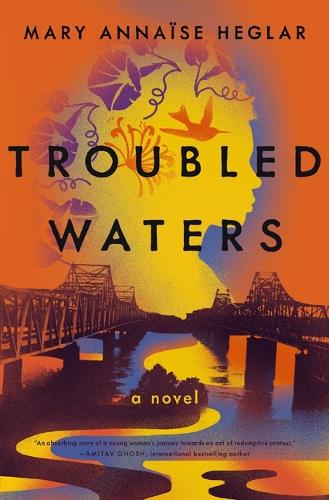
  • Book jacket: Troubled Waters

    Troubled Waters

    by Mary Annaïse Heglar

    (fiction)

    Essayist and writer Mary Heglar always lifts me out of woe and I was incredibly excited when she released a fiction book. Her debut novel Troubled Waters is an intimate narration of two generations of Black women and their reckoning with intersecting injustices – race and the climate crisis. The book made me realise how little I knew about Black history and resistance movements, and left me feeling inspired and wanting to learn more.

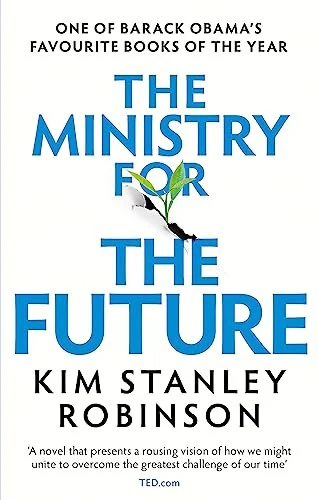
  • Book jacket: The Ministry for the Future

    The Ministry for the Future

    by Kim Stanley Robinson

    (fiction)

    The Ministry for the Future was released in 2020.  It starts with an eerily accurate description of India’s deadly summers with our recurring heatwaves and the impact they have on working class communities. The shockingly precise description of the severity of the climate crisis made it feel like I was reading the news. This made me stop reading it the first time around. But, I picked it up a second time and discovered that the book offered a really useful guide to address the climate crisis by spelling out the scale of the issue and offering insights on how political will can help solve it.

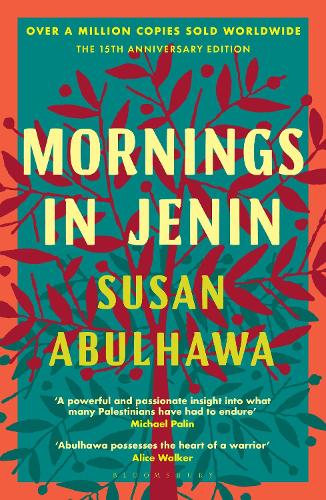
  • Book jacket: Mornings in Jenin

    Mornings in Jenin

    by Susan Abulhawa

    (fiction)

    Set in Jenin in Palestine, this book follows multiple generations from the 1940s to the 2000s through war, occupation, displacement, identity, love, resistance and hope. It is an essential read for a world that hasn’t done enough for Palestinians and I hope it inspires us to do more and to do better.

  • Book jacket: The Vegetarian

    The Vegetarian

    by Han Kang (Korean to English translation by Deborah Smith)

    (fiction)

    This novel offers a haunting insight into women’s autonomy in the modern world. The story revolves around the protagonist Yeong-hye’s abrupt choice to go vegetarian, how this choice scrambles the life of those around her and triggers a violent response from the men in her life. The book is thoughtful and unsettling and stays with you long after you’ve finished it.

Online and on the go

  • Mikaela Loach

    Instagram account

    Mikaela Loach is a climate justice organiser and writer. Her Instagram is a much-needed masterclass in climate justice. I love her platform for the way she offers clear and accessible information on the intersection of climate and other social justice issues. Her content doesn’t mince words on who is responsible for this crisis and how we can hold them accountable. I always leave her platform having learned something new.

  • here/now

    Newsletter

    I’ve followed Rega Jha’s work for a while and I was excited to read her new newsletter ‘here/now’. It explores the politics of existing in this world within the context of our current “world leaders” and how to navigate this. It’s personal, funny, reflective and can sway between boy problems (romantic prospects) to B.O.Y problems (heads of states). 

  • I fell in love with Anuk Arudpragasam’s writing from the moment I read my first page. He writes in long passages with few sentence breaks, very similar to  a lot of old Kannada and Tamil texts. This, combined with his stories being poetic and reflective of mundane things, made me instantly curious to read more. Both of his books – The Story of a Brief Marriage and A Passage Northtalk about the Sri Lankan Civil War and the lives it changed. Since the day I finished both of them, I’ve made it my life’s mission to make sure everyone reads them to understand the often overlooked elements of war. Here, in this video, he shares the process of documenting these atrocities through stories.

Image credit: Naomi Gennery

Musings and more

  • What is the book you've gifted the most?

    A Passage North by Anuk Arudpragasam. His books are a reminder of human atrocities and why we shouldn’t commit them. 

  • Where are you currently finding joy?

    I love being in the water and pretending to be a mermaid. It’s one of my favourite ways of connecting with nature.

  • If you could go on a walk with one author, who would it be and why?

    I have three A names – Arundhati Roy, Amitav Ghosh and Anuk Arudpragasam. They have a way of writing about the everyday passings of life and the politics of our world that is poetic, agonising and thought-provoking. They’ve made me fall in love with all living things a little more and have moved me to do more for them. I’m so in awe of them that I fall short of questions I’d like to ask them. Imagining this scenario turns me into a blabbing mess but I hope their presence would get my brain ticking. 

  • Written by Disha A Ravi

    Disha A Ravi

    Disha A Ravi is a climate justice activist from Bengaluru and founder of Fridays For Future India, which mobilised over 4 million people for climate action. Growing up in a farming family shaped her advocacy. She helped block India’s 2020 Draft EIA Bill and co-founded Fridays For Future MAPA to amplify Global South voices.

  • Illustrated by Naomi Gennery

    Naomi Gennery

    Naomi is a UK-based graphic designer and illustrator working at the intersection of creativity and social impact. Her work is colourful, playful, and often rooted in collage, crafts, and DIY culture. Exploring themes of culture, identity, and social change, she hopes people see their own thoughts, ideas, or experiences reflected in her work. Combining design and illustration, Naomi aims to make big ideas feel more approachable and human.

Read More