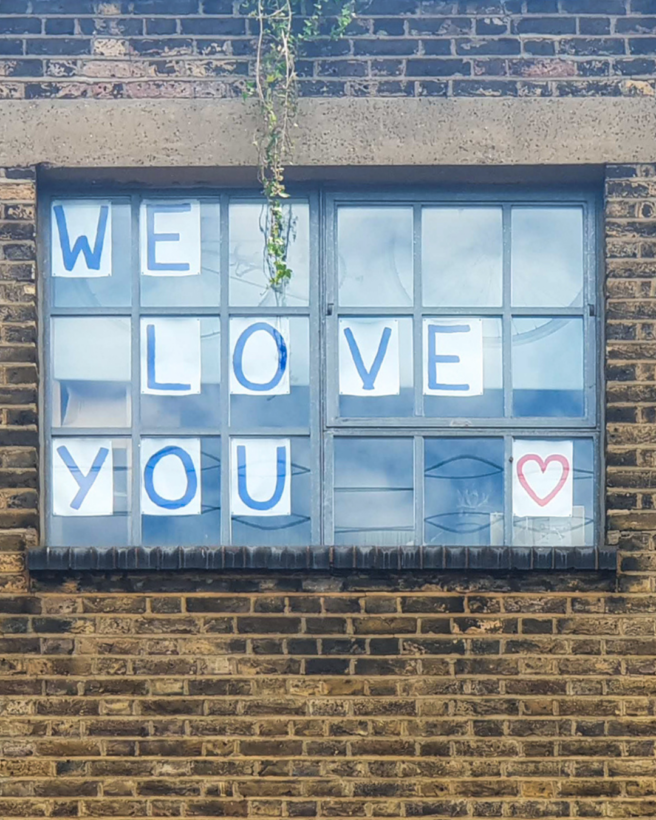

the image shows a building with three windows. In the middle window we can see the words we love you stuck on to the window
Image credit: Rosanna Vitiello

What’s your love language of place?

Rekindling relationships with the places we care for (and those that care for us)

We all love someplace, somewhere.

The neighbourhood that raised us. The city we fell for. The mountain that held us steady when everything else fell apart.

Yet it can feel hard to find the love these days.

Third spaces dwindle as youth clubs, pubs and places of worship shutter.

We’re priced out of the neighbourhoods we grew up in, with fear replacing pride as populism takes hold.

Landscapes that cared for us slip away — a ‘solastalgia’ — as waterways are privatised and polluted and greenspaces contested under housing pressure. 

And the structures meant to prevent this?

Emotions rarely fit into government policy or planning frameworks — yet how we feel about a place remains a determining factor in whether it lives or dies.

If we can’t articulate these feelings, we can’t begin to form lasting relationships with places. Words matter. As writer Tim Dee points out “without a name made in our mouths…a place struggles to find purchase in our minds and our hearts.”

What might sound nostalgic is fundamental to facing the future.

We’re told to skill up in AI to prepare for tomorrow. But, I’d argue the most important skill is learning to make the love language of place legible to those in power. 

We need a kind of place literacy that enables us to reflect upon our relationship with places we are part of, and that are part of us.

Or indeed to build that power ourselves. We need a kind of place literacy that enables us to reflect upon our relationship with places we are part of, and that are part of us. And to articulate that in ways that transform our beliefs and actions. 

The strength of those relationships becomes the foundation for a regenerative future that will see us through both tough times and glorious days ahead.

And, it’s happening. Through extraordinary experiments across around the world, people are re-writing their relationships with the places they care for.

In the North East of England, JRF is backing communities reclaiming their stories — Redhills rising, Horden writing its own narrative. In Adur & Worthing, West Sussex, people are imagining a future in their hands through the Thriving Together programme. In St Neots, The Big Listen laid out one table and 200 seats, welcoming the town to sit, talk about what they love in this market town and have a say in their future. 

Wherever we work with local people who feel something for their place — from the Isle of Wight, to Parma, to New Mexico — the pattern repeats: give people’s emotions weight and communities act.

Each project builds a vocabulary. Yet these local projects rarely find other. We need platforms that connect the dots around the world. A large language model, if you like, of place relationships could build a system that truly knows how to value places that are important to our lives.

In times of upheaval, it’s not just where you live that will determine whether you survive the future — it’s how you relate to it. Your street will matter more than your salary. Place is about to become the most important relationship in your life.


The ideas that shape us

  • What is an idea from someone else that has shaped and inspired your worldview/practice?

    A big inspiration has been the urbanist Charles Landry’s work on emotion and cities, specifically the profound concept of ‘places that say yes, places that say no’. That simple sentence inspired a 20-year research project called Urban Lexicons working alongside my friend, research fellow Marcus Willcocks, exploring how cities speak to us and how we speak back. Since Marcus passed away last year, I’ve been determined to share the thinking more widely — there is a developing interest in relationships and feelings about place tied to regenerative design that makes it such an urgent skill for the paradigm-shift of a world we are in now.  

  • What is a piece of culture that inspired a shift or idea for you?

    A participatory poem by George Ella Lyon called, ‘I Am From’ that encourages us to consider our place in the world and how we belong through the sensations, relationships and beliefs that strike us, not just the physical place on the map. I discovered this deep in the public library in St Louis, Missouri, where I’ve spent time working with people on how they feel about their city. We tried it out with those working on the Brickline Greenway as a way to have people consider a spectrum of views on a very diverse city, and it was a revelation!

    A simple poem exchanged perspectives and brought people closer together. We’ve since invited people to write their version of poem all over the world. Try it out!

  • What is a project that you are most excited about that’s enacting change now?

    Waterfronts are where change is happening. I’m excited about the Digital Museum of Coastal Futures, a project we’re working on with the Karachi-based artist/architect, Taqi Shaheen. Coastal communities are among the hardest hit by climate impacts, and yet have an amazing capacity for change running through their way of life. You feel the sea. This acts a vessel to share coastal communities memories and traditions, reflect upon current challenges of coastal life, and navigate where they’re headed their way for the future. And the digital metaverse format helps communities join the dots wherever they are in the world.

    There’s also brilliant work coming out of water custodians like the Ramboll Foundation’s Design As Water project calling for a new relationship with water, or Julia Watson’s Lo-Tek Water.

  • What has been an unexpected source of inspiration for you or your work?

    Getting lost. Most people find it stressful, but when I don’t know where I am, my spidey-senses pick up. It helps me to focus on a place and read its character, and I find it super inspiring. It’s a classic trait of a researcher in some ways, to be comfortable not-knowing.

Further resources

  • Podcast

    Poetry Unbound

    So many poems seem to speak of how we feel about places, and how places make us feel about each other. A beautiful place to dive in is Cyrus Cassels, Jasmine about Rome.

  • Practitioner

    Javyn Solomon

    One of the people I respect most on the planet, Javyn Solomon, and his work in St Louis, Missouri, on building trust as the way of building a city. More here on his work via the Loutopia project.

  • Book

    by Charles Curtin

    Charles Curtin’s Place-Based Solutions: The Power of Regenerative Thinking in the Face of Crisis is a great place to start on understanding the power of relationships and personal beliefs in partnership with the more technical approach to places in crisis. 

  • Substack

    The Love Language of Place

    Research should build relationships in and of itself. So I would love people to get involved. You can follow and find ways to contribute via substack at The Love Language of Place.

  • Written by Rosanna Vitiello

    Rosanna Vitiello

    Rosanna Vitiello is a designer, urban researcher and cultural strategist whose work for the last two decades has explored how places speaks to us, and how we speak back. As founder of The Place Bureau, she focuses on envisioning the future of places all over the world with brilliant partners — from ecologists in New Mexico to innovation teams at UNDP; citizens in Parma, and communities on the Isle of Wight biosphere.

Read More

  • The image shows a collage mix of photographs and hand drawn illustration overlain with scrapbook images such as tape and rough edged paper. In the centre of the image is a photo of Disha

    Disha A Ravi on fiction for change

    Climate justice activist Disha A Ravi curates a reading list of fiction books and other resources that asks us to reconnect and reimagine a new and better life with the natural world. 

  • A close-up of a woman doomscrolling on her phone in bed while her partner is also doomscrolling but facing the opposite direction. There’s no connection or interaction between them. Both are engrossed in feeds designed to capture their attention even in the quiet of the night. Doomscrolling spikes cortisol replaces conversation and erodes presence. Removing the phone from the bedroom isn’t just about sleep; it’s about breaking the addiction that profits from keeping us distracted from those we love most.

    How to reduce online addiction

    Founder of #Offline48 and fair fashion campaigner, Venetia La Manna, offers tips and advice on how to improve our health and build collective power by resisting the extraction of our online world

  • Who will Bristol Harbourside be for in 100 years?

    Rachael Burton discusses plans for Bristol Harbourside's regeneration, exploring what it means to be a good steward.