Full transcript text
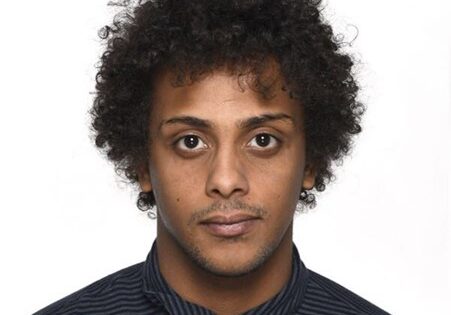
My name is Mohammed Elnaiem. I'm an organiser, writer, and activist from Sudan. You are listening to A World With and in this episode, I'll be adding one nation.
I don’t really know where I’m from. I was born in England, and grew up in the Middle East and South East Asia. I did my undergraduate studies in the U.S where I became an activist after having been inspired by the BLM movement in 2014. My biggest pride is having been protesting on the ground when the dictatorship of Omar Al Bashir was overthrown in Sudan in 2019. When asked where I’m from, I usually say, I’m Sudanese but born in Britain. Right now I live in St Albans, a nice and quaint cathedral city that isn’t too far away from London. But truthfully, I’m from everywhere and nowhere at the same time.
On our journey to liberation, my contribution to the world is one nation.
Let's begin by explaining what I mean by one nation. For me, one nation would look like the removal of borders and lines on a map and creating in its place one large nation made up of many peoples and no states.
For me, one nation would look like the removal of borders and lines on a map and creating in its place one large nation made up of many peoples and no states.
In a world with one nation, we wouldn't lose our distinct languages, sense of community or cultures, but would exist alongside each other with no one group using a state to dominate another.
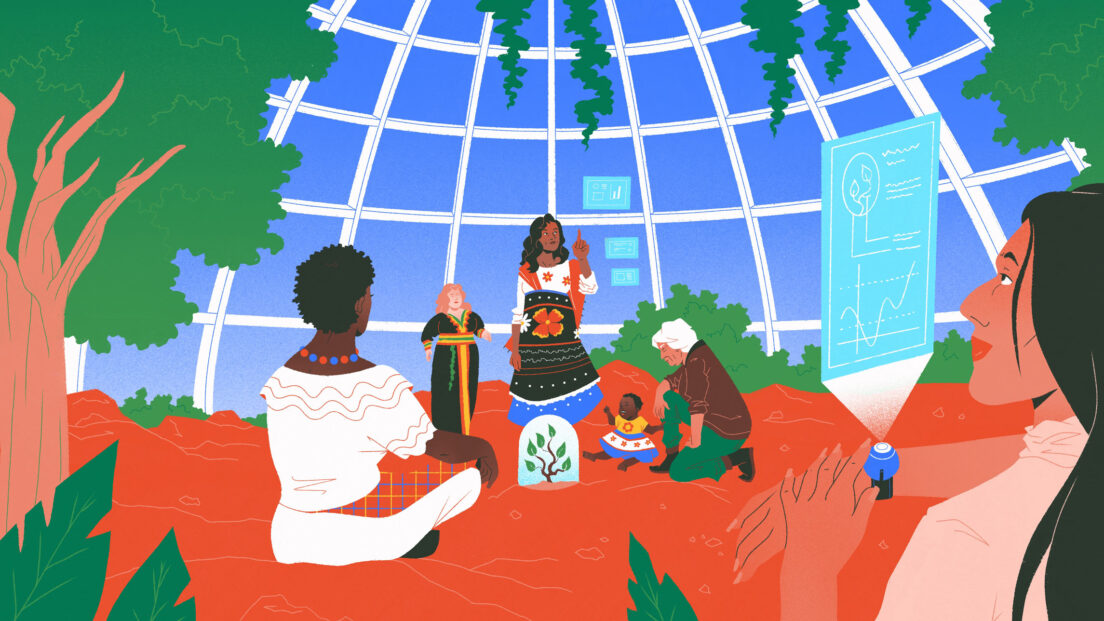
This nation would be democratically governed and scientifically administered where we would use science and technology for our wants and needs instead of for the benefit of politicians and business elites. In contrast to the global inequality that exists today, this one nation would not work to benefit a small minority at the expense of the majority. A world with one nation would be built on the belief that everybody will do what they can so that all of us have our core needs met, including access to healthcare, shelter and food. And once we've got that figured out, we would get to work at building a world of abundance.
So where did nation states come from and why are they a problem?
Nation states aren’t old. Many of us forget that in our 300,000 year history, nation states represent a tiny proportion of our timeline, having not even existed for 400 years.
Many of us forget that in our 300,000 year history, nation states represent a tiny proportion of our timeline, having not even existed for 400 years.
Some scholars trace the international state system back as recent to the Treaty of Westphalia in 1648. But for those of us from colonised backgrounds, most of our states didn’t exist before the 1940s. South Sudan, for example, was founded as recently as 2011.
A key problem I have with nation states is that they create hierarchies.
Inside of them, either a minority is dominant over an oppressed majority like in Apartheid South Africa, or a majority is dominant over oppressed minorities. And then there are insiders and outsiders…
Even though those on the inside are rarely equal, they have rights that outsiders don't. Some outsiders get golden visas if they are millionaires, while others are treated as expats instead of migrants if they're from Europe or the Global North.
But those outsiders with the wrong passports are allowed to be killed or to drown in oceans. And for me, it is this distinction which is absurd. We are all human. The system in place is no different from segregation or apartheid. You get a pass based on your nationality, and if you don't have the right one, you're not allowed into certain places and to go where you want to be.
That's what a passport is. It's a silly booklet that places you on a global hierarchy based on the accident of your birth. So with all these problems in the makeup of our current world order, are we really unable to imagine something else? Are we able to expand our consciousness just a little? If so, I think we can all start to see and visualise this idea of a world with one nation.
Without states, you may say this is unrealistic, but today our lack of imagination would rather see fascism come back than imagine a world without borders. We are living in a moment where ethnic cleansing or what the far right here calls remigration is increasingly being seen as an answer by mainstream politicians to problems that they can't solve. Where genocide in Palestine is taking place under the watch of the United Nations. Now if that's not enough of a realisation that our system of nation states is broken and urgently in need of replacing, then I don't know what is.
So how did I come to believe in the idea of a world with one nation? Well, I've always been suspicious of nationhood because I never really developed a strong sense of national identity. The closest thing to a national identity for me is my sense of kinship with the oppressed, no matter where they are.
It terrifies me that we've allowed a world to exist where since 2014, according to the UN, over 72,000 migrants have been declared missing. Those are people with families, people with those who depend on them financially and emotionally.
I’ve always asked myself. Why are people like this? Rich people from poor countries get to buy more favourable passports. Companies and capital get to go where they want, uninhibited by borders. But poor people, often fleeing persecution, are allowed to die trying to get to somewhere safer. And the only reason why some even cheer that on is because of nationalism.
And so, I’ve come to accept that to truly achieve a society of equality, free from hypocrisy and exploitation we need to create a world with one nation instead - built on one agenda - our common humanity.
I don't have a blueprint for how to achieve a world with one nation, but I do know that the oppressed, the people that I would consider the closest thing to being my nation, are fighting against their elites everywhere. I know that for many in the world, perhaps even most, nationhood is a core part of their identity.
Now, I'm not going to stand in the way of oppressed peoples, especially who see themselves as nations denied of their right to self-determination.
But my appeal to them in particular is simple. Today, fight for your nation. But tomorrow, let’s fight for a world with one nation and no states. A world with no classes. A world governed for you and for me.
I believe that a world with one nation and no states has the potential to help us rise to the biggest global challenges today, including climate change, the threat of nuclear war and global poverty. Special interests wouldn’t inhibit our common interest. We would be able to address planetary problems as a planetary species, redistribute our resources not to those who already have the most, but to those who need them. And we would have compassion with one another in ways unprecedented.
My name is Mohammed Elnaiem and that’s what a world with one nation would sound and feel like.
I can't wait to see what else we’ll add in the next episode. Thanks for listening!
A World with is an audio series produced by Futures in Draft and Storythings.