Full transcript text
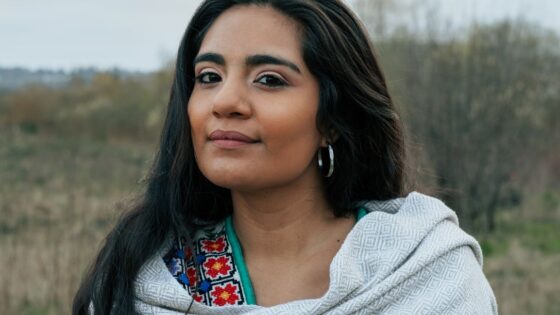
My name is Samara Almonte and you are listening to A World With. In this episode I want to explore a world with Indigenous feminism.
I am from the community of Puruaran, Michoacan - the place of springs. My father taught me where all the best water holes are to swim, and the places where you can find the water being born and drink from the springs. As I record, we are coming to and end of our rainy season - and we enter the harvest season. The mountains around us cover us in a green mantle, and the song of the tall corn stalk and the sugarcane swaying in the wind lulls me to sleep. We measure time in my pueblo based on the cycles of the harvest and rain.
On our journey to liberation, I will be adding a world with Indigenous feminism. For me, Indigenous feminism describes the liberation of Indigenous women from patriarchal and colonial structures, which in turn allows for self-determination of Indigenous peoples across their territories.
Indigenous feminism is a climate justice solution, it’s a reproductive justice solution. Indigenous feminism is a global solidarity movement.
So why is Indigenous feminism needed? According to the National Survey on the Dynamics of Household Relationships in 2021, 67.7% of Indigenous women have experienced gender based violence. Gender based violence describes the acts of physical, emotional, financial, sexual or reproductive harm impacting disproportionately people who identify as women. Gender based violence can present itself as a structural, political, economic and social forms of violence.
Alongside this, we also experience higher rates of femicides, expectations of marriage and motherhood at a young age, racial discrimination, and structural barriers to access higher education.
This unfortunately is not an experience unique to Mexico - Indigenous women globally face extreme levels of gender based violence and this is often because of the reality that Indigenous women globally are land defenders, feminists and revolutionaries who threaten capitalist colonial and patriarchal structures.
Indigenous feminism allows for a form of liberation that is intersectional
The structural violence we are facing, combined with our exclusion from positions of leadership is impacting both our livelihoods and those of future generations and the Earth.
Indigenous feminism allows for a form of liberation that is intersectional, where many forms of womanhood can exist that are culturally relevant, rooted in our ancestral lands and recognises the brilliance of Indigenous women outside of institutionalised Western knowledge.
As a young girl living in Michoacan and later in the United States, I often felt alone because of the lack of representation of Indigenous women in leadership positions and showcased across mainstream media. I felt like the women in my family and community didn’t have power or a voice in the feminist movement.
Even as I learned about feminism in higher education, I was asking where are the women who look like my mothers, who look like my grandmothers? Where are they in this landscape?
Yet, through conversations with these same women, I discovered that they have always felt powerful. They are the knowledge keepers, storytellers, healers, land defenders, and the pillars of my world.
More than ever we need Indigenous feminism. White supremacist ideologies are loud at this time, yet our resistance is intersectional, it’s intergenerational as we carry the wisdom from our grandmothers and the dreams of our youth. I believe that in a world with Indigenous feminism we can embrace ancestral practices and build a new future for women globally.
In a world with Indigenous feminism, Indigenous women have choices, but these choices won’t come at the price of losing our identity as women of our communities.
In a world with Indigenous feminism, Indigenous women have choices, but these choices won’t come at the price of losing our identity as women of our communities.
So why is a world with Indigenous feminism needed?
Well, Indigenous feminism has always been present in our communities – in the ways our grandmothers, mothers, aunties, have resisted colonial and patriarchal structures.
The women in my community have always questioned patriarchy through subversive ways so that we may survive and keep our culture alive for future generations. How we treat our first territory, our bodies, and our wombs that bring life into this world is a reflection of how we treat the Earth.
Individual self-determination can’t exist without collective self-determination which allows for all Black and Indigenous peoples to have self-governance of their land and therefore self-determination over their food systems, housing, spirituality, education, and so forth.
We can cultivate Indigenous feminism through sisterhood and healing our collective trauma through ceremony. As P’urhepecha women we often heal through temazcal, our ancestral sweatlodge practice, and through reconnecting with land based knowledge.
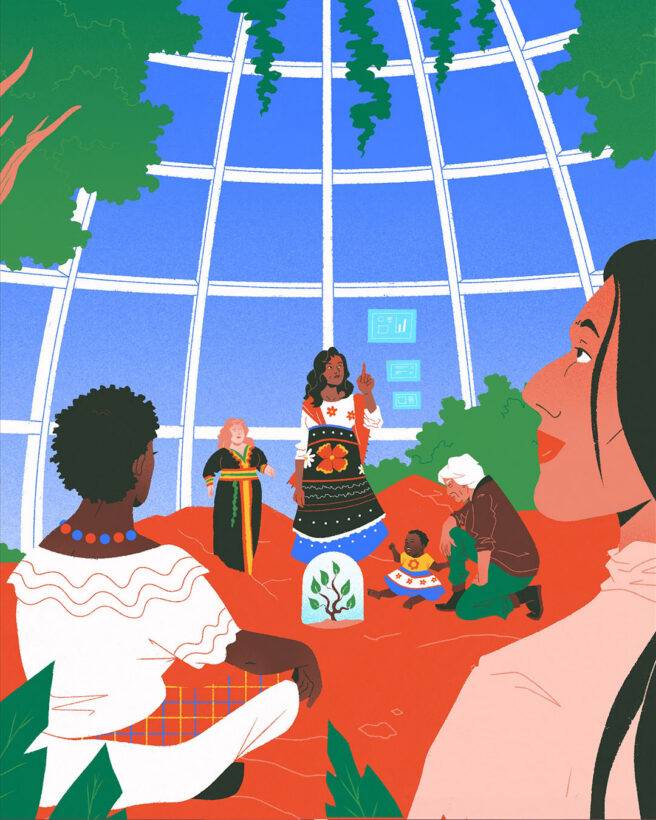
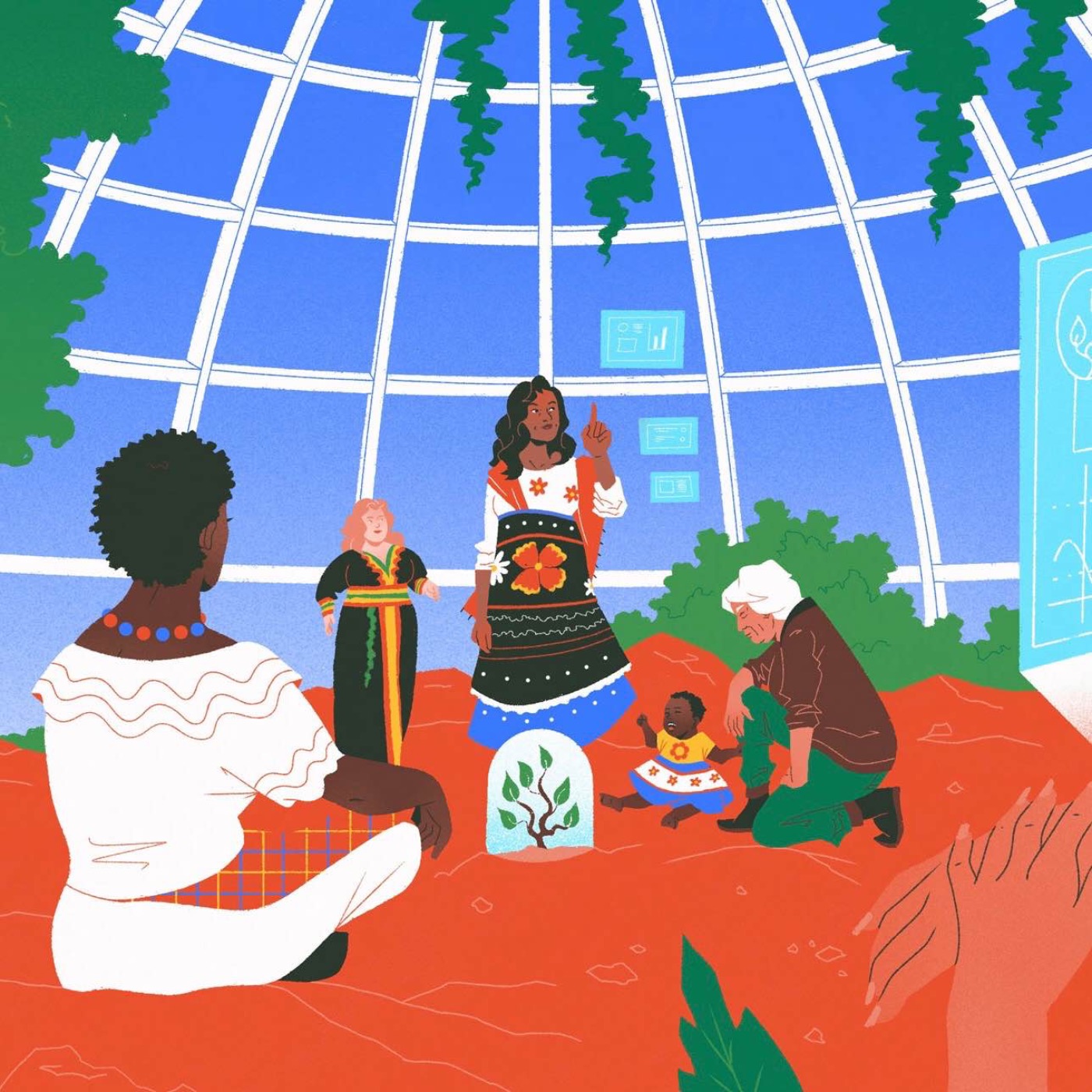
A sweat lodge is a practice that is used across Turtle Island. But, specifically for my community, it looks like a space that is created from the elements of the earth, like a dome that we can enter and be in ceremony with all the different elements and our different relatives, such as the fire, wind, earth and water. Our plant relatives have always been our companions in the fight for body autonomy - a relationship we have cultivated since time immemorial.
What excites me about a world with Indigenous feminism is its possibilities in allowing women to have autonomy over their bodies, and to have greater access to sexual education. In this world, our bodies will belong to us, and we won’t feel shame for choosing to do with them as we please.
As Indigenous feminism begins to build around the world and become normalised at global level, we will see women become part of every Indigenous council and form of governance. Reproductive justice will stop being stigmatised and motherhood will be a choice not an obligation.
Indigenous feminism is expansive and intersectional, as it includes our Black sisters across the world, and first nations women across territories from Turtle Island, to Palestine, to the island of the Pacific. We have all experienced violence by the same systems and we all deserve to live in self-determination.
In this world of Indigenous feminism, I am not betraying my community by choosing education and singlehood over motherhood.
Indigenous feminism allows us to define on our own terms what womanhood and Indigeneity means - the existence and acceptance of our autonomy doesn’t mean we leave our culture but rather return to it.
But in a world with Indigenous feminism, where my body is a territory within our ancestral lands, I can live in autonomy while feeling rooted.
I believe a world with Indigenous feminism has the potential to heal colonial trauma, bring forward repatriation of the land and self-determination over our bodies. My name is Samara Almonte and that's what a world with Indigenous feminism would sound and feel like.
I can't wait to hear what else we'll add in the next episode. Thanks for listening.
A World With is an audio series produced by Futures in Draft and Storythings.